
How to Clean a Laundry Room: When Extra Help Makes Sense
Published · Clear Choice Home Cleaning Services
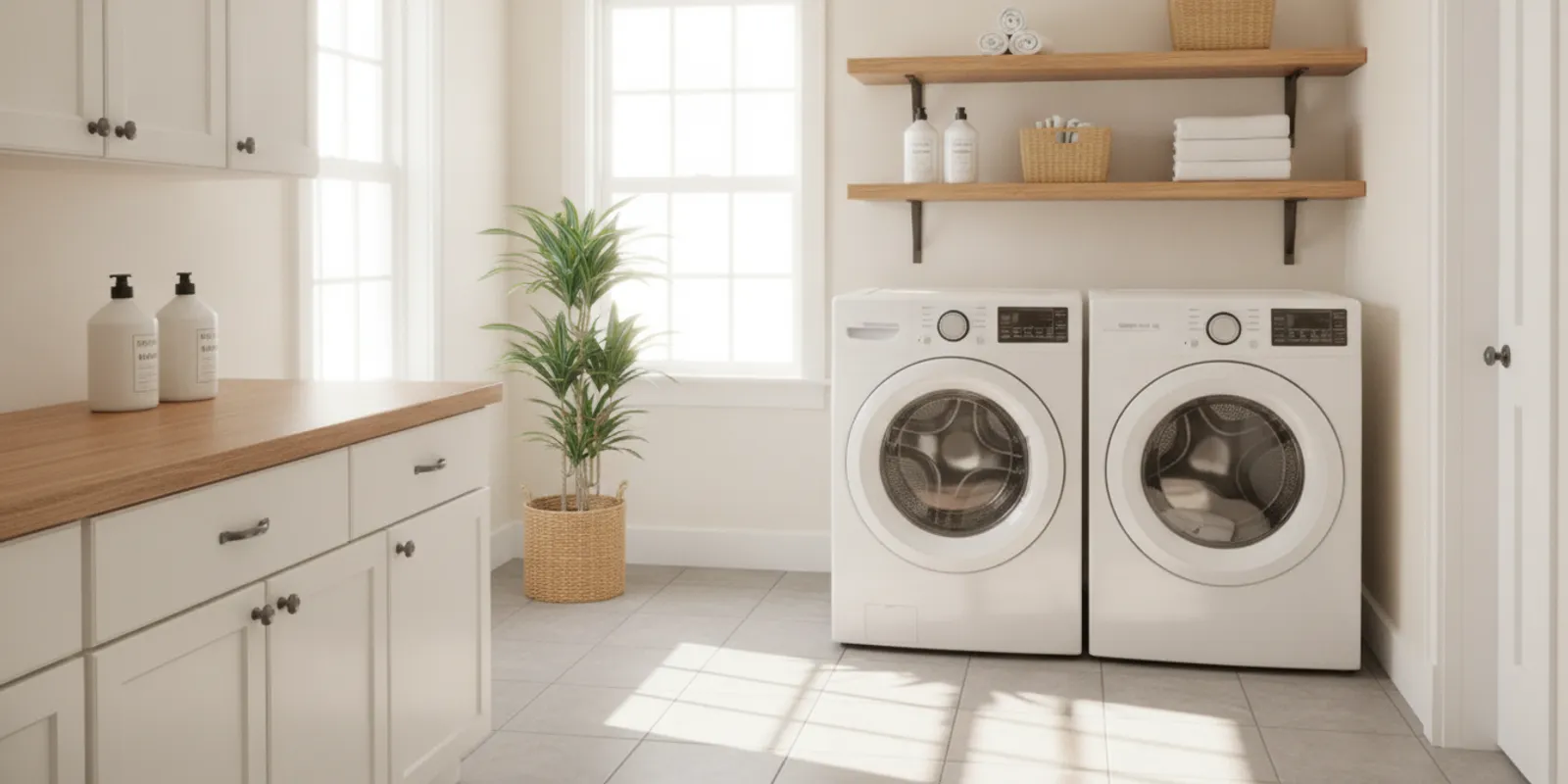
A laundry room gathers lint, dust, detergent drips, and the clutter that comes with repeated loads. Learning how to clean a laundry room is simpler when you work in a safe order: clear the floor, clean from high surfaces down, handle appliance exteriors and accessible parts according to their manuals, then finish with the floor. A small room with light buildup may take about 30 to 60 minutes; a crowded room or one with shelves to sort can take longer.
What should you do before cleaning the laundry room?
Begin by making a safe work area rather than reaching around baskets and bottles. Remove clothing, hampers, removable mats, and anything on the floor. Put detergents and other products somewhere stable and inaccessible to children and pets while you clean. Check the washer and dryer manuals before using a product or removing a component. A finish, gasket, dispenser, or screen may need a specific method.
- Take out laundry and baskets so you can see the floor and corners.
- Set aside empty containers and wipe drips from bottle exteriors; keep chemicals in their original, labeled containers.
- Gather microfiber cloths, a vacuum or broom, mild detergent, and a floor cleaner suitable for your surface.
- Read appliance care instructions and follow product labels. Never mix cleaning products, especially bleach with ammonia or acids.
- Make sure the room is ventilated, and keep water away from outlets, cords, controls, and appliance openings.
Work from shelves and other high surfaces down so dust and lint land where you can collect them. Use a cloth dampened rather than spraying cleaner toward controls or vents. If a room needs more than routine upkeep, Clear Choice's deep cleaning service information is a useful place to review the type of work to discuss. The scope and estimate depend on the home and requested tasks.
How do you clean the dryer and manage lint?
Remove lint from the screen after every load. For a room clean, take out the screen and clear visible lint around its slot only in the way the manufacturer allows. A soft brush or vacuum attachment may help if the manual permits it. Avoid forcing a tool into the opening or pushing lint deeper into the machine. Wash the screen only if the instructions say it is washable, and let it dry completely before putting it back.
Wipe the dryer top, door, and accessible control area with a lightly damp cloth, then dry them. Do not pour cleaner into the lint opening. A lint screen does not replace care of the exhaust vent system; use the maintenance directions for your model and arrange appropriate inspection or cleaning when needed. If drying suddenly takes much longer, the dryer feels unusually hot, or you notice a burning smell, stop using it and seek qualified assistance. Those signs are not a routine housekeeping problem.
Lint is also a fire-safety concern. The U.S. Fire Administration advises cleaning the lint filter before and after each load and checking that the venting system is not blocked. Its dryer fire-safety guidance explains practical precautions. A household room clean does not substitute for vent maintenance or appliance repair. For more on the screen and drum, see this guide to cleaning a dryer safely.
How should you clean the washing machine?
Wipe the washer exterior and controls with a cloth dampened with mild detergent, then dry them. Do not spray a solution directly onto a control panel. On a front-loader, gently wipe the door glass and accessible gasket folds, removing moisture and visible debris without stretching or pulling the seal. On a top-loader, wipe the lid and rim. Remove a detergent dispenser only as the manual directs; some parts are not intended to be pulled out or soaked.
Many washers include a recommended cleaning cycle. Follow the manual for the cycle, cleaning product, and frequency. Do not assume that bleach or another chemical is right for every machine or that adding extra product will improve the result. After a wash, leave the door or lid open when practical so the inside can dry, while keeping children and pets away. If an odor returns, check for standing water or visible residue and consult the manufacturer's maintenance directions instead of combining products.
There is a difference between wiping the machine and cleaning the laundry room around it. The machine's interior cycle is an appliance-maintenance task; the outside, nearby shelf, floor, and sink are room surfaces. Keeping those tasks separate helps prevent a cleaner intended for a counter from ending up on a seal or inside the washer.
Which shelves and storage surfaces need attention?
Dust shelves, cabinet tops, accessible light fixtures, and the space behind baskets. Wipe counters and shelving with a cleaner compatible with the surface, then dry them before returning products. Keep bottles upright and away from places where a leak could reach electrical equipment. Sort before putting supplies back: retain the products you use, discard empty packaging safely, and leave room to see whether a bottle is leaking.
- Sink and faucet: Remove loose debris, wash the basin with a surface-appropriate cleaner, rinse if its label calls for it, and dry the faucet.
- Cabinet fronts: Wipe handles and doors, where detergent residue often collects.
- Baseboards and corners: Pick up lint with a vacuum attachment or cloth rather than pushing it into the edge.
- Trash and recycling: Empty the containers and wipe their exterior if it has dust or residue.
- Supplies: Keep product labels readable and containers closed; never transfer chemicals to a food or drink container.
Use a small, deliberate sorting pass rather than emptying every cabinet at once. For example, take one shelf, check each container for a closed lid and residue, wipe the shelf, then return only what belongs there. That approach keeps products from sitting on a wet surface and makes it easier to notice a leak. A similar storage reset appears in this practical guide to cleaning a pantry.
How do you clean the floor safely?
Vacuum or sweep lint and dust first, including beneath appliances only where you can reach safely without moving heavy equipment. Choose a cleaner suited to the floor material and use only enough water to do the job. Do not let liquid pool around appliance feet, outlets, or thresholds. Spot-clean a detergent spill promptly, then let the floor dry before replacing baskets or mats.
Check the edges of mats and the baseboards after the open floor is clean; lint often gathers there. If a mat has a rubber backing, make sure both the mat and the floor are dry before putting it back. Do not pull a washer or dryer forward by yourself to reach hidden debris. Heavy equipment, cords, and water connections can make moving it unsafe or cause damage. For tile, review this tile-floor cleaning guide alongside the floor manufacturer's care directions.
Use a simple check to choose the next action when you find a mark. A dry patch of lint can usually be vacuumed; a sticky mark may need a damp cloth and suitable cleaner; a wet patch beside the washer needs its source identified before mopping. If moisture returns, do not cover it with a mat or fragrance. Investigate a possible leak or ask an appropriate repair professional to assess it.
How often should you clean a laundry room?
Small, frequent tasks keep buildup from turning into a larger job. Adjust the timing to the number of loads, pets, spills, and how much storage is in the room. The schedule below is a practical starting point, not a replacement for an appliance manual or a response to a fault.
| Task | Suggested timing | What to do |
|---|---|---|
| Clear dryer lint screen | After every load | Remove lint carefully and replace the screen securely. |
| Wipe spills and machine exteriors | As needed; check weekly | Use a suitable cloth and dry damp areas. |
| Dust shelves and clean the floor | Weekly, or when lint is visible | Work high to low, then sweep or vacuum and mop. |
| Run the washer cleaning cycle | As directed by the manual | Use the recommended cycle and product. |
| Detail corners and review supplies | Monthly, or when residue builds up | Check behind baskets, wipe storage, and remove empty containers. |
| Review vent maintenance | As directed for the dryer and household conditions | Follow the manufacturer's instructions; seek qualified help when needed. |
Consider two example routines. A household running several loads most days may clear the screen each time, wipe a detergent drip as soon as it happens, and do a short floor pass twice during the week. A household using the machines once or twice weekly may keep the same after-load screen habit but combine shelf dusting and floor cleaning into one weekly reset. In either case, a monthly look behind baskets can catch lint and a leaking container before they spread.
A five-minute weekly check can be enough to decide what needs attention: look for wet spots, inspect the washer area for drips, scan the dryer floor for lint, and check whether the bin is full. If everything is dry and clear, there is no need to repeat a deep clean. If a problem keeps coming back, identify its source rather than simply increasing the frequency of mopping.
What can make laundry-room cleaning harder?
Limited clearance, stacked appliances, crowded shelves, detergent spills, and lint behind baskets add time. If appliances are stacked or tightly fitted, do not pull them out alone. A routine room clean should stay within safe reach; hidden areas may require proper handling. Persistent moisture, unusual odors, or signs of a leak call for addressing the cause, not masking it with fragrance.
Some deposits point to different tasks. Sticky residue on a shelf may come from a leaking detergent bottle. Grit near the dryer may be lint mixed with dust. A damp area next to the washer may indicate a plumbing or appliance issue. Identify the source first, use a product suitable for that surface, and dry it. If the mark returns, document where and when it appears and get the right kind of help rather than repeatedly applying stronger cleaners.
There are also limits to what a room-cleaning session can safely include. Do not remove appliance panels, reach into a vent, handle electrical components, or disconnect hoses as part of ordinary housekeeping. For a floor that needs a different method, choose the care instructions for its material; this guide to cleaning vinyl floors is one example of material-specific advice.
When does extra cleaning help make sense?
Consider asking about help when the laundry room is one part of a larger deep cleaning, when dust and residue have built up across several rooms, or when you need a home reset around a move. Household cleaning can address appropriate room surfaces, but appliance repairs, electrical concerns, and dryer-vent work belong with qualified specialists. Describe the scope clearly so an estimate can reflect the work you want considered.
Clear Choice Home Cleaning Services LLC is locally owned and veteran-owned, based in Alpharetta and serving Metro Atlanta. Owner Michael A. Jones is involved in the business, and the team brings cleaning supplies and equipment. If you request an estimate, mention whether the laundry room has a sink, shelves, stacked appliances, visible buildup, or delicate surfaces. Also note anything that should not be moved or touched. The cleaning services overview can help you identify the kind of household cleaning to discuss, and the company information page provides further background.
Be specific about whether you want attention to the laundry room alone or as part of a wider home clean. Clear Choice uses quote-based cleaning, so describe the property and requested tasks rather than assuming a fixed package or price. You can review the cleaning service FAQs before getting in touch. Availability and the appropriate scope can be discussed when you request an estimate.
Frequently asked questions
Can I use an all-purpose cleaner on my washer?
Use a mild cleaner on exterior surfaces only when the manufacturer permits it. Avoid spraying controls, seals, or openings, and follow the manual for interior cleaning.
Should I clean the dryer vent while cleaning the room?
Removing lint around the dryer is part of room upkeep, but it is not the same as maintaining the vent. Follow the dryer manufacturer's directions and arrange qualified help for vent work when needed.
How do I keep lint from spreading?
Remove lint carefully, place it directly in a waste container, and vacuum or sweep visible lint during the weekly room check. Empty the container regularly so lint does not overflow.
Can a home cleaner move my washer and dryer?
Do not assume heavy appliances will be moved. Explain the access and cleaning request when asking about an estimate; moving equipment may require qualified help to avoid damage or injury.
What is the simplest way to keep the room clean?
Clear the lint screen after every dryer load, wipe detergent spills when they happen, and set aside a short weekly check for shelves and floors. Follow appliance instructions, store products safely, and call Clear Choice Home Cleaning Services at (470) 622-8884 to discuss an estimate if the room needs attention as part of a larger home cleaning. A steady routine makes the room easier to use and simpler to clean.