How to Clean Vinyl Floors Without Dulling the Finish
Published · Clear Choice Home Cleaning Services
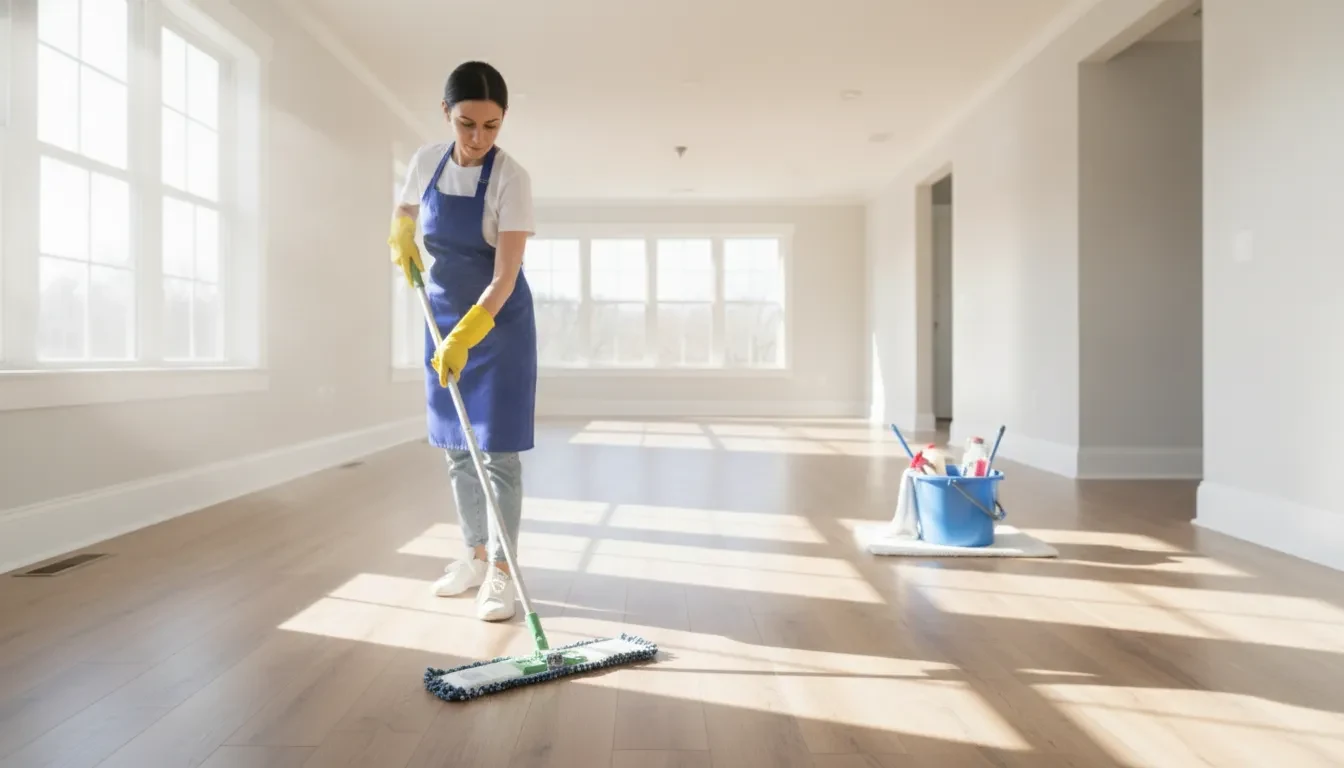
Vinyl floors are durable, but grit, standing moisture, and harsh products can gradually dull the finish or leave marks. A simple routine works best: remove dry debris first, use only a lightly damp mop, and clean spills before they settle.
Request a quote for residential cleaning help.
The safest way to learn how to clean vinyl floors is to follow the flooring manufacturer’s care instructions, then use a compatible pH-neutral cleaner sparingly with a microfiber mop that is damp rather than dripping. Prompt spot cleaning and gentle tools help protect the surface.
From daily dust and tracked-in soil to sticky spots and scuffs, the right sequence matters more than aggressive scrubbing. Start with the dry-debris step, then build a finish-safe cleaning routine that controls moisture from beginning to end.
How to Clean Vinyl Floors Safely, From Dry Debris to Damp Mopping
A safe routine starts with dry debris, then moves to controlled moisture. This order matters because grit can dull the finish, while too much water can create longer-term problems for vinyl flooring. Adjust the schedule to your home’s traffic and always check the manufacturer’s care instructions when the floor type or finish is uncertain.
- Remove loose dirt first. Sweep or dry mop the entire floor before adding any cleaning solution. Fine particles can act like abrasives under shoes and gradually affect the floor’s appearance. A soft broom or a suitable dry mop is a practical choice. For everyday upkeep, wiping or vacuuming may be enough, as Tarkett’s vinyl-care guidance explains. Pay extra attention to entryways and busy walkways, where debris collects fastest.
- Prepare a microfiber mop. Use a microfiber mop that can pick up soil while helping you control the amount of water on the floor. If you are using a cleaner, follow the product label and confirm that it is compatible with your specific vinyl, LVP, or LVT surface. More solution is not better. Excessive moisture can cause damage over time, particularly if liquid remains around seams or edges.
- Keep the mop damp, not dripping. Wring the mop thoroughly before it touches the floor. Work in manageable sections rather than flooding a large area, and use steady passes to lift soil. A damp mop provides cleaning contact without leaving unnecessary water behind. If the mop begins to leave visible puddles, stop and wring it again.
- Rinse and wring often. Soil transfers from the floor to the mop, so rinse and wring it frequently instead of spreading dirty water across the next section. Change the cleaning solution when it becomes visibly cloudy or gritty. Use only the amount of water needed for the job, then check the surface for wet spots and remove any excess with a clean, dry cloth.
- Finish with a dry check. Look along seams, edges, and areas beneath furniture to make sure moisture has not collected. Let the floor dry before replacing lightweight items or allowing heavy traffic. If the surface remains dull, sticky, or unusually wet, pause before applying another product and review the manufacturer’s maintenance guidance rather than adding more cleaner.
Consistent dry maintenance usually reduces how often damp cleaning is necessary. A cautious sequence protects the finish while keeping the process simple: remove particles, control moisture, rinse the mop, and leave the floor clean rather than saturated.
What Cleaner and Mop Are Safest for Vinyl Floors?
The safest choices are usually the least abrasive ones: a soft microfiber mop, a vacuum without a beater bar, and a cleaner specifically labeled for vinyl or other compatible hard-surface floors. Because finishes and installation methods vary, check your flooring manufacturer’s care guide before using any product, even if it is marketed as gentle.
| Choice | Best use | Guidance |
|---|---|---|
| Microfiber mop | Routine damp cleaning | Use damp, not dripping. Wring it often so moisture stays controlled. |
| Vacuum without a beater bar | Dust, grit, and loose debris | Choose a non-abrasive setting or tool that will not scrape the surface. |
| Vinyl-labeled, pH-neutral cleaner | Regular soil and buildup | Use only when the label confirms compatibility, and follow the stated dilution. |
| Plain warm water | Light cleaning or residue removal | Useful for removing soap residue after cleaning, without leaving another film. |
| Mild dishwashing liquid or diluted white vinegar | Some mild cleaning tasks | Use only if the floor maker permits it. Do not assume a homemade mixture is safe for every finish. |
For a practical routine, dry-clean the floor first, then use a damp microfiber mop with a compatible product. A water-based, pH-neutral hard-surface cleaner is a cautious option when its label specifically supports the flooring. If you use soap, rinse with clear warm water when needed to remove residue.
Avoid ammonia cleaners, film-leaving mop-and-shine formulas, wax, steel wool, and stiff-bristled brushes. Manufacturer guidance from Tarkett’s vinyl floor care guide also lists abrasive powders, solvents, varnish, oil-based products, and steam cleaners among items to avoid. Excess water can reach seams or edges, so the mop should leave the surface lightly damp rather than saturated.
How Should You Handle Spills and Sticky Spots?
Act quickly when something lands on vinyl flooring. Prompt cleanup helps reduce the chance of staining, especially with oil, vinegar, or lemon-based spills, which can discolor the surface if left in place. Start by using a clean, absorbent cloth to blot up the liquid. Lift the spill instead of rubbing it across a larger area.
For a sticky spot, use a small amount of a gentle, floor-compatible cleaner on a cloth or lightly damp pad. Check the flooring manufacturer’s care instructions first, particularly if you are unsure whether the surface is vinyl, LVP, or LVT. Keep the cleaning area controlled rather than flooding the floor.
- Blot first: Remove as much of the spill as possible with a clean cloth.
- Clean gently: Work from the outside edge of the spot toward the center. This helps keep the residue from spreading.
- Rinse the area: Wipe with fresh water to remove cleaner and loosened residue.
- Dry completely: Finish with a dry microfiber cloth, paying attention to seams and edges.
For tougher residue, repeat the gentle spot-cleaning process rather than reaching immediately for a rough scrubber, solvent, or concentrated product. Tarkett’s vinyl floor care guidance also recommends cleaning from the outside of a stain toward its center, then rinsing and wiping with fresh water.
If the spot remains after a cautious attempt, stop and check the manufacturer’s instructions before trying another product. A visible mark may be trapped residue, discoloration, or damage to the finish, and increasingly aggressive scrubbing can make the problem worse.
How Do You Remove Scuffs Without Damaging the Finish?
Scuffs deserve a light touch. Before rubbing, check the flooring manufacturer’s care instructions and identify whether the mark is surface transfer, embedded soil, or possible finish damage. A cleaning method can remove a mark without restoring a worn or damaged surface, so avoid treating every discoloration as a cleaning problem.
Start by removing loose grit around the area with a soft broom, dry microfiber mop, or other non-abrasive method. Then use a small amount of a compatible neutral cleaning solution on a soft, damp cloth or the least abrasive pad permitted by the flooring guidance. Work gently over the scuff instead of scrubbing aggressively. Tarkett’s vinyl floor care guidance recommends prompt treatment of tougher scuffs and stains with a gentle, compatible method.
Use a stop-and-check rule
After a few light passes, stop and inspect the spot in good light. If the mark is fading, wipe away residue with a clean, lightly damp cloth, then dry the area. If there is no improvement, the surface becomes dull, or the color changes, stop rather than increasing pressure or switching to a harsher product. Do not use the lack of immediate success as a reason to reach for steel wool, abrasive powder, solvent, wax, or an unapproved restoration product. Persistent marks may require advice from the flooring manufacturer or a qualified flooring professional.
Prevent new marks at the source
Felt protective pads beneath furniture, chair, and table legs can reduce the chance of new scuffs. Add or replace pads before moving heavy furniture, and lift items when possible instead of dragging them across the floor. Also check the bottoms of mats, baskets, and other objects. Rubber-bottomed items can stain vinyl, so avoid leaving them in place unless the flooring manufacturer confirms they are compatible. These small precautions protect the finish without promising to restore damage that cleaning cannot safely reverse.
What Should You Avoid on Vinyl Floors?
Knowing what not to use is an important part of learning how to clean vinyl floors. The safest approach is gentle, controlled cleaning rather than aggressive scrubbing or heavy product buildup. Before trying a new cleaner or method, check the flooring manufacturer’s care guide. Vinyl products and finishes can differ, so the manufacturer’s instructions should take priority when they conflict with general advice.
Skip excess water and steam
A soaking-wet mop can leave more moisture than the floor needs. Excess liquid may work into seams and edges, where it can affect the adhesive and contribute to loosening over time. Use a damp, well-wrung mop instead, and wipe up puddles promptly. Steam cleaners also belong on the avoid list unless the manufacturer specifically approves one for your exact floor. Heat and moisture may not be appropriate for every vinyl installation.
Avoid abrasive tools and harsh products
Steel wool, stiff-bristled brushes, abrasive powders, and forceful scrubbing can scratch or dull the surface. For the same reason, avoid solvents, acetone, oil-based products, and other cleaners that are not labeled as compatible with vinyl. A soft microfiber tool and a cleaner intended for the floor type are more cautious choices. If a spot does not lift with light pressure, stop and check the care instructions rather than increasing friction.
Do not add wax or leave a film
Wax and varnish are not universal solutions for improving vinyl’s appearance. Guidance from the vinyl flooring manufacturer Tarkett lists wax among the products to avoid, while other care guidance advises against ammonia cleaners and mop-and-shine products that leave a film. These products can create residue or change the intended finish. Keep the routine simple, rinse away compatible cleaner residue when directed, and let the surface dry without adding an unapproved coating.
How Often Should You Clean Vinyl Floors?
The right schedule depends on how much traffic your floor handles. In a quiet room, regular dust removal and a weekly damp clean may be enough. Busy kitchens, entryways, hallways, and homes with children or pets usually need more frequent attention because grit and dirt can contribute to scratches and markings. For a practical starting point, dry mop or vacuum high-traffic areas daily, then plan a thorough cleaning at least once a week.
Daily care does not need to mean wet mopping. Tarkett’s vinyl floor care guidance notes that wiping or vacuuming can be sufficient for daily cleaning. Use a soft broom, a suitable vacuum, or a non-abrasive dry mop to collect loose particles. In lower-traffic rooms, adjust the frequency based on what you see rather than following a rigid calendar.
Adjust the routine to your household
- After wet or muddy weather: Clean entry areas sooner, since tracked-in dirt can spread through adjoining rooms.
- In kitchens: Wipe spills promptly, especially oils and acidic liquids, and add a spot clean when needed. The kitchen cleaning guide can help organize the rest of that room’s routine.
- After moving furniture: Check for marks and clean them gently rather than scrubbing aggressively.
- During seasonal changes: Reassess the schedule when open windows, outdoor activity, or visitors bring in more dust and debris.
Prevention makes every cleaning easier. Place doormats at entryways, wipe spills as soon as they happen, and use felt pads under furniture legs. If a mark does appear, start with the gentlest compatible method and stop if the finish or color looks different. Always check the flooring manufacturer’s care instructions when the floor type or finish is uncertain.
When Is Professional Cleaning Help Worth Considering?
Vinyl floor care is often manageable as part of a regular household routine. Professional help may be worth considering when cleaning the floor is only one part of a larger job or your schedule makes consistent maintenance difficult. It may also help when a home needs a thorough reset after a move, renovation, illness, or a particularly busy season. The goal is not to promise restoration. It is to make the broader cleaning workload more manageable while you continue to follow the flooring manufacturer’s care instructions.
For example, a one-time visit can help when several rooms need attention at once, including floors, kitchens, bathrooms, and other frequently used spaces. Recurring service may also suit households that want help keeping up with routine cleaning. Clear Choice offers one-time and recurring residential cleaning options in Alpharetta and North Metro Atlanta. You can review the residential house cleaning service to see whether the general scope fits your needs. For a broader room-by-room reset, the complete home deep cleaning guide may also help you plan.
Before requesting help, note the flooring type if you know it, identify areas with spills or stubborn marks, and keep any manufacturer’s care information available. This helps set realistic expectations and reduces the risk of using a method that is not approved for your particular floor. A cleaning team can address general household cleaning, but unusual discoloration, lifting seams, water damage, or suspected finish failure may require advice from the flooring manufacturer, installer, or another qualified professional.
If you are unsure whether your needs call for a one-time visit or an ongoing schedule, describe the rooms and tasks when you contact Clear Choice for a quote. Services are quote-based, so the scope can be discussed before any work is scheduled.
Need help with a larger home cleaning routine? Request a quote from Clear Choice.
Frequently Asked Questions
What is the best thing to clean vinyl floors with?
Start with a soft broom, microfiber dust mop, or vacuum without a beater bar to remove grit. For damp cleaning, use a microfiber mop that is damp rather than dripping, along with warm water or a pH-neutral cleaner labeled compatible with your floor. Check the flooring manufacturer’s care guide first, since vinyl products and finishes can have different requirements.
What should you not clean vinyl floors with?
Avoid abrasive powders, steel wool, stiff brushes, wax, solvents, steam cleaners, ammonia-based cleaners, and mop-and-shine products that leave a film unless the manufacturer specifically approves them. Excess water can also reach seams and edges, so use only enough moisture to clean and dry wet spots promptly. See Tarkett’s vinyl-floor care guidance for additional manufacturer recommendations.
Can I use Dawn dish soap to clean my vinyl floors?
A small amount of mild dishwashing liquid may be appropriate for some vinyl floors, but do not assume every product or concentration is suitable. Dilute it well, use a barely damp mop, and rinse or wipe away residue with clean water. Follow the flooring manufacturer’s instructions, especially if the floor has a special finish.
Is vinegar okay to clean vinyl floors?
Diluted distilled white vinegar is listed as a mild option in some cleaning guidance, but vinegar is not automatically right for every vinyl product. Check the manufacturer’s care instructions before using it, dilute it properly, test an inconspicuous area, and never combine it with other cleaners. When in doubt, choose a labeled, pH-neutral vinyl-safe cleaner instead.
Ready to Get Help With Your Home Cleaning?
A consistent cleaning routine can help keep vinyl floors looking cared for, but regular household demands may make it difficult to stay ahead of every room. Clear Choice Home Cleaning Services can help with dependable residential cleaning support tailored to your home.