
Cleaning Schedule Template for a Manageable Home
Published · Clear Choice Home Cleaning Services
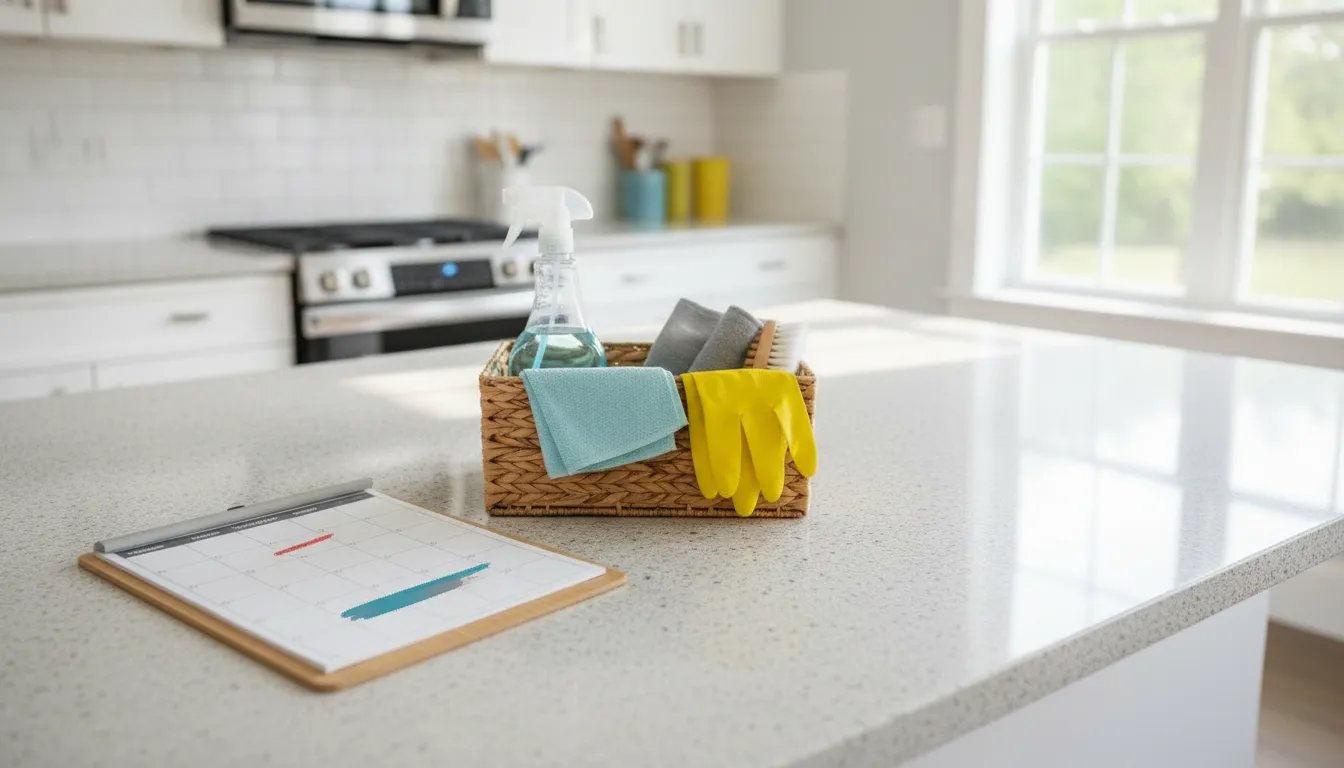
A cleaning schedule template works when it matches the home you actually live in, rather than a perfect house printed on a blank form. Daily resets, weekly zones, a short monthly rotation, and a few seasonal jobs keep the work from stacking into one exhausting weekend. Household size, pets, and the rooms you care about most should decide what stays on the list.
Book recurring standard cleaning in North Metro Atlanta
Clear Choice Home Cleaning Services is based in Alpharetta and cleans homes across Johns Creek, Cumming, Roswell, Sandy Springs, Milton, and Suwanee. This guide is the blank plan you fill in at home, not a one-time deep-clean list and not an office checklist. Use it to decide what you will do yourself, what you will share with the household, and what you would rather hand to a recurring visit.
What a Cleaning Schedule Template Should Include
Start with four rows rather than forty tasks, or the form will feel heavier than the housework. Daily work is the short reset that keeps tomorrow easy, and weekly work is one zone a day so Saturday is not a marathon. Monthly work is the short list you keep postponing, while seasonal work is the heavier pass you schedule only a few times a year.
Write the template in plain columns you can copy into a notes app, a paper calendar, or a shared family list:
| Column | What to write | Example |
|---|---|---|
| Frequency. | Daily, weekly, monthly, or seasonal. | Weekly. |
| Zone. | One room or area, not the whole house. | Kitchen. |
| Task. | One visible action a person can finish. | Wipe counters and the stove front. |
| Owner. | A name, anyone home, or service. | Alex on weeknights. |
| Time box. | A realistic cap so the task stays small. | 10 minutes. |
| Skip rule. | What you drop on a hard week. | Skip inside the fridge. |
Leave a notes line for pets, allergies, and the rooms you care about most. A template without a skip rule becomes a guilt list the first time a week goes sideways. If you miss a day, the next box should still be small enough to finish.
Set the Template to Your Household
Count the people who sleep there most nights, then add the mess those people actually make during a normal week. A one-person condo and a five-person house should not share the same daily list. Pets, work-from-home days, and kids' schedules change the cadence more than square footage does.
| Household | Daily load | Weekly shape | What to protect |
|---|---|---|---|
| 1 adult. | Dishes, a surface wipe, and trash if it is full. | Two focus rooms, not seven. | Kitchen and bathroom only. |
| Couple. | Split the reset with one owner per night. | Alternate zones so both see progress. | Shared kitchen and entry. |
| Family with kids. | Toy reset plus dishes and a floor sweep. | One kid-friendly job per afternoon. | Kitchen, baths, and the homework zone. |
| Pets at home. | Food bowls, a hair sweep, and litter or a pad. | An extra floor day and one fabric day. | Floors, couches, and sleeping spots. |
| Mostly away on weekdays. | A 10-minute Sunday open and a Friday close. | One weeknight plus a weekend block. | Kitchen, baths, and entry clutter. |
Pick three priorities and write them at the top of the template before you add any extra rooms. Most North Metro homes do well with a clear kitchen, a fresh bathroom, and floors that are not gritty underfoot. Guest rooms, baseboards, and the inside of cabinets can wait until a monthly or seasonal block. If a task does not serve one of those priorities, move it later or drop it.
The EPA Safer Choice program labels cleaning products that meet its safer-ingredient standard. If kids or pets are on the floor while you clean, look for that label and open a window so the room can air out. Clear Choice brings its own supplies on service visits, so you do not need to stock a full caddy before a booked clean.
Daily Resets That Keep the Week Small
Daily work should fit in the time it takes coffee to brew, because a longer block turns into a chore people skip. The goal is to stop crumbs, dishes, and pet hair from becoming a Saturday project. If a daily task regularly takes longer than 15 minutes, move that task onto the weekly list instead.
A workable daily block for most homes:
- Load or empty the dishwasher and wipe the sink edge.
- Clear the counters you cook on and the table you eat at.
- Make beds and put worn clothes in a hamper, not on a chair.
- Spot-sweep the kitchen floor and the pet path to the door.
- Empty the kitchen trash if it smells or is full.
- Do a 2-minute bathroom wipe of the sink and faucet you used.
Homes with dogs or cats should add food-bowl washing and a quick hair pass on the same path every day. Litter boxes need a daily scoop because that is basic hygiene, not a bonus chore you save for the weekend. Homes without pets can skip those lines instead of leaving them on the template as empty guilt.
Write the daily list once and stop rebuilding it every morning. If you travel or host guests, mark the day as reset only and keep just the dishes, the trash, and the bathroom sink.
A Weekly Zone Plan You Can Repeat
Give each weekday one zone, meaning one room plus the floor in front of it, not a whole wing of the house. When that zone is done, stop even if another room looks messy. Leaving a clear stopping point is what makes the template last past week two.
- Monday: kitchen surfaces, appliance fronts, and the floor you stand on to cook.
- Tuesday: main bathroom, including the toilet, sink, mirror, and floor.
- Wednesday: bedrooms, a linen change if it is due, and a floor vacuum.
- Thursday: living room dust, cushions, and the entry or mudroom.
- Friday: second bath or half bath, plus trash and recycling to the curb.
- Weekend: one catch-up hour, or a rest day if the week stayed on track.
Smaller homes can merge Monday with Thursday and keep Tuesday and Wednesday as their heavier days. Larger homes should not pile more tasks onto Monday. Add a second kitchen day or a second bath day instead, because a two-bath house that tries to scrub both on one night will quit the plan.
If you want the steps for a single room, use a focused guide rather than stuffing them into this template. The kitchen cleaning walkthrough and the bathroom cleaning steps cover method. Your schedule only needs the day and the time box.
Weekly floor care depends on the surface you actually walk on. Hard floors in kitchens and baths usually need a damp mop on their zone day, while carpeted bedrooms and living rooms need a vacuum pass, with an extra pass if pets shed. Do not mop and vacuum the whole house on one day unless that is the only block you can protect on the calendar.
Monthly and Seasonal Rows Without a Second Job
Monthly tasks fail when the list is a full deep clean in disguise. Cap the month at two to four jobs. Put them on the first weekend, or on the week you already have help. If you skip a month, roll one job forward and drop the rest.
- Month 1: inside the microwave and the fridge drawers.
- Month 2: baseboards in the two rooms you use most.
- Month 3: windows you actually look through, inside only.
- Month 4: under the couch cushions and behind the toilet.
Rotate those four jobs instead of trying to finish every item every month. A home with pets may move the cushion job onto every month and push the windows later. A home without pets can keep the windows and let the couch wait until the next rotation.
Seasonal work is the short list that does not fit inside a normal week. In North Metro Atlanta that often means pollen season, humid summers, holiday hosting, and the week after travel. Keep each seasonal block to about half a day, or book that block out so it does not swallow a weekend.
For a true top-to-bottom pass, use the room-by-room deep cleaning checklist once or twice a year. For the spring pollen reset, the spring cleaning checklist already lists the heavier tasks. Do not copy those lists into your weekly template. Link them as the seasonal row and get back to the small plan.
A simple seasonal row:
- Late winter or early spring: entry mats, window tracks, and a deep clean if pollen is high.
- Early summer: fridge, freezer, and ceiling-fan dust before the humid months.
- Early fall: closets you will actually use, plus one garage or porch sweep.
- Before hosting: guest bath, kitchen fronts, and floors. Skip the rest.
When a Row Should Move to a Cleaning Visit
Some lines on the template cost more in evening time than they are worth, and moving them is a scheduling choice rather than a failure. Standard recurring cleaning is built for the weekly zone work, including kitchens, baths, floors, dusting, and a reset of lived-in rooms. A deep clean is the seasonal or first-visit pass you use when buildup is already past what a weeknight can fix.
Clear Choice schedules house cleaning as a one-time visit or on a weekly, bi-weekly, monthly, or custom cadence, and the team brings supplies and equipment. You still keep the daily reset, because a service visit cannot wash the pan from tonight's dinner.
Use this handoff so the template and the visit do not duplicate each other:
- You keep daily dishes, pet care, trash, and clutter pickup.
- A weekly or bi-weekly visit takes kitchens, baths, floors, and dusting.
- A monthly visit still needs you to keep the daily reset, or the house slides between appointments.
- Book a deep clean before guests, after a busy season, or when you are starting a new plan and the weekly list cannot catch up.
The difference between deep cleaning and standard cleaning is visit depth, not a calendar you fill at home. Read that page when you are choosing a service, and keep this template for the days between visits. Quotes depend on the home, the service, and how often you book, and Clear Choice does not publish a flat rate.
If you are handing over keys instead of keeping a weekly plan, switch to the end of lease cleaning checklist, which is a one-time walkthrough rather than a schedule you repeat. Offices need a different cadence too, and the office cleaning plan guide covers workplaces rather than kitchens and kids.
Make the Template Stick for More Than Two Weeks
Put the schedule where the work happens, because a note on the fridge beats a file nobody opens. Shared homes should assign an owner to each weekly zone so two people do not both skip the bathroom. Review the list on the first Sunday of the month and cut one task that nobody actually did.
Three rules keep a cleaning schedule template alive:
- If you skip a task three weeks in a row, change the frequency or delete it.
- Protect one weekly block of 45 minutes. Do not protect seven.
- After a trip or a sick week, run daily resets only until the house feels normal again.
Pets, sports seasons, and work deadlines will break a rigid plan, which is why the skip rule sits in the template. A shorter list you follow beats a perfect list you abandon after a busy week.
Request a cleaning quote from Clear Choice
Frequently Asked Questions
How do I start a cleaning schedule template if the house is already behind?
Do not build the full plan on day one. For one week, run only the daily reset, which means dishes, counters, trash, and a bathroom sink wipe. On the weekend, book or complete one zone, usually the kitchen, and add a second zone the next week. A template that starts with every room will stall before it teaches a habit.
How should pets change a home cleaning schedule?
Add a daily hair sweep on the path from beds to the door, wash food bowls, and scoop litter every day. Give floors an extra weekly pass, and wash the pet bed or throw blankets on the monthly row. If shedding is heavy, that floor day is the task to keep when you have to cut something else.
What is the difference between this schedule and a deep cleaning checklist?
This template is the repeating calendar for daily, weekly, monthly, and seasonal work. A deep cleaning checklist is the heavier room-by-room pass you use a few times a year, or before a first service visit. Use that checklist as the seasonal row, not as the task list for every Monday.
Can a recurring cleaning visit replace the weekly plan?
A recurring visit can replace the weekly zone work, but it cannot replace the daily reset. A weekly or bi-weekly standard clean covers kitchens, bathrooms, floors, and dusting, while you still handle dishes, clutter, pets, and trash between visits. A monthly visit needs a slightly stronger daily list so the house does not slide for three weeks.
How many tasks belong on a realistic weekly schedule?
One zone per weekday is enough, along with a single weekend catch-up hour. Each zone should fit in about 20 to 40 minutes. If your list has more tasks than that, move the extras to the monthly rotation or to a booked visit.