How to Clean Bathroom: A Safe, Step-by-Step Checklist
Published · Clear Choice Home Cleaning Services
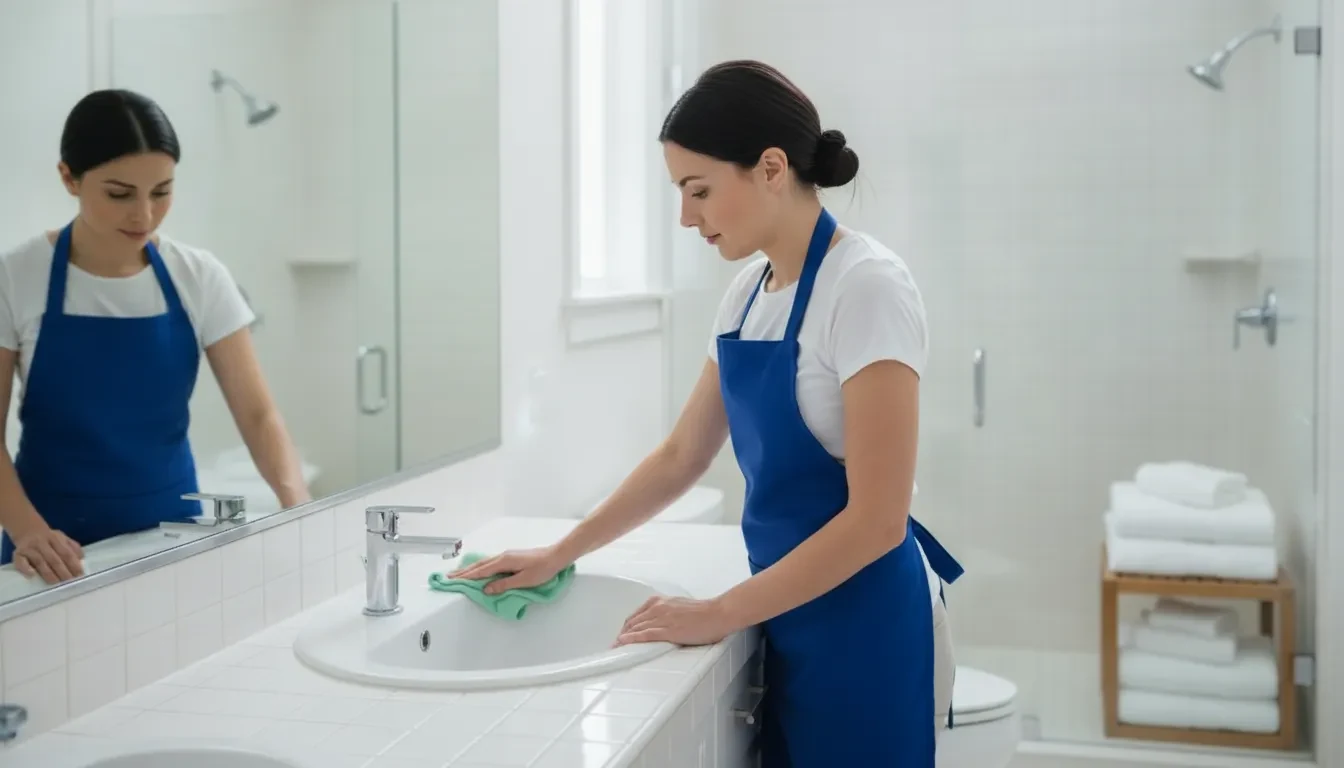
Bathroom cleaning is easier and safer when you work in a consistent order instead of moving randomly between surfaces. Clear the room, improve ventilation, and gather the right tools before you start. Then work from higher surfaces to lower ones, giving cleaner areas attention before floors and the toilet base.
To understand how to clean bathroom surfaces effectively, use a top-to-bottom routine: prepare the space, follow each product label. Clean fixtures and wet areas, finish with the toilet and floor, then dry the room well. This approach helps prevent drips from re-soiling surfaces and makes it easier to notice moisture or maintenance problems.
The best results come from matching your method to each material and allowing enough time for careful wiping, rinsing, and drying. Start by preparing the room and setting a few simple product-safety rules.
- Clear loose items and improve ventilation.
- Dust and clean higher surfaces first.
- Pre-treat and clean the sink, shower, and tub.
- Clean the toilet with separate tools.
- Finish with the floor, then dry the room.
Request a quote for professional bathroom cleaning
What to Do Before You Clean a Bathroom
Preparation makes bathroom cleaning more efficient and helps you work safely. Start by removing towels, bath mats, toiletries, trash, and anything stored on the counter or floor. Put washable items in the laundry and move personal products outside the room while you clean. Clearing the space lets you reach the areas behind and around fixtures instead of wiping only the visible surfaces.
Gather the tools you will use before opening any products. A practical kit can include a mop, bucket, toilet brush, sponge, and clean cloths. Use separate cloths or sponges for the toilet and the rest of the bathroom to avoid carrying soil from one area to another. Add a vacuum or broom if the floor has loose hair and dust. Check labels to confirm that each product is suitable for the surface you plan to clean, especially if the bathroom includes natural stone, delicate finishes, or specialty fixtures.
Ventilate before using cleaning products
Turn on the exhaust fan and confirm that it vents outdoors rather than into an attic or another enclosed space. If conditions allow, open a window or door for additional airflow. Showers add moisture to indoor air, and airing out the room after a steamy shower can help reduce grime buildup. If you notice a leak around a sink, tub, or pipe, address it rather than repeatedly cleaning the same damp area. Water leaks can create conditions where biological pollutants grow. The EPA’s moisture-control guidance provides additional background.
Set clear product-safety rules
Read and follow every product label, including directions for use, surface compatibility, ventilation, and any required protective equipment. Some products call for gloves or eye protection. Keep bottles closed and stored away from children and pets while you work, and never leave an open container unattended.
Never mix bleach or any disinfectant with another cleaner or disinfectant. In particular, bleach combined with ammonia or an acid can produce toxic fumes that are dangerous to breathe. Use one product at a time, rinse or wipe as the label directs, and do not improvise chemical recipes. In many everyday situations, cleaning with soap, water, and scrubbing removes most germs from surfaces. Disinfecting may be unnecessary unless someone at home is sick or has recently visited while sick. Wash your hands after cleaning or disinfecting.
How to Clean Bathroom Surfaces From Top to Bottom
Cleaning from the highest surfaces downward keeps dust and loosened residue from falling onto areas you have already finished. Start with the exhaust vent and light fixtures. Turn off the light before wiping around the fixture, use a lightly damp cloth rather than spraying liquid overhead, and make sure surfaces are dry before restoring power. Dust the vent cover and surrounding ceiling area, then check that the exhaust fan sends moisture outside instead of into an attic. Showers add moisture to indoor air, while ventilation can help limit grime buildup after bathing. The EPA’s moisture-control guidance recommends using bathroom exhaust fans to remove moisture outdoors.
Next, clean the mirror with a glass cleaner and a clean cloth, working in side-to-side strokes. Use enough product to lift fingerprints and film without soaking the mirror’s edges. Move to the counter, clearing away toiletries so you can wipe the full surface, including the backsplash and corners. Choose a product that is appropriate for the counter material, and follow its label rather than assuming every cleaner is safe for every finish.
For the sink, rinse the basin with hot water first to loosen soap, dirt, and grime. Clean both the inside and outside of the basin, then wipe the faucet, handles, drain area, and backsplash. A cloth or sponge can remove toothpaste marks. Pay attention to the faucet base and seams where residue collects. Light wipe-downs every few days help prevent buildup, while a deeper clean is useful when the drain looks dirty or hard-water scale appears.
Finish this pass with high-touch points: cabinet pulls, drawer handles, door handles, light switches, and the toilet-handle area. Apply cleaner to a cloth when working near switches, never spray directly into electrical components. Clean toothbrush holders and other countertop organizers after removing their contents. For routine cleaning, soap and water remove most germs from surfaces in many situations, according to the CDC’s cleaning guidance. If disinfecting is appropriate because someone is sick, clean first and follow the product label. Never mix bleach or disinfectants with other cleaners, and ventilate the room while using them.
For a detailed room-by-room approach beyond routine upkeep, use this whole-home deep cleaning guide.
How to Clean a Shower and Tub Without Scratching Surfaces
Start by removing bottles, mats, and loose debris so you can see the entire shower or tub. Rinse the surfaces with warm water to loosen soap residue, then apply a cleaner that is labeled for the specific material. A product intended for ceramic tile may not be appropriate for acrylic, fiberglass, natural stone, or a refinished tub. When in doubt, check the manufacturer’s care instructions and test the cleaner in a small, inconspicuous area first.
Pre-treat tile and grout gently
Apply the product evenly to the tile walls and tub, following the label’s directions for how long it should remain on the surface. One bathroom-cleaning guide recommends a short 15- to 20-second dwell before wiping, but the product label should always take priority. Letting the cleaner loosen the residue reduces the need for forceful scrubbing. Use a soft microfiber cloth, non-scratch sponge, or soft-bristled brush suited to the surface. Avoid abrasive powders, steel wool, rough scouring pads, and stiff brushes that can dull finishes or leave scratches.
Work across the tile in manageable sections. Give grout lines extra attention with a soft brush, but do not assume every grout or sealant can tolerate the same product. Natural stone and some specialty finishes can be damaged by acidic or highly abrasive cleaners, so material guidance matters. Do not combine products, especially bleach with another cleaner or disinfectant. Mixing them can release dangerous vapors. Ventilate the room and use gloves or eye protection when the label calls for it.
Clean fixtures, then rinse and dry
Wipe showerheads, handles, faucets, and other fixtures with a clean, soft cloth. Avoid letting strong cleaner dry on metal or coated finishes. Rinse thoroughly when the label directs you to rinse, or wipe with a clean damp cloth when that is the appropriate method for the material. Remove remaining product and loosened residue from corners, ledges, seams, and around the drain. A second pass with a dry microfiber cloth helps limit water spots and leaves less moisture behind.
Moisture control is part of protecting the room. Showers add moisture to indoor air, so run the exhaust fan or open a window after a steamy shower. The EPA recommends that exhaust fans remove moisture to the outside, not into an attic. Letting the bathroom air out after each shower can also reduce grime buildup. Inspect caulk, plumbing connections, and the area around the tub for leaks, since persistent moisture around tubs and sinks can create conditions where biological pollutants grow.
When buildup has spread into hard-to-reach areas, floors, or baseboards, an Alpharetta deep cleaning service can provide a more intensive, material-aware clean without relying on aggressive scrubbing.
How to Clean the Toilet Carefully
Toilet cleaning is easier and more hygienic when you work from the less dirty areas toward the bowl and floor. Start by opening a window or running the exhaust fan. Gather a toilet brush, toilet cleaner, disposable or washable gloves, and separate cloths for the toilet exterior and nearby floor. Do not use the same cloth or sponge on the toilet and sink.
Clean the exterior before the bowl
Apply an appropriate bathroom cleaner to a cloth rather than overspraying near buttons, seams, or electrical fixtures. Wipe the tank, lid, sides, front, and the area behind the toilet. Then clean the top and underside of the seat, followed by the hinges. The flush handle deserves careful attention because it is touched frequently. Use a fresh part of the cloth as you move from cleaner surfaces to areas more likely to collect residue. Toilet cleaning guidance also recommends wiping the exterior, underside of the seat, and space behind the toilet while bowl cleaner works. But keeping those tools separate prevents you from spreading soil to other bathroom surfaces. See the surface-by-surface toilet cleaning guidance.
Work inside the bowl, then finish the base
Follow the toilet product label, applying cleaner beneath the rim and around the bowl as directed. Let it sit only for the label-specified time, then scrub with the toilet brush, paying attention to the waterline and underside of the rim. Flush according to the product directions, and rinse or store the brush safely. Finish by wiping the toilet base, the floor immediately around it, and the wall or trim behind it with a dedicated cloth. Clean from the outer edge toward the area closest to the base, then launder or discard the tool as appropriate.
Use products safely
Routine cleaning with soap and water removes most germs from surfaces in many situations, so disinfecting is not always necessary. If disinfection is appropriate, clean visible soil first and follow the product label for dilution, contact time, and protective equipment. Never mix bleach with ammonia, acids, or any other cleaner because dangerous vapors can result. Keep products away from children and pets, maintain ventilation, and wash your hands after cleaning. If a product label conflicts with a general tip, the label controls.
How to Clean Bathroom Floors and Control Moisture
Bathroom floors collect hair, dust, splashes, and residue from every other surface in the room. A careful sequence keeps you from spreading that debris and helps the floor dry properly.
Remove dry debris before mopping
Start by moving the bath mat, wastebasket, and other loose items out of the way. Sweep or vacuum the entire floor, including around the toilet base, behind the door, and along the edges of cabinets. Dry removal matters because wet debris can turn into a paste that is harder to lift and easier to push into grout lines.
Use a soft brush or vacuum attachment along baseboards and corners. If the baseboards have visible dust or buildup, wipe them with a suitable damp cloth after the loose debris is gone. Check the flooring manufacturer’s guidance before using a cleaner, especially on natural stone, unsealed grout, or other surfaces that may require a specific product.
Mop toward the door and leave the floor dry
Prepare the cleaning solution according to its label and avoid using more product than directed. Begin at the farthest point from the door, then work toward the exit with overlapping side-to-side passes. This sequence follows a commonly recommended bathroom-mopping method and keeps you from walking across freshly cleaned areas while you work. Lysol recommends starting at the point farthest from the door.
Change or rinse the mop as needed rather than redistributing dirty water. Pay extra attention to the area around the toilet, the vanity toe-kick, and the shower or tub entrance. Do not leave standing water on the floor. Use a clean, dry cloth for small puddles and allow the surface to dry before replacing rugs or returning items to the room.
Control humidity and investigate leaks
Ventilation is part of bathroom cleaning, not an afterthought. Run the exhaust fan while bathing or showering, or open a window when practical. After a steamy shower, keep the fan running or the window open for at least 20 minutes, as recommended by Wirecutter’s bathroom-cleaning guidance. Keep the bathroom door positioned as appropriate for airflow, while still following household safety and privacy needs.
Look for damp spots that return after cleaning, water collecting beneath the vanity, loose caulk, or staining near the toilet and tub. Persistent moisture may indicate a leak or a failed seal. Stop cleaning the affected area, protect nearby belongings, and contact a qualified plumber or property manager for inspection rather than covering the problem with more cleaner.
If floor residue, baseboard buildup, or hard-to-reach grime remains after routine cleaning, a more intensive service may be appropriate. Clear Choice includes bathrooms, floors, and baseboards in its deep-cleaning service for customers who need help beyond regular upkeep.
When a Bathroom Needs Routine Cleaning or a Deep Clean
Most bathrooms benefit from light, regular attention before grime becomes difficult to remove. A practical rhythm depends on how many people use the room, how well it dries, and how quickly soap residue, hair, dust, or water spots return. A quick wipe of the sink, faucet, toilet touchpoints, and visible splashes every few days can help maintain the room between more thorough cleanings. A broader routine clean may fit weekly, bi-weekly, or monthly needs, depending on the household and the condition of the space.
Look beyond the calendar when deciding what the room needs. Routine cleaning is usually appropriate when surfaces have ordinary dust, fresh water spots, light soap residue, and manageable floor debris. It should cover the bathroom fixtures, sink, toilet, shower or tub, mirrors, high-touch surfaces, and floor. Clear Choice includes bathroom cleaning and sanitizing in its standard cleaning service, which can be scheduled one time or on a recurring basis.
A deep clean makes more sense when buildup remains after ordinary wiping or when neglected areas begin affecting the overall condition of the room. Signs include a dull or sticky film on tile, heavy soap scum, or scale around faucets and drains. Other signs include darkened grout, dust along baseboards, grime behind or beneath fixtures, and residue in hard-to-reach corners. Persistent moisture, musty conditions, or a slow leak also deserve attention beyond surface cleaning. Fix plumbing problems separately, since cleaning alone will not resolve the source of moisture.
Deep cleaning should expand the scope rather than simply repeat the routine. In addition to standard bathroom surfaces, it can address floors, baseboards, edges, corners, and hard-to-reach areas where built-up dust, dirt, and grime collect. Review the Alpharetta deep cleaning service when the room needs that more intensive level of detail.
| Routine cleaning | Deep cleaning |
|---|---|
| Fresh splashes, light residue, fixtures, and floors. | Built-up grime, baseboards, corners, and hard-to-reach areas. |
| Useful for regular one-time or recurring upkeep. | Useful when ordinary wiping no longer restores the room. |
There is no need to wait for a bathroom to look severely neglected. If routine upkeep no longer keeps pace with use, a one-time deep clean can reset the space, followed by a maintenance cadence that fits your household. Clear Choice brings its cleaning supplies and equipment, and uses eco-friendly products and proven cleaning methods. The company serves Alpharetta and nearby North Metro Atlanta communities. For ongoing upkeep, explore the standard cleaning service and choose the option that matches the bathroom’s actual condition.
Request a quote for bathroom and whole-home cleaning
Frequently Asked Questions
What is the best cleaning solution for bathrooms?
The best solution depends on the surface and the product label. Choose a cleaner made for the material, use only the recommended amount, and ventilate the room while working. Never combine bleach with ammonia, acids, or other cleaners. If you prefer a greener option, look for products carrying the EPA Safer Choice label, which indicates that the product and its ingredients meet the program’s requirements.
What do professionals use to clean bathrooms?
Professionals use surface-appropriate products, microfiber cloths, brushes, a toilet brush, and equipment that helps them work methodically from cleaner areas toward more heavily soiled ones. At Clear Choice, the team brings its own cleaning supplies and equipment, including eco-friendly products and proven cleaning methods. Bathroom cleaning and sanitizing are included in the company’s house-cleaning services.
Is Dawn dish soap a good bathroom cleaner?
A small amount of dish soap can help loosen light soap residue on some compatible, washable surfaces, but it is not a universal bathroom cleaner or disinfectant. Check the surface manufacturer’s guidance first, rinse away residue, and avoid using an improvised mixture with other products. For stone, specialty finishes, or heavy buildup, choose a product specifically labeled for that material.
What is the 20 minute rule of cleaning?
In bathroom routines, the phrase often refers to keeping ventilation running after a steamy shower. One published cleaning guide recommends turning on the overhead fan or opening a window for at least 20 minutes afterward. This supports moisture control, but it does not replace wiping wet surfaces, repairing leaks, or following product directions.
When should you schedule a deep bathroom clean?
Schedule deeper attention when grime, hard-water residue, baseboard dust, or hard-to-reach buildup remains after routine cleaning. Clear Choice deep cleaning covers bathrooms, floors, baseboards, hard-to-reach areas, and built-up dust, dirt, and grime. Routine standard cleaning may be scheduled one-time or recurring, depending on your household’s needs.
Get Started With a Cleaner Bathroom
If bathroom buildup keeps returning or the room needs more attention than routine upkeep can provide, professional help can make the work more manageable. Clear Choice Home Cleaning Services LLC provides quote-based bathroom and whole-home cleaning, bringing the needed cleaning supplies and equipment for homes across North Metro Atlanta. Request a quote through the contact form to discuss the cleaning support your home needs.