
Dining-room cleaning: A Practical Homeowner Answer to How to Clean a Dining Room
Published · Clear Choice Home Cleaning Services
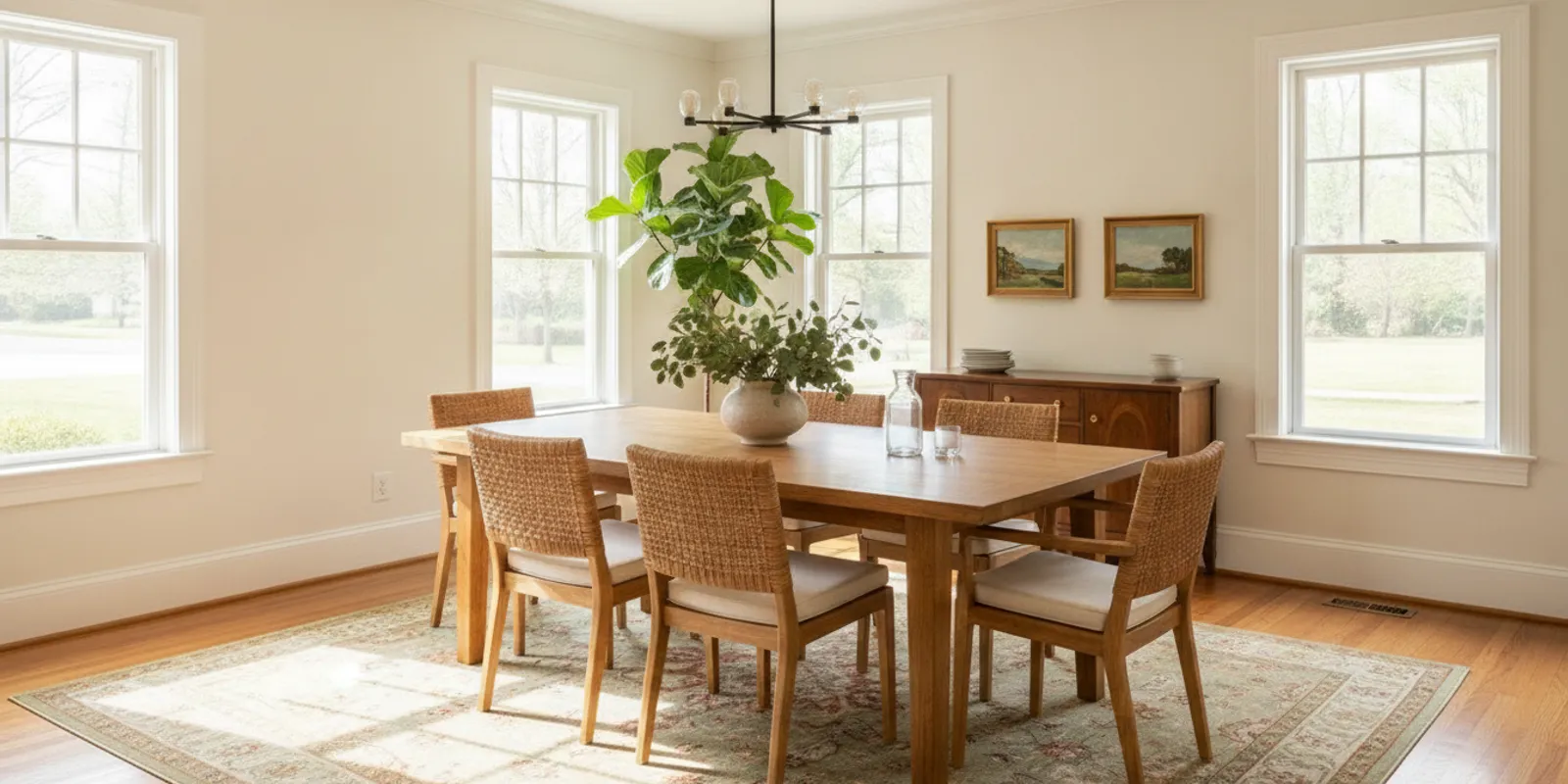
Knowing how to clean a dining room well means more than wiping the table. Crumbs settle under chair legs, fingerprints collect on chair backs, and dust gathers on shelves and trim. A steady routine helps keep the room comfortable for everyday meals and ready for guests, while protecting the surfaces you use.
What should you check before cleaning the dining room?
Look at the room and identify the materials before choosing a cloth or cleaner. A sealed wood table, a glass top, a stone surface, and upholstered chairs need different care. Check the maker's instructions when you have them, especially for antique, lacquered, or unfamiliar finishes. If you are not sure whether a product is suitable, test it in a small, hidden area and let that spot dry before continuing.
Notice where the mess is concentrated. A room used for family meals may have food on the table edge and floor beneath the chairs. A dining area used occasionally may have more dust on the sideboard, frames, and light fixtures. If sticky spots or spills are present, deal with them using a method suited to that material rather than scrubbing harder with a general-purpose product.
- Gather a soft microfiber cloth, a dry duster, a vacuum or broom, and a mild cleaner labeled for the surfaces you will clean.
- Set out separate cloths for food-contact surfaces and dusty or grimy areas; replace or rinse them when they become soiled.
- Clear plates, placemats, and decorative objects so the full surface is accessible.
- Move chairs gently and keep cleaning products away from children and pets. Follow each product's label.
- Use only a safe, stable step stool for reachable high areas. Do not balance on a chair to dust a fixture.
A clean, dry cloth is often enough for routine dust. The least aggressive method that removes the soil is usually the sensible starting point. For a broader room reset, the same top-to-bottom approach used in a deep cleaning can help you remember edges and details that a quick wipe misses.
How do you clean a dining room step by step?
Work from high surfaces down to the floor. That way, dust and crumbs that fall as you clean will not land on an area you have already finished. Divide the room into zones—high surfaces, furniture, touchpoints, and floor—so you can work in a useful order without repeatedly moving supplies.
- Put away dishes and loose items. Clear the table, sideboard, and window ledges. Shake crumbs into the trash or collect them with a dustpan rather than sweeping them onto the floor. Move only the objects needed to reach each surface.
- Dust high, fixed surfaces first. Dust reachable light fixtures, picture frames, shelves, and the tops of furniture. Use a dry duster or a soft cloth that will not snag. Work from the top down, and leave difficult or unsafe high areas for someone with the right equipment.
- Wipe the table and sideboard. Use a clean cloth and a surface-appropriate product. On finished wood, wipe with the grain and avoid leaving moisture behind. On glass, use a glass-suitable cleaner and a lint-free cloth. Wipe edges and the underside of the table lip where hands and food can leave residue.
- Clean chair backs, seats, and legs. Wipe hard frames, rungs, and the areas people grasp. Vacuum upholstered seats and crevices with an upholstery attachment. Follow the fabric care label for any spot treatment; avoid soaking cushions or forcing debris deeper into seams.
- Wipe nearby touchpoints. Clean cabinet pulls, door handles, and light switches with a cloth lightly dampened with an appropriate cleaner. Do not spray directly onto switches or delicate finishes. Give the cloth a fresh section as it picks up grease or dust.
- Clean the floor last. Pull chairs back carefully and vacuum or sweep underneath the table and around each leg. Then use a floor-safe method for the flooring material. Move furniture only as far as you can without strain or scraping, and let damp areas dry before putting chairs back.
For wood furniture beyond the dining table, use the same material-first approach and refer to this guide to cleaning wood furniture safely. The grain, finish, and care directions matter more than using a strong product.
Does the cleaning method change by table material?
Yes. A cleaner that works on one surface may dull, scratch, or otherwise harm another. When care instructions are available, use them. The table below is a starting point for routine care, not a substitute for the manufacturer's guidance.
| Surface | Routine approach | Use care with |
|---|---|---|
| Finished wood | Dust with a soft cloth; wipe spills promptly with a lightly damp cloth and dry. | Standing water, abrasive pads, and products not intended for the finish. |
| Glass | Use a glass-appropriate cleaner and lint-free cloth; check the edges for residue. | Rough cloths that may scratch and spray that can run into wood joints. |
| Stone | Choose a cleaner specifically labeled as suitable for the particular stone. | Acidic or abrasive products unless the stone-care instructions allow them. |
| Upholstery | Vacuum crumbs and follow the fabric care label for spot cleaning. | Soaking the fabric or applying an untested cleaner. |
| Painted or laminate surfaces | Use a soft cloth and a mild product confirmed as suitable; dry as directed. | Scouring pads, excess moisture at seams, and strong solvents. |
Do not assume that a product is safe just because it is described as gentle or all-purpose. Check the label and the furniture guidance. For a valuable, antique, or already damaged table, stop if a test spot changes the finish. A furniture-care professional may be a better choice than experimenting with household chemicals.
How do you handle common dining-room messes?
Greasy fingerprints: Put a small amount of a suitable cleaner on a cloth rather than saturating the table. Wipe gently, then dry if the surface instructions call for it. Repeat with a clean section of cloth instead of scrubbing hard.
Dried food: If the material permits, hold a slightly damp cloth over the residue briefly to soften it. Lift the food gently when it loosens. Do not pry with a knife or other sharp object; it can gouge a finish or scratch a tabletop.
Crumbs in chair seams: Use a vacuum crevice tool or upholstery attachment at a suitable setting. Work along the seam and guide loose crumbs toward the vacuum opening. A soft brush can loosen debris first, but avoid pushing it further into the fabric.
Sticky floor spots: Choose a floor-safe method and use only as much moisture as needed. Follow the flooring care instructions and dry the area when appropriate so it is not slippery. Never combine cleaning products; mixing them can create dangerous fumes.
Dust on chair rungs and table supports: Turn a cloth around each rung and wipe along its length. For narrow joints, use a soft brush or vacuum attachment rather than forcing a sharp tool into the gap. Finish by checking the floor directly below the support, where dust often gathers.
What should you avoid when cleaning?
- Do not mix products, particularly bleach with ammonia or acids.
- Do not use one dirty cloth across the whole room. A soiled cloth can spread grease and crumbs instead of removing them.
- Do not let water sit on wood, seams, or upholstery. Use limited moisture and dry as the care instructions recommend.
- Do not use abrasive scrubbers on delicate finishes or treat every surface as if it were the same material.
- Do not spray cleaners directly onto electrical switches, decorative details, or table edges where liquid can run into joints.
- Do not skip the undersides of chair seats, table supports, and the floor beneath furniture.
A university residential dining cleaning protocol describes using a posted checklist that is signed when regular-frequency cleaning is completed. That is a useful reminder that a simple checklist can make recurring tasks easier to track and less likely to overlook: CSULB Residential Dining Cleaning Protocol.
How often should you clean the dining room?
Wipe food and drink spills as they happen, since dried residue can take more effort to remove and may attract more debris. After meals, clear dishes and remove visible crumbs from the tabletop and floor. Dust and wipe furniture as needed. A household that eats in the room every day will likely need more frequent attention than one that uses the space only for occasional meals.
A practical schedule can separate quick resets from detail work:
- After meals: Clear dishes, wipe food-contact areas, and pick up visible spills or crumbs.
- Weekly, or as needed: Dust furniture, clean chair seats and touchpoints, and vacuum or sweep beneath the table.
- Periodically: Reach trim, chair rungs, cabinet tops, and less-used corners. Check whether any furniture care instructions call for specific upkeep.
Adjust the rhythm to the way the room is used. Children, pets, frequent guests, or a dining table that also serves as a work surface can mean more crumbs and fingerprints. If the room sees little use, a quick visual check may be enough between more complete cleanings. The goal is a routine you can repeat, not a rigid calendar that ignores actual conditions.
What changes in apartments, offices, or property turnovers?
The basic order stays the same, but the checklist should reflect who uses the room and what needs to happen next. In an apartment, check the table, chair legs, floor edges, and any shared dining nook without moving heavy furniture. Renters can also confirm which areas are part of their cleaning responsibility before a move. Learn more about apartment cleaning if the dining area is part of a larger home-cleaning need.
In an office or shared break area, pay extra attention to handles, switches, chair backs, and the surfaces where people eat. Remove food debris promptly and use products according to their labels, especially in a space used by many people. A manager planning regular upkeep can review office and workspace cleaning as a separate service option rather than treating a shared room like a private dining room.
For a property that is being prepared for showings or a new occupant, the dining room may be one part of a wider turnover checklist. In that case, consider the whole property's needs, including dust on trim, floors, and nearby rooms. Real-estate professionals and property managers can learn about real-estate cleaning when a property needs more than routine table and floor care.
When is a larger cleaning job worth considering?
Routine care is usually enough for everyday dust and meal messes. A broader cleaning may make sense when the dining room is part of a whole-home reset, a move, a property turnover, or preparation before listing a home. Look at the work across the home: if dust and grime have collected in several rooms, cleaning only the dining table will not address the larger task.
Clear Choice Home Cleaning Services LLC is a locally and veteran-owned company based in Alpharetta, serving Metro Atlanta. The company handles residential and commercial cleaning. Michael A. Jones is the owner and is personally involved in customer follow-up. To compare options for a larger job, review the company's cleaning services and use the estimate request to describe the property, the areas involved, and whether the need is one-time or recurring. The team can then discuss an appropriate quote; the article does not set a fixed service price.
For answers about arranging service, the cleaning services FAQ is another place to start. You can also contact Clear Choice with questions about a residential or commercial cleaning need.
Call (470) 622-8884 to request an estimate
Frequently asked questions
Can I use an all-purpose cleaner on a dining table?
Only if the product label and the table's care guidance say it is suitable. Test it in a hidden spot, apply it to a cloth rather than spraying directly, and avoid leaving moisture on the surface.
How do I clean between dining-chair slats?
Use a soft brush or cloth to loosen dust and crumbs, then vacuum or wipe them away. Work from the top of the chair down and avoid forcing a hard tool into narrow joints.
Should I clean the floor before or after the furniture?
Clean the floor after dusting and wiping the furniture. Debris falls as you work, so saving the floor for last reduces the chance that you will need to repeat it.
What if the dining room has not been cleaned in a while?
Break the work into zones: high surfaces, furniture, touchpoints, and floor. Start with dry debris, then address spots with surface-appropriate methods. If the job extends to several rooms or a property turnover, request an estimate for the broader cleaning need.
Choose a manageable next step
A consistent top-to-bottom routine keeps the dining room more comfortable and makes deeper cleaning less daunting. For a quote-based cleaning question, call Clear Choice Home Cleaning Services LLC at (470) 622-8884 or use the online estimate request.