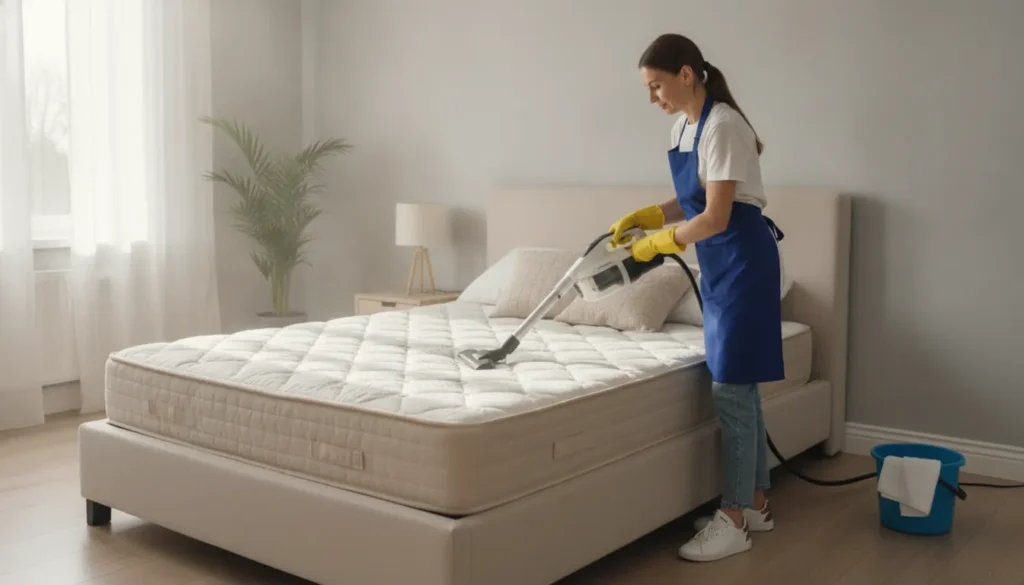
A mattress can look clean while holding dust, skin flakes, and everyday odors, so a careful routine matters more than a quick spray. For North Metro Atlanta homeowners, the safest approach is to work in stages: remove the bedding. Vacuum thoroughly, treat spots lightly, deodorize when appropriate, and let the mattress dry fully before making the bed.
To learn how to clean a mattress safely, start by checking its care label and the manufacturer’s instructions. Use only a small amount of moisture that the material allows, avoid soaking the mattress, and do not apply heat unless the guidance confirms it is suitable.
Request a cleaning quote from Clear Choice Home Cleaning Services
The right method depends on the mattress construction and the type of soil or stain involved. Before choosing products or tools, take a moment to understand those limits and set up a well-ventilated space.
What to Know Before You Clean a Mattress
Before you begin, identify the mattress material and read its care label. The label and manufacturer guidance should determine whether you can use moisture, which products are appropriate, and how the mattress should dry. A method that works for one mattress may damage another, so avoid treating mattress cleaning as a one-size-fits-all chore.
Start with the care label
Memory foam, latex, pillow-top, and innerspring mattresses can have different covers, padding, and internal construction. Memory foam and latex may be especially sensitive to excess moisture or heat, while a pillow-top may hold liquid in its added layers. An innerspring mattress still has fabric and padding that require careful handling. These distinctions do not replace the manufacturer’s instructions, but they explain why you should not automatically use the same spray, steamer, or drying method on every bed.
If the label is missing, look for the manufacturer’s care instructions before applying a cleaning solution. Test any approved product on a small, inconspicuous area first. Use only enough moisture to address the spot, and blot rather than saturate the fabric. Never soak the mattress, and do not apply heat unless the care guidance specifically permits it.
Plan for moisture and ventilation
Remove all bedding and create a clear, well-ventilated area before cleaning. Open the room to moving air when practical, and leave the mattress uncovered while any treated area dries. Do not replace sheets or blankets until the mattress is fully dry. Trapped moisture can create a larger problem than the original stain, particularly when padding holds water below the surface.
For the same reason, avoid relying on a disinfectant simply because a label says it works on hard surfaces. Upholstered materials and mattress padding are not the same as sealed counters or other hard surfaces. If a mattress has been exposed to flooding or a large amount of water, stop before attempting a routine DIY cleaning. Flood-damaged padding can retain water and allow mildew to grow inside and outside the material. That situation calls for product-specific assessment rather than a standard spray-and-wipe approach.
Know when to pause the DIY approach
Pause and seek guidance when the care instructions are unavailable, the mattress has extensive staining, the material remains damp, or the mattress has flood or sewage exposure. You should also be cautious when a stain has penetrated deeply or when a cleaning method could affect a warranty. A careful decision at the start is better than trying to correct shrinkage, discoloration, trapped moisture, or an odor that has moved into the padding.
For ordinary upkeep, begin with dry methods and follow the label’s limits. Vacuuming and careful spot treatment can be part of a broader bedroom routine. Clear Choice’s house cleaning service includes bedroom cleaning and general vacuuming, but specialized mattress treatment should never be assumed unless it is specifically confirmed.
How to Clean a Mattress Step by Step
- Read the care label and prepare the room. Before you learn how to clean a mattress, check its care label and the manufacturer’s instructions. Mattress covers, foams, fibers, and finishes can respond differently to moisture and cleaning products, so do not assume one method fits every material. Remove pillows, blankets, sheets, and any mattress protector. Wash the bedding according to its own care instructions, then create a well-ventilated work area. Open a window when practical and leave enough room to work around the mattress. Gather a vacuum with an upholstery attachment, clean cloths, and only a cleaning solution that the care guidance permits. This preparation follows the same basic sequence recommended in mattress-cleaning guidance from Consumer Reports.
- Vacuum the entire surface. Start at the top and work methodically toward the foot of the mattress. Use slow overlapping passes across the top, then vacuum the sides, seams, edges, and other places where dust and debris collect. Avoid pressing so hard that you damage the fabric or force debris deeper into a seam. If the mattress can be repositioned safely, vacuum the accessible sides as well. This step removes loose material before any spot treatment is applied. For related guidance on careful vacuuming and spot treatment around the home, see this safe vacuuming and spot treatment guide.
- Identify stains and choose a cautious spot treatment. Look over the surface in good light and address visible spots individually rather than wetting the whole mattress. Use an appropriate solution for the stain and the material, following the manufacturer’s directions. A mild dish-detergent solution is one example cited for some dirt or grass stains, but it is not a universal mattress cleaner. If you use any product, test it first in a small, inconspicuous area. Keep the application light. Never soak the mattress, and do not use heat unless the care instructions specifically allow it.
- Blot instead of scrubbing or saturating. Apply the smallest amount of approved solution needed to the cloth or affected area, then work gently. Re-dab the spot with a clean cloth or kitchen roll to lift the stain and remove excess moisture. Rubbing aggressively can spread a mark or disturb the surface fabric. If the product instructions call for dwell time, follow that direction without letting the area become saturated. A treated area may need at least 15 to 30 minutes, or longer when the instructions require it, before the next step. Keep children and pets away from the mattress while it is being treated.
- Deodorize only when the material and care guidance permit it. For a compatible mattress, a light layer of baking soda can be used across the surface to address everyday odors. Consumer Reports describes spreading baking soda over the mattress and leaving it in place for up to 24 hours for best results. Treat that timing as source-specific guidance, not a rule for every mattress. Do not add powder if the care label warns against it or if removing it could harm the cover. Once the permitted time has passed, vacuum slowly and thoroughly until no visible residue remains.
- Ventilate the mattress and remove remaining moisture. Leave the mattress uncovered in a clean, well-ventilated room. Pulling back a duvet for about 20 minutes in the morning can also help the surface air out from overnight moisture. After spot treatment, continue ventilation until the treated areas feel fully dry. Do not replace bedding simply because the surface looks dry. Moisture trapped inside padding can create a separate problem, especially when the mattress has been over-wetted. If the mattress has substantial water damage, mold, or a persistent odor, stop and seek material-specific guidance instead of adding more product.
- Replace clean bedding only after the mattress is completely dry. Check the seams and treated areas by touch before making the bed. When everything is fully dry, put on the clean, dry bedding and mattress protector permitted by the manufacturer. Keep the room ventilated while the bed is remade, and dispose of used cloths or wash them according to their care instructions. The finished process should leave the mattress vacuumed, cautiously spot-treated, deodorized when appropriate, and fully dry, without relying on soaking, unconfirmed heat, or unsupported sanitizing claims.
How Do You Remove Common Mattress Stains and Odors?
The safest way to handle a mattress stain is to treat the smallest practical area. Use as little moisture as possible, and follow the care label before applying any recipe. A method that works on a removable cover may not be appropriate for memory foam, latex, a pillow-top, or another sensitive material. Test a solution in an inconspicuous spot first, and stop if the fabric, color, or texture changes.
Sweat and general body-odor buildup
For light sweat marks or everyday odor, begin by vacuuming the dry surface with an upholstery attachment. This removes loose debris before you introduce moisture. For odor control, a light layer of baking soda can be spread across the surface. Provided the care instructions allow it and the powder will not enter an exposed mechanism or damaged cover. Consumer Reports recommends leaving baking soda in place for up to 24 hours for best results, then vacuuming it thoroughly. This is a deodorizing step, not a substitute for treating a visible stain or cleaning a mattress that has absorbed a large amount of liquid.
Urine stains
Urine needs prompt spot treatment because liquid can travel into padding. First, check the label and identify whether the cover can be removed and washed separately. Blot the affected area with clean towels rather than rubbing or pressing liquid farther into the mattress. Apply only a small amount of a material-appropriate solution to the cloth or stain, not enough to saturate the padding. Re-dab with a clean, dry cloth to lift excess moisture. A treated spot may need to dwell for 15 to 30 minutes. Or longer when the product directions require it, but it should never remain wet without a drying plan.
Blood, dirt, and grass stains
Blood requires a separate, cautious approach from dirt or grass, and the care label should guide the choice of product. Avoid hot water unless the manufacturer specifically permits it, since heat can make some protein-based stains more difficult to remove. Use a small amount of an approved solution, work from the outside of the mark toward the center, and blot between applications.
For some dirt or grass stains, a cited Consumer Reports method uses one teaspoon of mild dish detergent in one cup of warm water. That ratio is not universally suitable for every mattress, so use it only when the material and care instructions permit it. Apply sparingly, then re-dab with a clean cloth or kitchen roll to remove excess moisture. Do not scrub aggressively, since friction can spread the mark or damage the cover.
The no-soaking and drying boundary
Do not soak a mattress. Padding can hold water below the surface, extending drying time and creating conditions for mildew. Instead, keep treatment localized, blot repeatedly, and provide ventilation. Leave bedding off until the treated area is fully dry. Fans can improve airflow, but do not apply a hair dryer, heating pad. Or other direct heat unless the manufacturer confirms that it is safe for the mattress material. If a stain has spread deeply, an odor returns after drying, or the mattress has been exposed to substantial liquid. Pause before adding more product and consider guidance from the manufacturer or a qualified cleaning professional.
These boundaries matter more than using a stronger recipe. Careful blotting, an appropriate dwell time, and complete drying are usually safer than repeated applications that leave the mattress damp.
How Mattress Material Changes the Cleaning Method
The right approach depends on what is inside and around the mattress. Before applying a product or moisture, read the care label and follow the manufacturer’s instructions. A method that is reasonable for a washable outer cover may be unsuitable for the underlying foam or upholstery. No mattress should be treated as automatically safe for every cleaning method, and soaking is not a safe default.
For any material, begin with dry steps when the label allows them. Remove the bedding, improve airflow, and use a suitable vacuum attachment to lift surface dust and debris. If a spot treatment is permitted, test a small, hidden area first. Apply as little moisture as possible, blot rather than scrub, and keep the mattress uncovered until the treated area is fully dry. Do not add heat unless the care guidance specifically allows it.
| Material or design | What to consider | Safer starting point |
|---|---|---|
| Memory foam | Foam can respond differently to moisture, pressure, and heat than a fabric surface. Avoid assuming that a liquid cleaner or steam method is approved. | Check the label, vacuum gently if permitted, and use a very limited, carefully tested spot treatment only when the instructions support it. |
| Latex | Latex mattresses can have material-specific care requirements. The cover, internal layer, and manufacturer’s instructions may not allow the same treatment. | Start with label-approved dry cleaning steps and ventilation. Stop if the care guidance does not clearly support a product or moisture. |
| Pillow-top | The added upholstered layer can hold moisture and may dry slowly. Deep saturation can reach padding that is difficult to inspect or ventilate. | Use minimal moisture for a permitted spot treatment, blot thoroughly, and leave ample airflow around the surface before replacing bedding. |
| Innerspring | The coils do not make the surrounding fabric and padding waterproof. A surface that feels dry may not show whether moisture reached deeper layers. | Follow the label, keep liquid controlled, and allow complete drying. Do not treat the spring structure as permission to soak the mattress. |
These distinctions matter most when a stain seems to require aggressive treatment. A small, fresh spot can sometimes be handled with a label-approved solution and careful blotting. But a large spill, repeated wetting, or strong odor calls for a more cautious decision. Ventilate the room and do not put sheets back on until the mattress is completely dry. Keeping the duvet pulled back for a while in the morning can also help air out overnight moisture.
Stop the do-it-yourself process if the mattress has been flooded, has visible mold or mildew, or has padding that stayed wet. Flood-damaged upholstered padding can retain water and support mildew growth inside and outside. Flood-related textiles also require an assessment before cleaning, including confirmation that the wash water is safe. In addition, many disinfectants are intended for hard surfaces rather than upholstered materials, so do not assume a household disinfectant will solve the problem. When the material or damage is uncertain, protect the mattress from further moisture and seek guidance before proceeding.
For broader bedroom upkeep, combine material-appropriate mattress care with careful dusting and vacuuming in the surrounding room. That keeps the cleaning plan practical without turning a mattress into a test surface for products that its manufacturer did not approve.
How Often Should You Clean and Maintain a Mattress?
Mattress care works best as a routine rather than a single intensive project. A general guideline is to vacuum and spot-clean the surface every three to six months, but that is not a universal rule. Your schedule may need to change if the mattress is used by children, someone with allergies, a person who sweats heavily, or a household with pets. Always follow the mattress care label and manufacturer instructions before applying moisture or a cleaning product.
Build simple maintenance into your bedding routine
When you change the sheets, take a moment to check for crumbs, dust, loose debris, stains, and unusual odors. Vacuum the mattress surface and seams with an upholstery attachment when the material and care instructions allow it. Use a light touch around quilting and stitching so you do not damage the cover. If you spot-clean an area, use as little moisture as possible, blot rather than scrub, and allow the mattress to dry completely before replacing the bedding. Never soak the mattress. Foam, latex, pillow-top, and innerspring designs can respond differently to moisture, cleaners, and heat.
Airflow is another low-effort habit. In the morning, pull the duvet or comforter back for about 20 minutes so overnight moisture can evaporate. Keep the room reasonably ventilated, especially after spot treatment. Do not apply heat unless the manufacturer confirms that it is appropriate for the mattress material.
Reduce dust mites and pet dander
Cleaning the mattress is only one part of keeping the sleep area fresh. Mayo Clinic recommends encasing mattresses and box springs in dust-mite-proof covers when allergy control is a concern. Wash sheets, pillowcases, and blankets at least weekly in water heated to at least 130 F (54 C), if the fabric care instructions permit it. You can review the Mayo Clinic bedding and dust-mite guidance for additional allergy-management context.
Pet dander also collects in bedrooms. Keeping furry pets out of the bedroom can reduce the amount that settles near the bed. And Mayo Clinic notes that bathing pets at least weekly may reduce allergens in the dander they shed. Vacuum nearby floors and upholstered surfaces regularly, using a small-particle or HEPA-filter vacuum where appropriate. For broader safer cleaning products, choose options that match both the surface and the manufacturer’s care instructions rather than assuming a product is suitable for every textile.
Know when the rest of the room needs attention
Sometimes the mattress is not the only source of buildup. Dust on baseboards, floors, bedroom furniture, and hard-to-reach areas can quickly return to a freshly maintained sleep space. Clear Choice Home Cleaning Services can help with surrounding bedrooms and living areas, including dusting and vacuuming, but this should not be read as a specialized mattress-cleaning service. For ongoing upkeep, compare deep cleaning versus standard cleaning based on the condition of the broader home. Standard cleaning may suit recurring maintenance, while a deeper service can make more sense when dust, dirt, grime, and neglected areas have built up. If you need help deciding what your home requires, you can request a cleaning quote for the surrounding household cleaning needs.
Request a cleaning quote for your North Metro Atlanta home
Frequently Asked Questions
What is the best thing to clean a mattress with?
Start with your mattress care label and manufacturer instructions. For routine cleaning, use a vacuum with an upholstery attachment, then spot-treat stains with only a small amount of an approved solution. Blot rather than scrub, avoid soaking the mattress, and let it dry fully before replacing the bedding.
How do you get yellow or brown stains out of a mattress?
Identify the stain first, then test any cleaning solution on a hidden area. Use a suitable spot-treatment method, apply minimal moisture, and re-dab with a clean cloth to lift excess liquid. Some discoloration may be permanent, especially when it has set into the fibers, so avoid aggressive scrubbing or heat unless the manufacturer permits it.
Can you use baking soda to clean a mattress?
Yes, baking soda can help deodorize a dry mattress. Spread a light layer across the surface, allow it to sit, and vacuum it thoroughly. Consumer Reports recommends leaving baking soda on the mattress for up to 24 hours for best results (Consumer Reports). Baking soda will not replace stain treatment, and it should not be used as a reason to add excess moisture.
How often should you clean a mattress?
Vacuum and spot-clean as needed, with general mattress maintenance often suggested every three to six months (Silentnight). Air the mattress when possible, wash bedding regularly, and address spills promptly. If the mattress has been heavily water-damaged, has persistent odors, or cannot dry completely, follow the manufacturer guidance before attempting further cleaning.
Get started with a cleaner home
If mattress care is part of a larger bedroom reset, Clear Choice Home Cleaning Services can help with standard or deep home cleaning across North Metro Atlanta. The team can discuss the areas you want addressed and the service that best fits your home. For questions, call (470) 622-8884. To request a quote or book a home cleaning service, contact Clear Choice Home Cleaning Services.