Kitchen Cleaning Supplies: What You Actually Need
Published · Updated · Clear Choice Home Cleaning Services
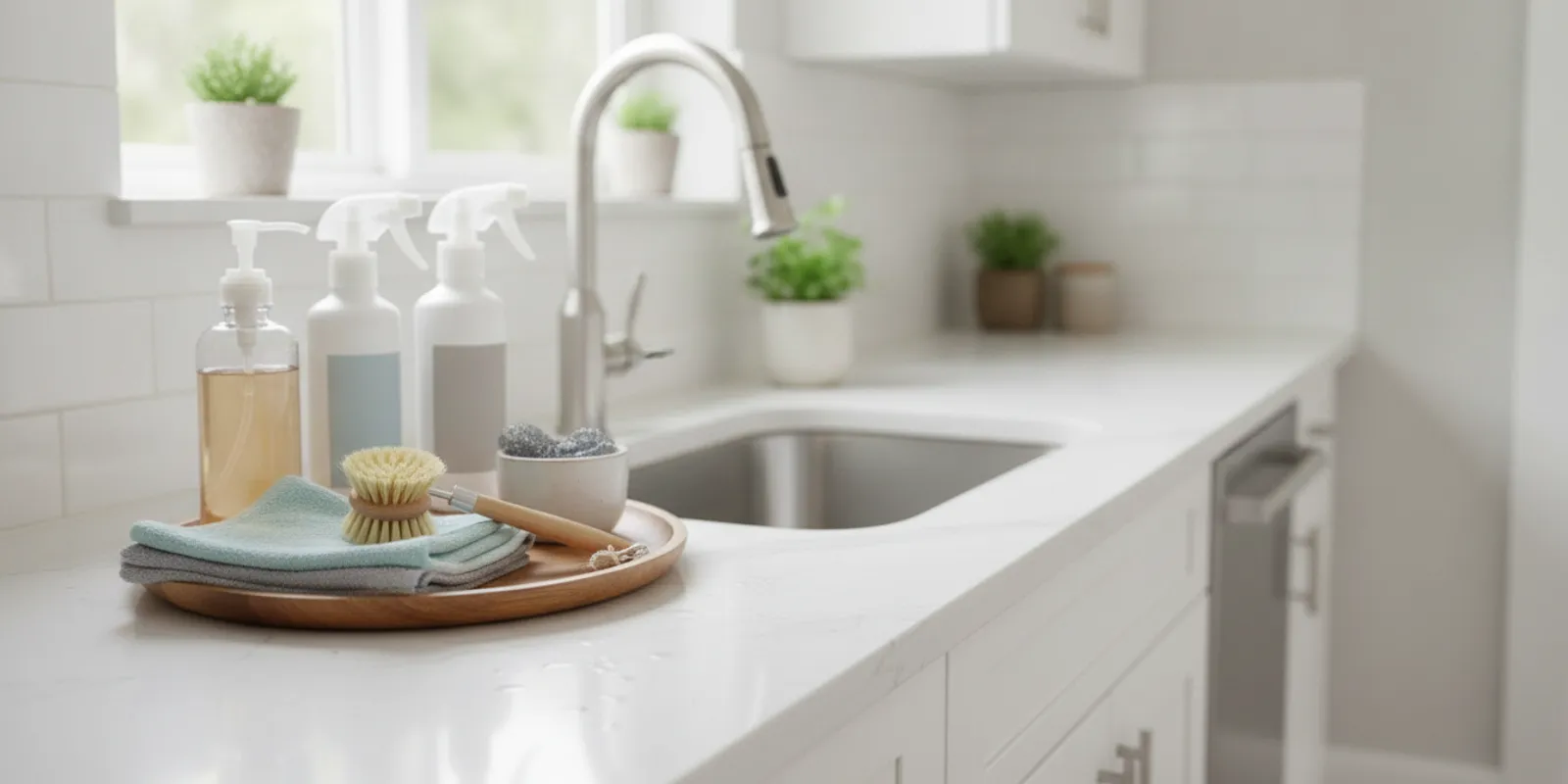
A useful collection of kitchen cleaning supplies does not need to fill a cabinet. A few basics can handle everyday crumbs, greasy splashes, dishes, and floor messes, while surface-specific products are best added only when your counters, cooktop, or floors need them. The key is to match the cleaner and tool to the job, follow product labels, and avoid mixing chemicals.
Request a kitchen cleaning quote
Which kitchen cleaning supplies do you need most?
Start with reusable tools and a small number of clearly labeled cleaners. You can add specialty products after checking the care instructions for the surface you want to clean. For many homes, this starter list covers normal upkeep:
- Microfiber cloths: Keep several clean cloths available. Use separate ones for food-contact surfaces, general counters, and messier jobs, and launder them between uses.
- Dish soap: Use it for hand-washing dishes and for cleaning tasks where the product label or surface instructions allow it.
- All-purpose cleaner: Choose a product labeled for the surfaces you plan to clean. “All-purpose” does not mean safe for every finish, appliance, or food-contact surface.
- Scrub brush or non-scratch sponge: A brush helps with dish residue and crevices; a softer sponge or cloth is a safer first try on finishes that may scratch.
- Small detail brush: Use one reserved for cleaning seams, faucet bases, and other narrow areas, not for dishes.
- Broom, dustpan, and mop: These handle dry debris and floor spills. Use the mop or floor cleaner recommended for your flooring.
- Gloves, if useful: Wear them if the cleaner label recommends them or if you prefer them for a task.
- Paper towels or a washable alternative: Either can help with small spills. Keep a fresh cloth available when cleaning counters used for food preparation.
That is a practical starting point, not a shopping mandate. Before buying a new product, check the instructions for your countertop, sink, cooktop, and flooring. A cleaner that works on one material could dull, stain, or otherwise harm another. If a product label does not list the surface, choose a gentler, surface-approved option or contact the manufacturer for guidance.
How should you organize supplies by kitchen surface?
Think in terms of the material being cleaned, not just the room. Kitchen counters, appliances, sinks, and floors can have different care needs. A short surface-by-surface plan can help prevent both damage and unnecessary purchases.
Food-preparation counters
First clear away crumbs and food. Use a clean cloth and a cleaner that is appropriate for the countertop material. If the product label calls for rinsing, rinse as directed. For counters used to prepare food, follow the label’s instructions about contact with food and whether a rinse is needed before using the surface again. Do not assume that a product is suitable just because it is labeled all-purpose.
Stone, laminate, wood, and other counter materials may have different care instructions. Check the counter manufacturer’s recommendations before using acidic, abrasive, or specialty products. A soft cloth and the approved cleaner are a safer starting point than a rough pad or an unverified home mixture.
Cooktops and ovens
For a cooktop, wait until it is cool, remove loose crumbs with a soft cloth, and check the appliance manual for the recommended cleaner and tools. Use a product intended for the specific cooktop surface when the manual calls for one. Avoid abrasive pads unless the manufacturer says they are suitable, since they may scratch or dull a finish.
Oven interiors also have model-specific instructions. Check whether the appliance has a self-cleaning feature and what the manual says before applying a cleaner. Do not combine oven cleaner with another product or apply it to a surface that the label excludes. For routine kitchen upkeep steps, see this step-by-step kitchen cleaning guide.
Sink, faucet, and drain area
Use a cloth or sponge and a cleaner approved for the sink material. For a stainless-steel sink, follow its care guidance and wipe in the direction recommended by the manufacturer. For a porcelain or composite sink, confirm which cleaners and scrubbers are safe. Rinse away residue when the label or surface instructions call for it, and dry the faucet or sink if you want to reduce water marks.
Do not pour a second product into a drain that already contains a drain cleaner. Check the label before using any drain product and follow its precautions exactly. Keep drain cleaners separate from other cleaning supplies, and never mix products.
Cabinet fronts, handles, and small appliances
For cabinet doors and appliance exteriors, begin with a soft, slightly damp cloth if the manufacturer permits it. Grease around handles may need a suitable cleaner, but test it in an inconspicuous spot first. Avoid soaking wood, seams, buttons, electrical openings, or control panels. Apply cleaner to the cloth rather than spraying directly near controls when the appliance instructions advise against direct spraying.
Kitchen floors
Pick up crumbs and grit before damp mopping. Then use a floor cleaner and mop compatible with your flooring. Some floors need very little moisture; others have specific product restrictions. Avoid leaving pooled water around seams, edges, or cabinets. For a spill, blot or wipe it promptly and use the floor manufacturer’s care instructions rather than assuming that a general-purpose product is safe.
What should you check before choosing a cleaner?
Read the front and back label before using a product. The label explains its intended use and directions, including any precautions, required protective equipment, ventilation guidance, dilution instructions, and surfaces to avoid. Check the instructions every time you use a product you have not used before, even if its name sounds familiar.
- Surface compatibility: Does the label name the surface you plan to clean? If not, check the surface manufacturer’s advice before proceeding.
- Use directions: Is the product ready to use or does the label require dilution? Follow the stated amount and method rather than guessing.
- Rinse and food-contact directions: Does it require rinsing, or does it give a specific direction for food-contact areas? Follow that instruction before using the counter or appliance again.
- Ventilation and protection: Use the ventilation and protective measures stated on the label. Stop if you feel unwell and follow the label’s first-aid guidance.
- Storage instructions: Note temperature limits, container requirements, and any keep-away warnings.
“Natural,” “green,” or “eco-friendly” wording alone does not tell you whether a product is right for a particular surface or task. Look for complete directions and use claims you can verify. The U.S. Environmental Protection Agency’s Safer Choice product search can help shoppers find products that meet its Safer Choice Standard. That is one way to check a product’s program status; it does not replace reading its label or your surface-care instructions.
How do you clean without using too many products?
Cleaning and disinfecting are not interchangeable goals. For routine household cleaning, choose a cleaner appropriate for the surface and task. Disinfection may be needed in particular situations, but a disinfectant is not automatically necessary for every daily wipe-down. The CDC offers guidance on when and how to clean and disinfect your home, including the distinction between cleaning and disinfecting.
Use this simple order for an everyday counter or table:
- Put away food, dishes, and small items.
- Remove loose crumbs and visible debris.
- Apply an appropriate cleaner as directed, using a clean cloth.
- Rinse if the cleaner label or surface instructions require it.
- Allow the surface to dry, or dry it as directed before returning food or equipment.
If disinfection is appropriate for the situation, choose a product labeled for the intended surface and use it exactly as directed. Some products require the surface to remain visibly wet for a stated contact time. Do not wipe the product off early unless its instructions say to do so. Never mix a disinfectant with a cleaner or with any other product.
A microfiber cloth can be useful for everyday wiping, but it still needs care. Change to a clean cloth when you move from a dirty area to a food-preparation surface, and wash used cloths according to their care directions. A cloth that has picked up grease or raw-food residue should not be used elsewhere before it is laundered.
What is worth buying, and what can you skip?
The right kit depends on your kitchen and surfaces. This table is a way to decide what to buy first; it is not a recommendation for any specific brand.
| Supply | Useful for | What to check | Buy now or later? |
|---|---|---|---|
| Microfiber cloths | Routine wiping and drying | Laundry and care instructions; keep clean cloths separate by task | Start here |
| Dish soap | Hand-washing dishes and labeled compatible tasks | Use directions and surface compatibility | Start here if you wash dishes by hand |
| All-purpose cleaner | Some counters and other listed hard surfaces | Named surfaces, dilution, rinse directions, and precautions | Choose one after checking labels |
| Non-scratch sponge or brush | Dishes and appropriate light scrubbing | Whether the material could scratch the surface | Start with one suitable option |
| Specialty cooktop or floor cleaner | Appliances or flooring with particular care needs | Appliance or flooring manufacturer guidance | Buy only if your surface calls for it |
| Disinfectant | Situations where disinfection is appropriate | Approved surfaces, contact time, and label precautions | Use for a defined need, not by default |
| Multiple scented sprays or overlapping cleaners | Often duplicate what a basic kit already does | Whether you have a clear use for each product | Usually skip until there is a specific need |
A useful rule is to buy for a real surface or task in your home, not for a long list of possible messes. If you have specialty stone, an induction cooktop, unsealed wood, or another material with strict care needs, consult its manufacturer before adding a cleaner to your cart. You can also avoid duplicating products by keeping the label and surface instructions together in your household notes.
How can you store kitchen cleaning supplies safely?
Keep products in their original containers whenever possible so the name and directions stay available. Store them according to their labels, away from food and food-preparation items. Choose a cool, dry, well-ventilated storage location when the product directions call for it, and keep supplies inaccessible to children and pets. Do not put cleaners into drink bottles, jars, or unmarked containers.
Keep incompatible products separate and never combine leftovers in one bottle. Do not mix cleaners, including bleach with ammonia or acids, because combinations can produce dangerous fumes or reactions. Use one product at a time, and rinse a surface between products only when the instructions allow and call for it. If a product is spilled, use its label’s cleanup instructions rather than improvising with another chemical.
Check bottles occasionally for leaks, damaged labels, or products you no longer need. Do not pour an unwanted chemical down the drain or put it in household trash unless the label and local disposal guidance say that is appropriate. Follow local hazardous-waste instructions for products that require special disposal.
When does a smaller kit make sense?
A smaller kit is especially practical if you have limited cabinet space, want to reduce clutter, or clean a kitchen with a few straightforward surfaces. Start with cloths, a dish brush or sponge, a broom, and products you have confirmed are compatible with your actual counters, sink, and floor. Add a specialty cleaner only when the appliance or surface directions make it useful.
Households with different finishes may need a little more planning. Keep the product for a delicate surface separate from a general counter cleaner, and label storage areas clearly so everyone knows what is intended for each job. If a roommate, family member, or cleaner will use the products, leave the labels visible and avoid transferring them into unmarked bottles.
For a deeper kitchen reset, separate daily maintenance from occasional detail work. Wipe handles and visible splashes during routine cleaning; set aside additional time for cabinet fronts, appliance edges, and other buildup. Our guide to what deep cleaning involves can help you distinguish a detailed clean from ordinary upkeep. If the kitchen is part of a wider home-cleaning project, you can also review house cleaning service information and the company’s cleaning service FAQs.
Clear Choice Home Cleaning Services serves homes in North Metro Atlanta. The team brings its cleaning supplies and equipment, so customers do not need to assemble a kit for a professional visit. Owner Michael Jones is personally involved in scheduling and satisfaction follow-ups. If you want to ask about a kitchen or whole-home cleaning, send a request through the contact form; service details and scope can be discussed for your home.
Ask about cleaning for your home
Frequently Asked Questions
What are the basic kitchen cleaning supplies for everyday use?
A few microfiber cloths, dish soap, a suitable all-purpose cleaner, a non-scratch sponge or brush, and basic floor tools are enough for many everyday tasks. Check each product against your surface-care instructions, then add specialty cleaners only for a defined need.
Can I use one all-purpose cleaner on every kitchen surface?
No. “All-purpose” does not mean compatible with every material. Read the product label and check the manufacturer’s guidance for counters, appliances, sinks, and flooring. If the surface is not listed, confirm compatibility before using the cleaner.
Should I disinfect kitchen counters every day?
Not necessarily. Cleaning removes soil, while disinfecting is a separate step for situations where it is appropriate. Follow public-health guidance and the product label for the specific circumstances, surface, and contact time. Do not use a disinfectant outside its labeled directions.
Can I mix two cleaners if one does not work?
No. Never mix cleaning products. Use only one product at a time and follow its label. Combining products can create hazardous fumes or other harmful reactions.
Does a professional kitchen cleaning visit require me to provide supplies?
Clear Choice says its team brings cleaning supplies and equipment, so customers do not need to provide them. To ask about the scope for your home, request a quote through the contact form.
Keep the kit simple, match each product to its intended surface, and let the label guide how you use and store it. Those habits make kitchen cleaning more straightforward while helping you avoid unnecessary products and unsafe combinations.