
How to Clean Outdoor Furniture Safely
Published · Clear Choice Home Cleaning Services
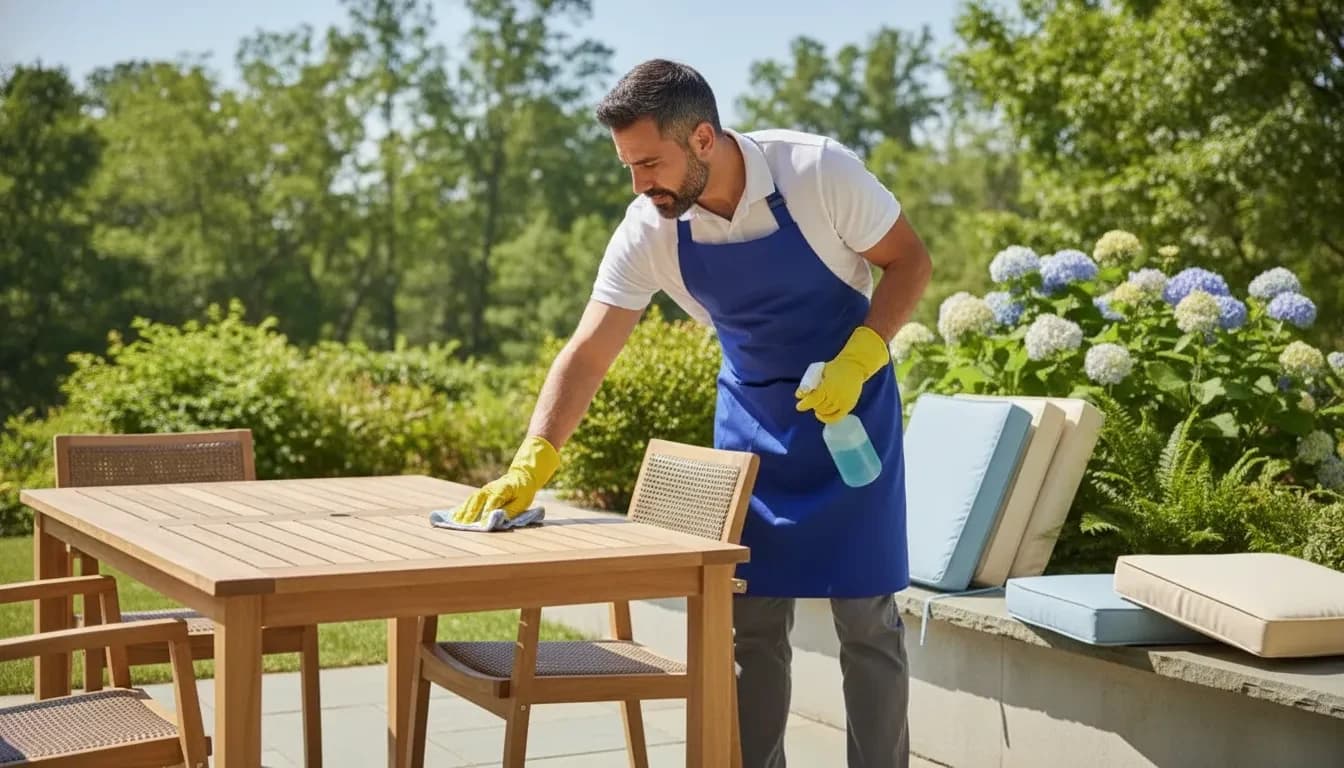
Outdoor furniture can look similar while reacting very differently to water, cleaners, and scrubbing. A cushion cover, mesh sling, painted metal frame, and finished wood surface each have their own care limits. So a strong all-purpose cleaner is not a safe starting point. If a label is missing, avoid soaking or treating the surface until you can confirm the maker’s guidance.
To learn how to clean outdoor furniture safely, check its care label or maker’s manual first, then use the gentlest permitted method on a hidden spot. Rinse only as directed and let every piece dry completely before use or storage.
That simple order helps prevent avoidable damage: identify the material and finish, remove loose dirt carefully, and control how much moisture reaches seams and joints. Before cleaning, take a moment to prepare the area and confirm what the manufacturer allows.
Need help with indoor home cleaning? Contact Clear Choice.
How to Clean Outdoor Furniture Without Damaging It
A careful setup prevents a simple cleanup from becoming a repair. Furniture labels and manuals are the best guide because fabric treatments, finishes, and frame materials can respond differently to water and cleaners. If instructions are missing, start with the least aggressive approach and avoid assuming that a cleaner safe for one piece is safe for another.
- Check the care directions and identify the materials. Look for labels on cushions and manuals for the furniture. Note whether covers are removable and whether the frame is painted or coated, woven, wood, metal, or plastic. Follow product-specific instructions first; there is no single cleaner or method that suits every material.
- Prepare the area. Move cushions away from the frame and set them on a clean, dry surface. Protect nearby flooring and plants from runoff, and choose a time when the furniture can dry fully. Keep water away from electrical items and anything the manufacturer says should stay dry.
- Remove loose debris before adding moisture. Use a soft, dry brush or cloth to lift dust, leaves, and grit. Brushing first helps avoid rubbing loose dirt into fabric. Do not scrape with a hard tool or use an abrasive pad on a finish.
- Test a gentle method out of sight. If the care directions permit a cleaner, use a small amount of mild soap diluted as directed by the maker. Apply it with a soft cloth, sponge, or brush rather than pouring it over the furniture. Try the method on a hidden spot and check for color transfer, dulling, or other change before continuing. If the manufacturer specifies a product or prohibits soap, follow that guidance instead.
- Clean with controlled moisture. Work in small areas, using a soft touch. Avoid soaking cushion seams, joints, fasteners, and openings where water may collect. Do not use a pressure washer, bleach, vinegar, or harsh chemicals unless the furniture maker explicitly approves that method for the specific material and finish.
- Rinse and dry according to the care directions. Rinse away residue only when the maker’s instructions call for it, and use no more water than needed. Let each piece dry with airflow; keep cushions separate from frames until fully dry, including seams and undersides.
Pause if a test spot changes appearance or if the care instructions are unclear. Contact the furniture maker for material-specific guidance rather than escalating to a stronger cleaner or more forceful tool.
How to Clean Outdoor Cushions and Mesh
Outdoor cushions and sling mesh can look similar but may use different fibers, coatings, and finishes. Start with the furniture or fabric care tag and follow its washing and drying instructions. If a cover is removable, check whether the label permits machine washing before unzipping or taking it off. Keep inserts away from water unless their care instructions specifically allow washing.
Before adding moisture, gently brush away loose grit, leaves, and dried debris with a soft brush. This helps keep particles from being rubbed into the fabric. For a fresh spill, blot with a clean, absorbent cloth rather than rubbing; friction can spread the mark or work it deeper into the weave.
When the maker permits wet cleaning, prepare only the mild cleaning solution it recommends. Apply a small amount with a soft cloth or soft-bristled brush, working gently over the affected area. Avoid soaking seams, zippers, and cushion interiors. Test the solution on a hidden spot first and let it dry so you can check for color or texture changes before treating a larger area. Phifer’s fabric guidance for its own products emphasizes removing loose dirt before cleaning, using a soft brush, and allowing airflow during drying. Its directions do not apply to every outdoor textile: Phifer’s outdoor fabric cleaning guidance.
Rinse with clean water only when the care label or fabric maker allows it, and remove any permitted cleaner residue without flooding the cushion. If the cover is removable, dry it separately only as directed. Let fabric, seams, and inserts dry completely with good airflow before putting cushions back together or returning them to the furniture. Turn pieces as needed so undersides and tucked areas are not left damp.
If a musty odor or suspected mildew remains, do not assume a household bleach or vinegar mixture is suitable. Such treatments can affect color, coatings, or fibers, and care differs by product. Check the manufacturer’s specific instructions or ask the furniture or fabric maker for advice. Keeping the pieces separated and ventilated while drying is a safer first step than trapping moisture beneath a cover.
Cleaning Metal, Wicker, and Plastic Frames
Frame materials can look similar while responding differently to moisture and cleaning. Check the furniture maker’s care instructions before choosing a cleaner or method. If directions are unavailable, avoid assuming that a product safe for one frame will suit another. Start by brushing away loose grit, then use a soft cloth or brush and only a mild cleaning method the maker permits. Work gently around seams, joints, fasteners, and drainage openings.
| Frame type. | Careful starting point. | Watch for. |
|---|---|---|
| Painted or coated metal. | Soft cloth and maker-approved cleaner. | Chips, peeling finish, trapped water at joints. |
| Aluminum or steel. | Follow care directions for the specific finish. | Do not assume bare and coated metal need identical care. |
| Resin or plastic. | Soft brush or cloth if permitted. | Textured areas, scratches from abrasive scrubbing. |
| Synthetic wicker. | Gently brush along and between strands. | Snagging, loose strands, water trapped in weave. |
| Natural wicker. | Dry brush first; use minimal moisture only if allowed. | Soaking, brittle or damaged weave. |
Painted, coated, and uncoated metal
Painted or powder-coated frames depend on an intact finish for protection. Use a soft cloth rather than an abrasive pad, and avoid scraping at chips or peeling areas. For aluminum or steel, follow the specific care guidance for the frame and its finish; do not assume that bare metal and coated metal have identical needs. Apply moisture in a controlled way instead of leaving the frame wet, and rinse or wipe it as directed. Dry the surface and check joints and hardware where water or debris may collect. If you notice bubbling, rust, or a damaged coating, cleaning will not repair the finish; consult the maker about next steps.
Resin, plastic, and synthetic wicker
Resin and plastic frames can be cleaned with a soft cloth or brush, provided the maker allows the chosen method. Pay attention to textured areas where dust can settle, and avoid hard scrubbing that could mark the surface. Synthetic wicker has woven gaps that may hold crumbs or dirt. Brush gently along and between the strands, taking care not to pull or snag them. Rinse only as the manufacturer recommends, then let water drain rather than allowing it to stand in the weave or at frame joints. Check for loose strands or cracks before using the furniture.
Natural wicker needs a lighter touch
Natural wicker is not the same as synthetic resin wicker, and it should not be treated as if it can be soaked. Follow the maker’s instructions, remove dry debris carefully with a soft brush, and use minimal moisture only if the care guidance permits it. Avoid leaving water in the weave or around connected joints. Let the piece dry fully with airflow before replacing cushions or putting it away. If the weave is brittle, loose, or visibly damaged, ask the furniture maker or a qualified repair professional how to proceed rather than scrubbing or wetting it further.
Across all frame types, finish by checking hidden contact points and letting the furniture dry as directed. Controlled cleaning and a careful inspection help you spot damage without turning routine care into an unapproved repair.
What Is the Safest Way to Clean Outdoor Wood Furniture?
Start with the care manual or label for the specific piece. Outdoor furniture may be made from different wood species and protected with oil, varnish, paint, stain, or another finish. Each can respond differently to water and cleaners, so there is no single safe recipe for every wooden table or chair. Follow the maker’s directions over general advice, including any limits on products, moisture, or tools.
If the instructions allow routine cleaning, begin by removing loose dust and grit with a soft, dry cloth or brush. This helps keep particles from being dragged across the finish during wiping. For stuck-on dirt, use only the cleaner and method the maker permits. Apply a small amount to a soft cloth rather than pouring liquid onto the furniture. Wipe gently with the grain where the surface and finish allow it, and test an inconspicuous spot first if the directions recommend testing.
Keep moisture controlled. Avoid soaking boards, leaving water pooled on horizontal surfaces, or letting liquid sit around joints and hardware. If the care instructions call for rinsing, do so gently and remove residue as directed. Dry the surface promptly with a clean cloth, then let the piece finish drying in a well-ventilated place before putting cushions or covers back on it. Stop if the finish changes, becomes tacky, or shows unexpected discoloration, and check with the manufacturer before continuing.
Do not assume that vinegar, bleach, household degreasers, abrasive pads, or a pressure washer are suitable for wood. A method that seems effective on another patio material could strip or dull a coating, force water into seams, or leave the surface worse. Use any of these only if the furniture maker specifically approves the product and application for that piece.
Cleaning also has limits. If the finish is peeling, deeply weathered, cracked, or showing persistent stains, ordinary washing may not solve the problem. Avoid sanding or applying oil, stain, or varnish based on a generic online recipe. Ask the furniture maker or a qualified furniture-care professional whether repair or refinishing is appropriate for the wood and existing coating.
Drying and Storing Patio Furniture Between Seasons
Plan cleaning for a stretch of dry weather so cushions and frames have time to air out before evening humidity or rain. After washing, separate cushions from the frame when the maker allows it. Stand removable cushions so air can reach both sides, and pay attention to seams, zippers, undersides, and places where fabric meets the insert. Turn pieces as needed and wait until every area feels completely dry before putting the set back together.
Moisture can hide in a woven seat, a cushion seam, or a frame joint even when the visible surface looks dry. Give these areas extra airflow rather than relying only on direct sun or heat. Avoid using a dryer or heater unless the care instructions specifically approve it. If the furniture or fabric maker provides a drying method, follow that guidance.
Before seasonal storage, remove loose debris and clean only as the product instructions permit. Let each piece dry fully before stacking, covering, or moving it into storage. A cover placed over damp cushions or frames can trap moisture, so do not cover them until they are dry. Use a clean, properly fitted cover and store pieces in a dry location when the maker recommends it. Check stored furniture periodically for condensation, musty odors, or moisture collecting around contact points.
For a broader seasonal plan for indoor rooms, use Clear Choice’s spring cleaning checklist. It is a home-cleaning resource, not an outdoor furniture maintenance manual. Readers preparing the inside of a home for a new season can also explore the company’s deep cleaning guide.
A Quick Guest-Ready Patio Checklist
Before guests arrive, take a final pass over each chair, table, and cushion. A clean surface is only part of a comfortable setup; furniture should also be stable and dry before anyone uses it.
- Check the material and care directions. Confirm whether each piece is wood, metal, plastic, mesh, or fabric, then follow its tag or maker’s manual. If you are unsure which cleaner is safe, pause rather than testing a strong product on the visible surface.
- Look for residue and loose debris. Remove leaves, grit, and cobwebs. Wipe away any cleaner residue as directed by the furniture maker, and check corners, seams, and joints where dirt or moisture can collect.
- Confirm cushions are completely dry. Check both sides, seams, and the area around zippers. Let them air-dry longer if any part feels damp; do not put them back on the frame or cover them while wet.
- Test stability before seating. Gently check chairs and tables for wobbling, loose fasteners, cracked supports, splinters, or sharp edges. Keep damaged pieces out of use until they have been assessed.
- Separate cleaning from repair work. Washing can remove ordinary dirt, but it will not fix a loose joint, failed finish, deep crack, or weather damage. Follow the maker’s guidance or ask a qualified furniture professional about repairs and refinishing rather than applying a coating or attempting a structural fix without instructions.
For indoor spaces that need a more thorough refresh before company visits, see Clear Choice’s guide to thorough top-to-bottom cleaning. That guide covers home cleaning, not patio furniture care.
Contact Clear Choice about indoor home cleaning
Frequently Asked Questions
Is dish soap good for cleaning outdoor furniture?
It can be suitable for some materials if the furniture maker allows mild soap. Check the care label or manual first, apply a small amount with a soft cloth or brush, and test an inconspicuous spot. Rinse if the instructions call for it, since residue may affect the finish or fabric.
Can I use vinegar to clean outdoor wood furniture?
Do not assume vinegar is safe for every wood type or finish. Check the maker’s instructions before using it; if vinegar is not specifically recommended, choose the approved cleaning method instead. Use minimal moisture, avoid letting water sit on the wood, and dry the surface promptly.
What is a good homemade cleaner for patio furniture?
There is no one mixture that is appropriate for every frame, finish, and cushion. If the maker permits it, use a mild soap-and-water solution, prepared according to the product directions. Do not combine household cleaners or add vinegar or bleach unless the furniture maker specifically directs you to do so.
What is the best cleaner for outdoor furniture fabric?
The best choice is the one allowed by the fabric or furniture care label. Brush away loose dirt before cleaning, use an approved cleaner on a cloth or soft brush rather than pouring it on, then rinse when the instructions permit. Phifer gives these fabric-care steps for its own products, so follow your fabric maker’s directions first: Phifer’s fabric cleaning guide.
How can I help prevent mildew on outdoor cushions?
Let cushions dry fully before covering or storing them. Separate removable covers and inserts only when their care instructions allow, and give both sides and seams airflow. If cushions stay damp, move them to a dry, ventilated area rather than sealing them under a cover.
Ready to Discuss Indoor Home Cleaning?
For indoor home cleaning, Clear Choice offers residential services for homes and apartments. If you would like to discuss the cleaning help you need, contact us through the form.