
How to Clean Grout Without Damaging Tile
Published · Updated · Clear Choice Home Cleaning Services
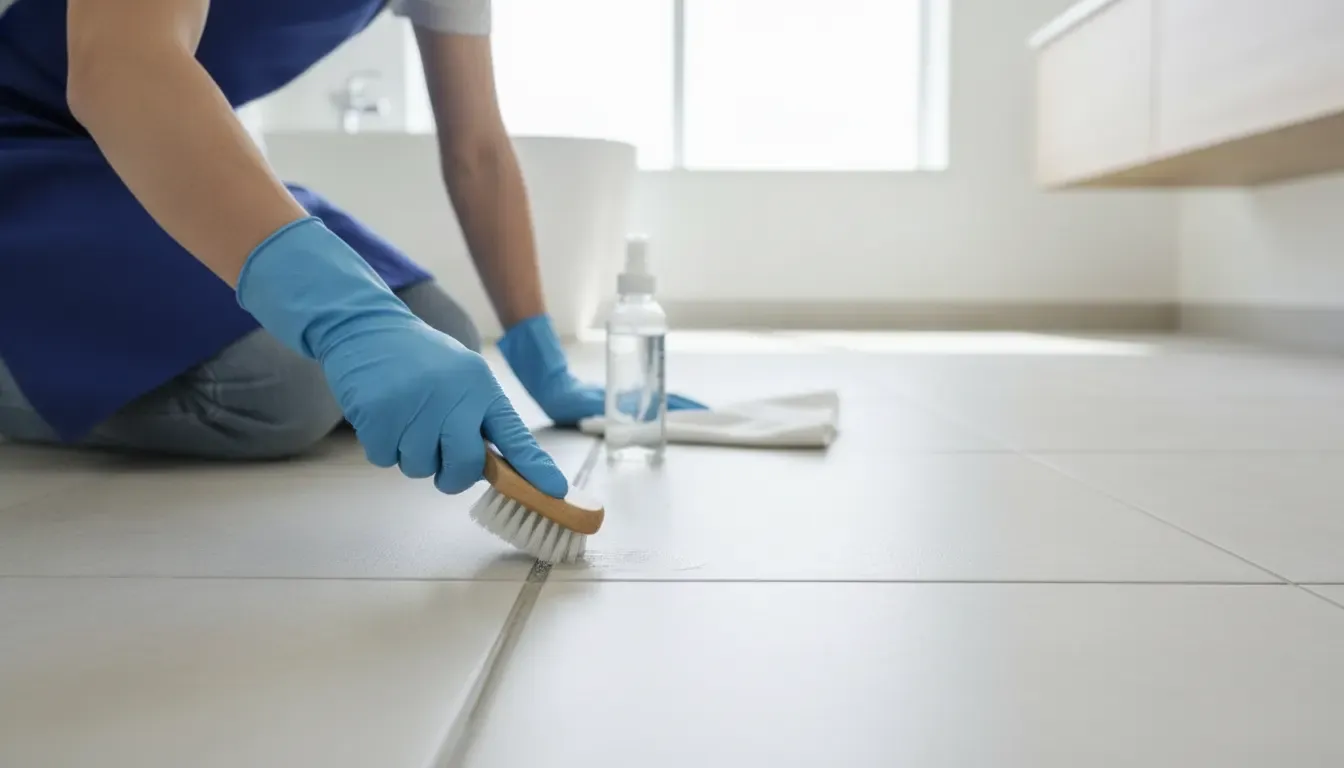
Learning how to clean grout starts with one important rule: clean the grout and tile as a system. Use the mildest method that fits the soil, choose a tool that reaches the joint without scratching the tile, and rinse away residue instead of scrubbing harder and harder. That approach refreshes dull grout while protecting the surrounding surface.
Request a quote for professional cleaning
How do you clean grout safely?
To clean grout safely, remove loose soil, apply a tile-and-grout-safe cleaner, work in a small section, scrub with a soft nylon brush, and rinse thoroughly. Avoid acidic cleaners, wire brushes, abrasive powders, and untested chemicals. Always check the tile, grout, and sealer manufacturer's instructions, then test the method in a hidden area first.
Grout is often more porous and vulnerable than the tile around it. Cement-based grout can absorb soil and cleaner residue, while some stone tiles can etch or dull when exposed to acids. The safest plan is controlled, gradual cleaning rather than a strong product used everywhere at once.
Gather the right tools and cleaner
Before you start, identify the surface and assemble a small set of tools. You do not need an aggressive brush or a shelf full of chemicals. A measured, surface-appropriate approach is easier to control and less likely to damage grout lines or tile finishes.
- Vacuum, sweep, or use a dry microfiber cloth to remove loose grit.
- Use a neutral-pH tile-and-grout cleaner for routine soil, following the product label.
- Keep a soft nylon grout brush or an unused soft toothbrush for narrow joints.
- Use microfiber cloths, clean water, and a bucket for rinsing.
- Keep a non-abrasive sponge or soft hand pad available for nearby tile.
- Wear gloves if the product label calls for them, and ventilate the room when appropriate.
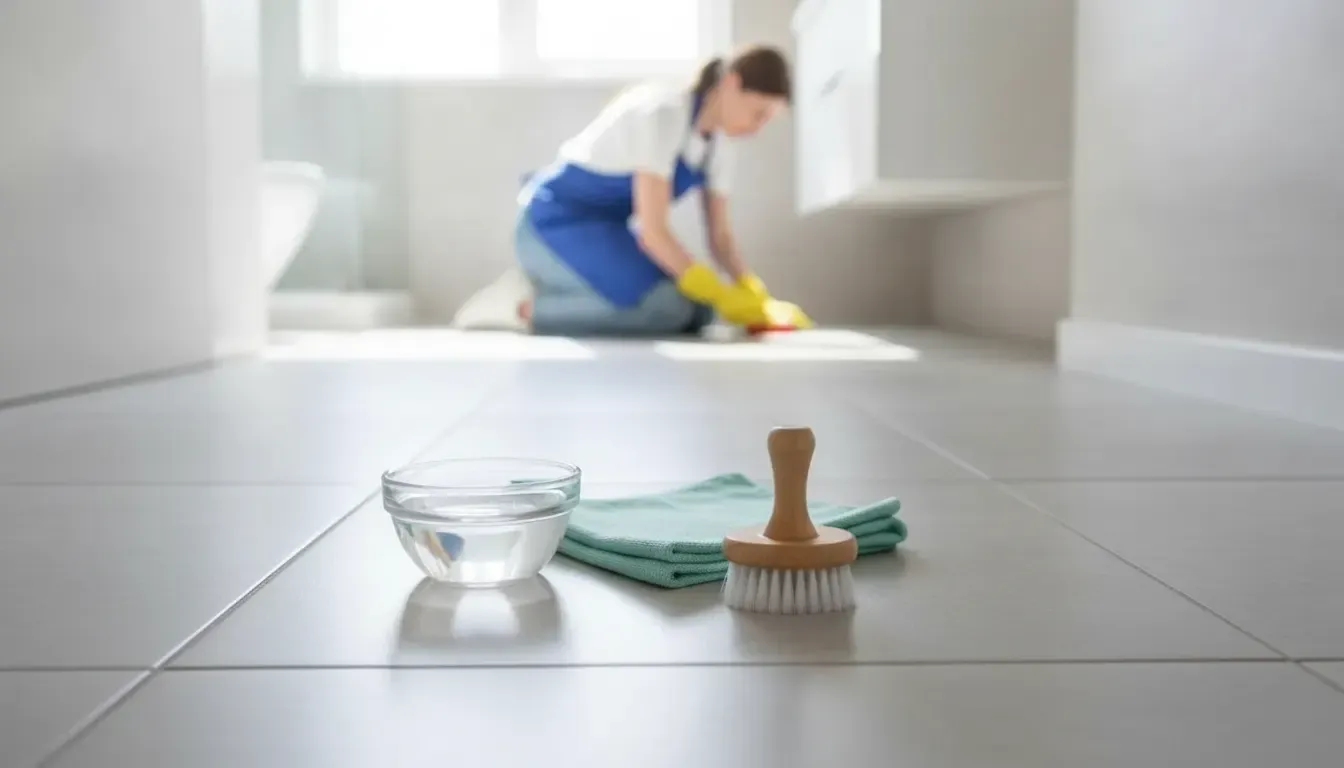
For a visual checklist, the image below shows the kind of simple setup that keeps the work controlled. The bowl, cloth, and brush are more useful than a collection of untested cleaners.
Match the method to the soil
| What you see | Start with | Use extra care with |
|---|---|---|
| Light dust or everyday soil | Dry removal, then neutral cleaner and a soft brush | Rubbing grit into the joint or tile |
| Greasy or tracked-in buildup | A label-approved alkaline tile-and-grout cleaner, followed by rinsing | Leaving cleaner to dry or using it on untested stone |
| Dark spotting in a damp area | Clean the hard surface, dry it, and improve ventilation | Mixing chemicals or treating an ongoing moisture problem as only a stain |
| Deep, set-in discoloration | Repeat a compatible method or seek professional assessment | Acids, aggressive grinding, or removing grout without experience |
The Tile Council of North America explains that cement-based grout can be affected by acids and that alkaline cleaners are generally a better choice for grout than acid-based cleaners. Its grout-cleaning guidance also emphasizes removing dirty water and rinse water instead of allowing residue to remain in the joint.
How to clean grout step by step
This sequence works for most routine grout cleaning on compatible ceramic or porcelain tile. Slow down when the grout is cracked, crumbling, unsealed, unusually soft, or a different material than you expected.
- Read the labels and identify the surface. Check whether the tile is ceramic, porcelain, glass, or natural stone. If you cannot identify it, begin with water and a soft cloth, then use only a product labeled for the surface.
- Remove dry soil first. Sweep or vacuum the floor and wipe the wall or backsplash. Loose sand and grit can act like an abrasive when dragged across tile.
- Protect nearby items. Move rugs, bath mats, and countertop items away from the work area. Keep cleaning products away from children and pets.
- Test a hidden section. Apply a small amount of the planned cleaner and wait the label's recommended time. Look for color change, dullness, softening, or residue before proceeding.
- Work in small sections. Apply enough cleaner to keep the joint damp, but do not flood the area. A small section makes it easier to scrub, rinse, and inspect before residue dries.
- Agitate gently. Use a soft nylon brush along the grout line. Short back-and-forth strokes are more controlled than heavy pressure. Let the cleaner do part of the work.
- Lift the dirty solution. Wipe with a clean microfiber cloth or use a suitable wet vacuum where practical. Do not simply spread the dirty liquid across neighboring tile.
- Rinse and dry. Use clean water to remove cleaner residue, changing the water or cloth as it becomes dirty. Dry the surface with a clean microfiber towel and allow the joint to dry fully.
- Inspect before repeating. If the grout looks better but still has discoloration, repeat the compatible method once the surface is dry. If the result does not improve, stop escalating chemicals and consider professional help.
Avoid using a steam cleaner, pressure washer, or powered scrubber as a first step. These tools may be appropriate for some materials and conditions, but heat, pressure, or aggressive movement can push moisture into vulnerable areas or damage grout and sealers when used incorrectly.
What should you avoid when cleaning grout?
The most common grout damage comes from using a stronger method than the surface requires. These precautions help protect both the joint and the tile finish:
- Do not use vinegar or other acids on cement-based grout as a routine cleaner. The Tile Council of North America cautions that acid can react with the cement in grout. Acid can also etch some natural stone tiles.
- Do not mix bleach, ammonia, acids, or other cleaning products. Use one product at a time and rinse before changing methods. The US EPA specifically warns against mixing chlorine bleach with ammonia-containing products because toxic fumes can form.
- Do not use a wire brush, steel wool, or gritty scouring powder. These can scratch tile, remove a finish, or wear down the grout surface.
- Do not let cleaner dry on the surface. Dried residue can leave a film that attracts more soil and may be harder to remove.
- Do not assume white grout and colored grout behave the same way. Test any cleaner first because aggressive products can change the appearance of pigmented grout.
- Do not use oil- or wax-based products to make tile shine. Residue can collect in grout and make the surface look dirty sooner.
For recurring damp-area spotting, cleaning alone may not solve the cause. The US EPA guide to mold, moisture, and the home recommends controlling moisture, drying wet areas, and improving bathroom ventilation. If an area is extensive, keeps returning, or follows a leak, address the moisture source and seek appropriate professional guidance.
How should you clean delicate tile and grout surfaces?
Delicate surfaces need a narrower cleaning plan. Natural stone such as marble, limestone, and travertine can be sensitive to acids, while polished surfaces can lose their appearance from abrasive tools. Glass tile may show streaks if cleaner is not rinsed completely. Unsealed or damaged grout may absorb water and cleaner more readily.
- Natural stone: Use only a product specifically labeled for the stone, avoid acids, and test first in an inconspicuous area.
- Colored or older grout: Start with a neutral cleaner and a soft brush. Stop if color transfers to the cloth or changes in the test area.
- Cracked or missing grout: Cleaning will not repair the joint. Keep water controlled and arrange an assessment before aggressive scrubbing.
- Epoxy grout: Follow the grout manufacturer's care instructions because product compatibility differs from cement-based grout.
- Metal trim or mixed materials: Keep cleaner on the intended surface and wipe surrounding materials promptly.
When the surface is part of a larger home-cleaning project, Clear Choice Home Cleaning Services can help with a deep cleaning service or a recurring cleaning plan. The team brings cleaning supplies and equipment, and service is arranged by quote rather than a published flat rate.
Contact Clear Choice for a grout and home-cleaning quote
How do you keep grout clean longer?
Prevention is easier than restoring heavily discolored grout. A few simple habits reduce the amount of soil that reaches the joint:
- Wipe spills and tracked-in soil before they dry.
- Use a clean, damp microfiber mop or cloth instead of pushing dirty water across the floor.
- Run the bathroom fan or open a window during and after showers when practical.
- Rinse away cleaner residue instead of relying on repeated product applications.
- Ask a tile professional whether the grout should be sealed and which sealer is compatible.
- Schedule regular standard cleaning for everyday soil before buildup becomes difficult to remove.
Grout sealer is not a substitute for cleaning, and it is not permanent in every setting. Follow the sealer manufacturer's maintenance guidance and watch for changes in water behavior, color, or wear. If the grout has deep staining, crumbling joints, or a moisture problem behind the surface, a tile or cleaning professional can help identify the safest next step.
Request your Clear Choice cleaning quote
Frequently asked questions about cleaning grout
What is the safest cleaner for grout?
A neutral-pH tile-and-grout cleaner is a sensible starting point for routine soil. Choose a product labeled for your tile and grout, test it in a hidden area, use a soft nylon brush, and rinse away residue. Heavier buildup may need a label-approved alkaline cleaner, but stronger is not automatically safer or better.
Can you use vinegar to clean grout?
Vinegar is acidic, so it is not a good routine choice for cement-based grout or acid-sensitive natural stone. The Tile Council of North America explains that acids can react with the cement in grout. Use a compatible tile-and-grout cleaner instead, and follow the surface manufacturer's instructions.
How do you clean grout without scrubbing too hard?
Remove loose soil first, apply a compatible cleaner to a small section, allow the label-recommended dwell time, and use a soft nylon brush with light pressure. Rinse and lift the dirty water before it dries. If the stain remains, repeat the safe method once rather than switching immediately to an aggressive tool.
Is bleach safe for tile and grout?
Do not treat bleach as a universal grout cleaner. It can be unsuitable for some grout, stone, sealers, and finishes, and it must never be mixed with ammonia or other cleaners. If a product label specifically permits bleach for the surface, follow that label, ventilate the area, and rinse thoroughly.
Why does grout get dirty again after cleaning?
Grout may hold onto cleaner residue, moisture, grease, or deeply embedded soil. Repeated dampness, poor ventilation, spills, and unsealed or worn grout can also contribute. Rinse thoroughly, dry the area, improve ventilation, and ask a qualified professional whether sealing, repair, or moisture correction is needed.
When should you hire a professional cleaner?
Consider professional help when grout is heavily soiled across many rooms, the surface includes delicate stone, the grout is crumbling or cracked, a leak or recurring moisture is involved, or safe cleaning has not improved the appearance. A professional can match the method to the surface and reduce the risk of damage.