
How to Clean a Window Air Conditioner
Published · Updated · Clear Choice Home Cleaning Services
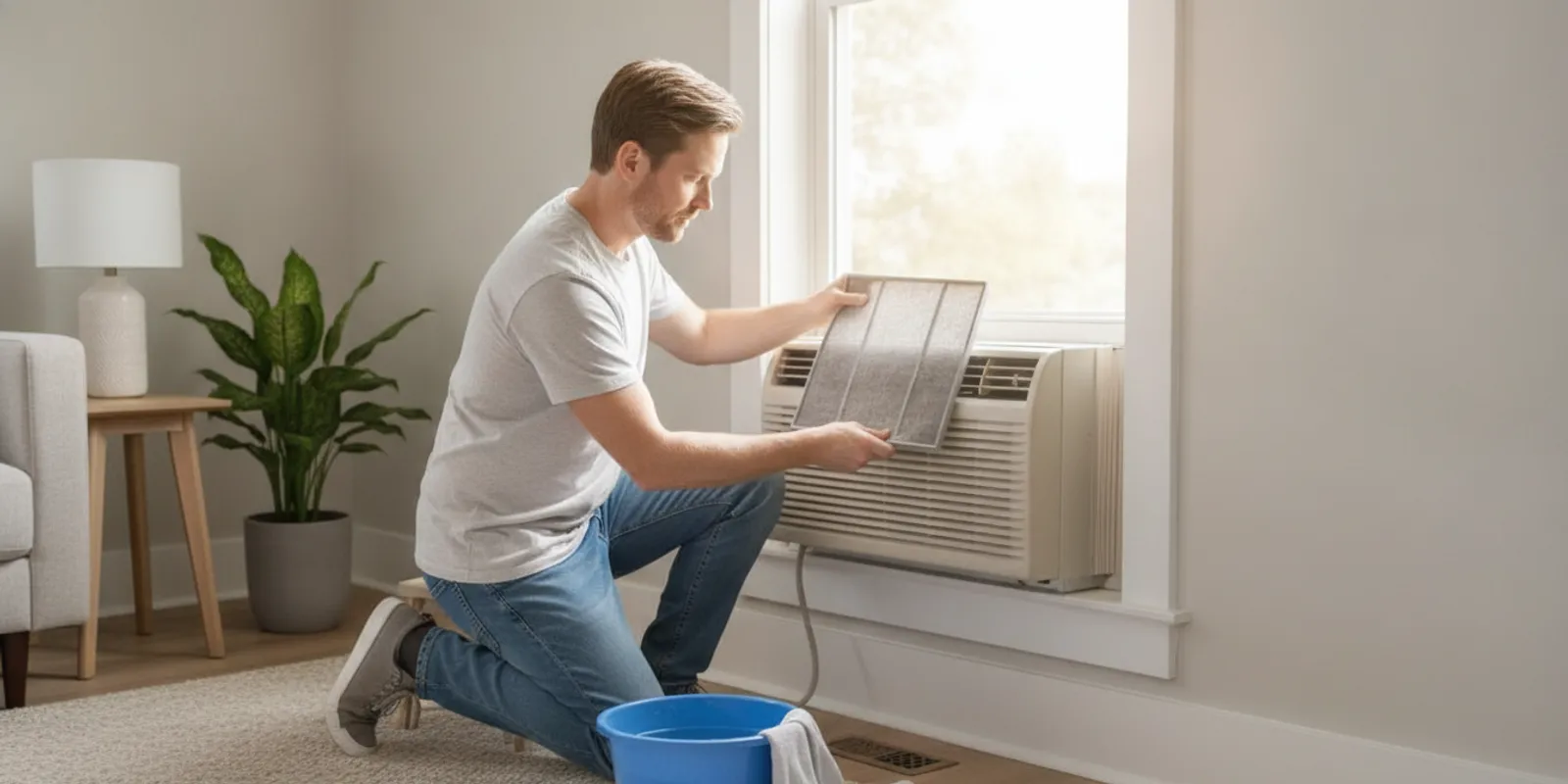
Knowing how to clean a window air conditioner can help you remove dust from the parts you can safely reach and prepare the unit for regular use. The right method depends on the model: check the owner's manual first, especially before opening a cabinet, washing a filter, or removing the unit from the window. This guide covers a careful routine for the filter, accessible fins, and exterior housing without asking you to work on electrical parts or refrigerant components.
What should you check before cleaning a window air conditioner?
Window air conditioners differ in how their filters, front panels, and drain systems are designed. Start by finding the model number and reading the manufacturer's cleaning and maintenance instructions. The manual should say whether the filter is washable, how the front cover comes off, which cleaning products are acceptable, and whether any part requires special care.
Do not assume that a filter is washable just because it slides out. Some are reusable mesh; others are disposable or have a coating that could be damaged by water. If the instructions are missing, look for the manufacturer's documentation for your exact model before taking anything apart. A U.S. Department of Energy homeowner's guide to window air conditioner installation and maintenance also discusses routine care, including keeping intake and exhaust grilles clean.
- Make sure the unit is off and unplug it before cleaning accessible parts, following the manufacturer's safety instructions.
- Work from a stable position. Keep tools and cleaning water away from the outlet and electrical components.
- Do not remove sealed panels or attempt to access wiring, the motor, or refrigerant lines.
- If the unit is loose, damaged, unusually heavy to handle, or mounted above a difficult reach, do not try to remove it alone.
- Set aside a soft cloth, a soft brush or vacuum brush attachment, and a shallow container for a washable filter. Use only products the manual permits.
Never spray water into the installed unit or pour liquid through its vents. Water can reach places that are not meant to get wet. Cleaning the parts you can remove as directed is different from washing the full appliance.
How do you clean the window air conditioner filter?
The filter is usually the easiest part to maintain, but follow the care label for your model. Dust on the filter can restrict airflow, so it is worth inspecting it regularly during periods of frequent use. How often it needs attention depends on the unit, how much it runs, and conditions in the room; use the manufacturer's suggested schedule as your starting point.
- Turn off and unplug the unit. Do not reach into the appliance while it is operating.
- Remove the front grille or filter as directed. Many models allow the filter to slide out from behind the front panel, but the release method varies. Do not force a panel or bend its clips.
- Check whether it is washable. If the filter is disposable, replace it with the specified type and size. Do not rinse it unless the instructions say to.
- For a washable filter, remove loose dust gently. A soft brush or vacuum brush attachment may be appropriate. If the manual permits washing, rinse the mesh as instructed, without harsh scrubbing.
- Let it dry fully. Place the filter in a safe spot and wait until it is completely dry before reinstalling it. Do not put a wet filter back into the unit.
- Reinstall it in the correct direction. Match any arrows or markings, and make sure the front panel is secured as intended.
A filter that is torn, misshapen, or still dirty after approved cleaning may need replacement. Use the exact size and compatible filter specified by the manufacturer. Do not operate the air conditioner without its filter unless the manual specifically directs you to do so for a particular maintenance step.
Research has also discussed regular air-conditioner filter cleaning as a way to prevent or reduce the spread of dust-mite allergens. The published study on air-conditioner filters and dust-mite allergens is not a substitute for your unit's care instructions, but it reinforces the value of following the filter maintenance guidance for your model.
How should you clean the grille, cabinet, and accessible fins?
Once the filter is out, inspect only the accessible areas identified in the manual. The goal is to lift surface dust without bending delicate fins, pushing debris farther inside, or getting water into the appliance.
Clean the front grille and exterior cabinet
Wipe the outer cabinet and front grille with a soft, slightly damp cloth if the manufacturer allows it. Apply any permitted cleaner to the cloth rather than spraying it toward the unit. Keep liquid away from vents, controls, and electrical openings. Use a dry cloth afterward, and do not use abrasive pads or sharp tools that can scratch the finish or damage the grille.
If the grille is removable, take it off only as described in the manual. Wash it separately only if that is allowed, then let it dry completely before putting it back. Never force a stuck panel; a hidden fastener or different removal sequence may be involved.
Remove loose dust from accessible fins
Fins are thin metal surfaces, so handle them gently. If the manual permits, use a soft brush or a vacuum brush attachment held lightly near visible dust. Avoid pressing down or dragging an attachment across the fins. A fin comb is appropriate only if the manufacturer recommends it and you know how to use the correct size without damaging the coil.
Do not push a cloth, brush, or tool deep into the unit. Do not straighten fins by hand, and do not attempt to clean a coil that is behind a panel you are not instructed to remove. If dust is packed into the coil, fins are bent, or the area cannot be reached without dismantling the appliance, stop and consult the manufacturer or a qualified air-conditioning technician.
What should you know about water and drainage?
Window units manage moisture in different ways. Some models collect or direct condensate in a particular manner, and drainage details can depend on how the unit is installed. Check the manual rather than assuming that every unit should have a drain hole cleared, a plug removed, or water poured through the base.
With the unit off, look for obvious exterior damage, unusual water around the appliance, or signs that water is entering the room. Do not tilt or move an installed unit to drain it unless the manufacturer instructs you to do so. Never poke wire or another object into a drain opening, because that may damage a part or push debris farther inside.
For any concern about pooled water or a possible product safety issue, check the manufacturer's guidance and model-specific safety information. Drainage designs vary, so do not treat water in one unit as proof of a problem in every window air conditioner.
What mistakes should you avoid when cleaning a window AC?
Most avoidable problems come from treating a window air conditioner like a washable outdoor appliance or opening it beyond the maintenance steps in its manual. Keep the job limited to simple, manufacturer-approved cleaning.
- Do not use a hose, pressure washer, or spray bottle on the installed unit. Water can reach electrical areas or other components that should stay dry.
- Do not use bleach, solvents, or strong household chemicals unless expressly permitted. They may damage a filter, coating, plastic, or metal surface.
- Do not scrape coils or fins with a knife, screwdriver, or stiff wire brush. Fins bend easily, and sharp objects can cause damage.
- Do not run the unit with a wet filter or a removed safety panel. Reassemble it as directed and make sure the filter is dry.
- Do not open electrical or sealed refrigerant sections. Cleaning the filter and accessible exterior is not a repair procedure.
- Do not remove a heavy unit from the window without appropriate help and a safe plan. A fall can injure someone or damage the appliance and window.
If cleaning does not resolve an airflow, noise, odor, or cooling concern, avoid trying increasingly invasive fixes. Turn the unit off if you notice damage, a burning smell, or water in an unexpected place, and contact the manufacturer or an appropriate service professional for guidance.
How do you prepare a window air conditioner for seasonal storage?
Whether to leave a window unit installed or remove it for the off-season depends on the unit, window, climate, and manufacturer's instructions. If you plan to store it, follow the manual's procedure. Do not lift or remove an appliance alone if its weight, position, or mounting makes the job unsafe.
For a unit that can be safely removed, use a helper and protect the window and surrounding surfaces. Keep it upright or in the orientation the manufacturer specifies. Do not carry it by the grille, cords, or controls. Before storage, clean and fully dry the filter and accessible surfaces as directed. Store removable parts together so they are not lost, and protect the appliance from dust and moisture without sealing in dampness.
If the unit stays in the window, check its support, weather sealing, and any seasonal cover according to the installation instructions. A cover should be used only if suitable for that model and should not block required ventilation while the air conditioner is running. Before using it again, inspect the cord, plug, cabinet, filter, and visible mounting for damage. If something appears loose or compromised, do not operate the unit until it has been checked.
Which cleaning tasks can you do yourself?
This table separates routine care from work that calls for model-specific instructions or professional help. It is a practical guide, not a substitute for the manual; instructions for your exact unit take priority.
| Task | Typical approach | When to stop or get help |
|---|---|---|
| Reusable filter | Remove as directed, clean only if washable, and reinstall fully dry. | Filter type is unclear, damaged, or does not fit correctly. |
| Disposable filter | Replace with the model-specified compatible filter. | Correct size or replacement type is unknown. |
| Front grille and cabinet | Wipe accessible surfaces with a soft cloth and permitted cleaner. | Panel resists removal or liquid would need to enter vents. |
| Visible fins | Gently lift loose dust only when the manual allows access. | Fins are bent, debris is packed in, or cleaning requires opening the unit. |
| Drainage or pooled water | Inspect from the outside and follow model-specific instructions. | Water leaks indoors, drainage is unclear, or a safety issue may apply. |
| Electrical or refrigerant components | Do not open or service as a household cleaning task. | Contact the manufacturer or a qualified HVAC professional. |
When is it time to ask for professional help?
Routine filter and exterior care can be manageable when the manual makes the steps clear and all parts are safely accessible. Professional assistance is the better choice when the unit needs disassembly, is difficult to reach, has a damaged cord or plug, leaks into the home, makes an unusual sound, or has a persistent odor or performance issue after basic approved cleaning.
An HVAC professional is the right contact for air-conditioner operation, electrical, refrigerant, drainage, or installation problems. A home cleaning company can help with surrounding household cleaning, but that is different from servicing or repairing the appliance. For other needs around the home, you can explore residential house cleaning, review answers to common cleaning service questions, or learn about Clear Choice Home Cleaning's local, owner-involved approach.
Clear Choice Home Cleaning Services is locally owned and based in Alpharetta, serving North Metro Atlanta. Michael Jones is personally involved in scheduling and satisfaction follow-ups. To discuss a home cleaning need, use the contact form to request a quote; cleaning service is separate from HVAC maintenance.
Contact Clear Choice about a home cleaning quote
Frequently Asked Questions
How often should I clean a window air conditioner filter?
Check the filter regularly while the unit is in frequent use, and follow the schedule in the owner's manual. Dust levels and how often the unit runs affect how quickly a filter needs attention. Clean a reusable filter only as instructed, and replace a disposable filter with the specified type.
Can I clean a window air conditioner without removing it?
Often, you can clean the filter and wipe the accessible grille or cabinet while the unit stays installed. Keep the appliance off and unplugged, follow the manual, and do not spray or pour water into it. Do not reach into concealed areas or remove the unit if it is not safe to do so.
Can I wash the filter with soap and water?
Only if the manufacturer identifies your filter as washable and explains how to clean it. Rinse or wash it exactly as directed and let it dry fully before reinstalling. A disposable filter should be replaced, not washed.
Is it safe to clean the air conditioner coils myself?
Limit cleaning to loose dust on fins that the manufacturer identifies as accessible for routine care. Do not open sealed or electrical sections, use a pressure washer, or scrape the coil. If the coil is heavily soiled or requires disassembly to reach, ask the manufacturer or a qualified HVAC professional for guidance.
Should I take the air conditioner out of the window for winter?
There is no single answer for every model and installation. Check the manufacturer's storage instructions and consider the weight, mounting, and window conditions. If removal is recommended, arrange safe assistance rather than attempting a difficult lift alone.
What is the safest way to get started?
Begin with the manual, switch the unit off, and clean only the filter and surfaces the manufacturer identifies as user-accessible. Keep water and tools away from internal components, stop if anything seems damaged or unclear, and call an HVAC professional for appliance problems that go beyond routine care.