
Staircase Cleaning Steps for Safer, Fresher Floors: How to Clean a Staircase
Published · Updated · Clear Choice Home Cleaning Services
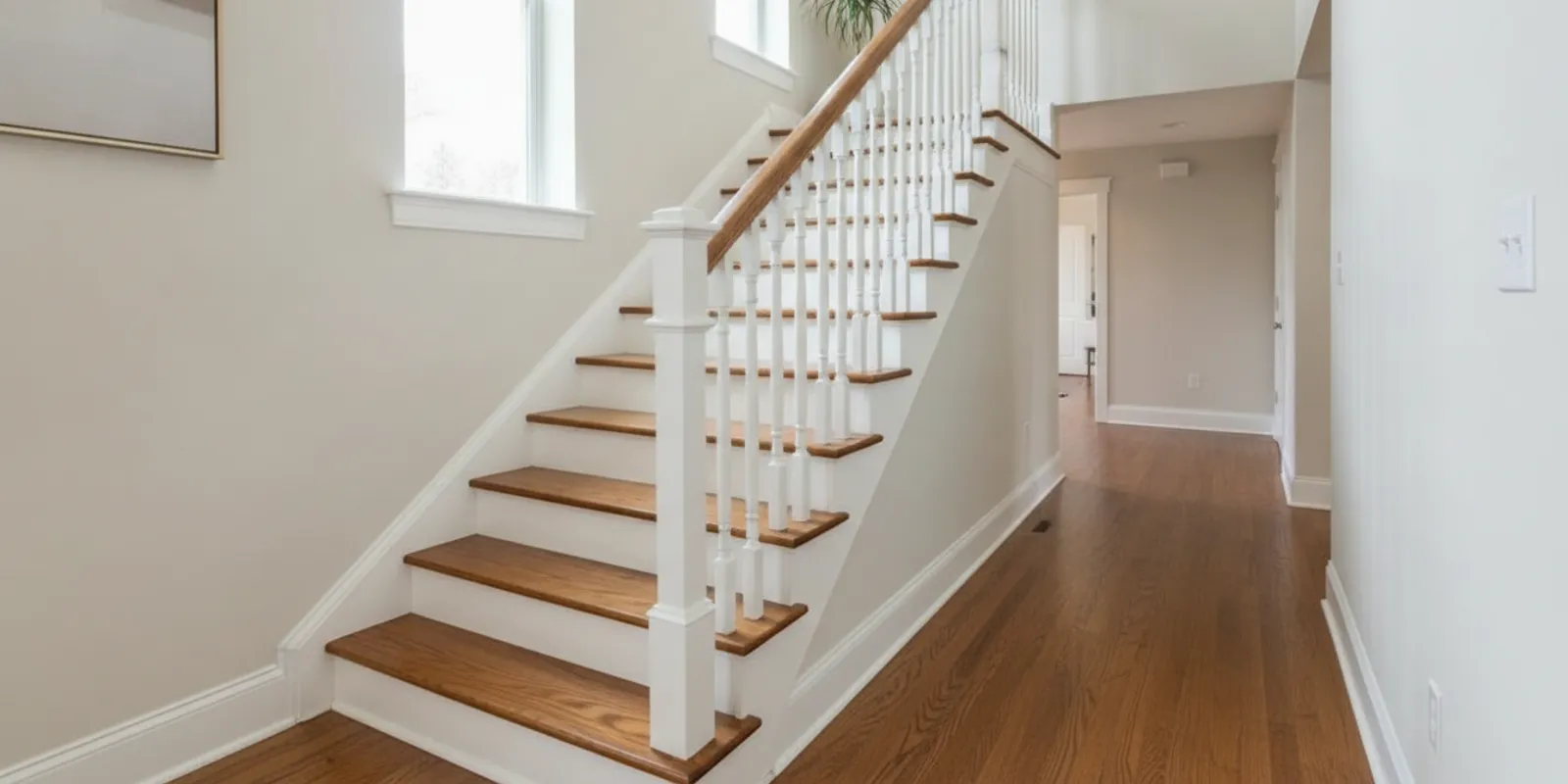
A clean staircase is easier to use and helps keep dust and grit from traveling between floors. If you are wondering how to clean a staircase, the safest approach is simple: clear the steps, work from the top down, remove loose soil before using a damp cleaner, and let every step dry before walking on it. The right method depends on whether your stairs are carpeted, wood, tile, or another material.
Request a House Cleaning Quote
What should you check before cleaning a staircase?
Take a moment to look at the entire stairway before bringing out supplies. Check the treads, risers, edges, landing, handrail, and the space underneath or beside the stairs. Note the surface material and any loose carpet, damaged finish, stains, or objects that could cause a trip. If a step is unstable or a handrail is loose, do not treat cleaning as a repair; address the hazard separately before using the stairs as usual.
Clear shoes, bags, toys, and other belongings from the steps and landing. Keep children and pets away while you work. Make sure the area is well lit, and put supplies where they will not block your route. If you need to carry a vacuum or bucket, plan how to do so without losing your balance or blocking your view of the steps. A second trip for supplies is better than climbing with both hands occupied.
Stair-safety guidance from Stanford's overview of safer stairs calls attention to handrails, lighting, and slip risks. A stairway cleaning should support those basics, not create a temporary slick or obstructed path. Keep the steps clear throughout the job, and do not walk on a freshly cleaned surface until it is dry.
Before applying a product, identify the exact material rather than guessing from its appearance. A painted riser, sealed hardwood tread, and stone landing may need different care even when they are part of one staircase. Check available flooring or carpet care instructions, then test an unfamiliar cleaner in a small, inconspicuous place if the label recommends it. Stop if the test changes the color or finish.
What supplies do you need to clean stairs?
Gather a few tools before you begin. Choose products suitable for the specific flooring, and check the care instructions for carpet, wood, stone, or tile. A product that works on one stair surface may damage another or leave it slippery. Avoid soaking wood, laminate, or carpet, and do not combine cleaning products. Follow the product label for application and ventilation.
- A broom, dustpan, or vacuum with an appropriate attachment.
- A clean microfiber cloth or soft brush for edges, risers, and handrails.
- A surface-appropriate cleaner and a small amount of water, if the material allows damp cleaning.
- A dry cloth for removing moisture and a sign or barrier to keep people off the steps while they dry.
- Gloves if you prefer them or the product label calls for them.
A vacuum with a hose or stair attachment can make carpet and edges easier to reach. For hard flooring, a soft broom or vacuum attachment helps remove grit without scratching. Keep the toolkit compact: placing a heavy bucket or several loose items on the steps adds clutter and makes the work harder to manage.
For a typical staircase, a small carry caddy can keep cloths and a suitable cleaner together, but do not balance it on a tread. Set supplies on a stable landing or outside the walkway. If the cleaner must remain wet for a label-specified time, plan that pause before starting so you do not feel tempted to rush across the steps. Keep electrical cords behind you and out of the walking route; unplug and reposition equipment rather than stepping over a cord.
How do you clean a staircase step by step?
- Clear the route. Remove loose items from every tread and from the landing. Put them somewhere outside the walkway.
- Start at the top. Working downward keeps loosened dust from falling onto steps you have already cleaned. Stand securely on the landing or a dry tread and avoid reaching far across the stairs.
- Remove dry debris. Vacuum or sweep each tread, its front edge, the corners, and the junction where the tread meets the riser. Capture dust and hair before adding moisture.
- Clean the risers and handrail. Use a suitable cloth or brush, beginning at the top. Apply cleaner to the cloth rather than spraying broadly over the stairway, particularly near the tread surface.
- Spot-clean the tread material. Follow the care directions for the surface. Use a lightly damp cloth on compatible hard surfaces, and blot carpet rather than saturating it.
- Remove residue and moisture. Wipe with a clean cloth as directed by the product label. Dry hard surfaces promptly if the care instructions permit.
- Wait before reopening the stairs. Keep people off the steps until they are fully dry. Return items only after the walking route is clear.
Keep your attention on the step you are cleaning and move carefully. If you cannot clean comfortably from a stable position, pause and choose a safer way to reach that area rather than leaning or stepping onto a wet tread. MIT's publication on hazards, falls, and safer design notes the importance of keeping stairs free from dirt and other material that can contribute to slips or trips. Removing grit and avoiding wet, cluttered steps are practical parts of routine care.
Think of the job as several small zones instead of one long reach. Finish one tread and its edges, move your tools from a safe position, then continue to the next. On a staircase with a landing or turn, treat the landing as its own floor area and remove dirt there before it can be tracked back onto the cleaned steps. If household members need the stairs, choose a time when they can use another route or wait until the entire treated path is dry.
How should you clean carpeted stairs?
Carpet can hold dust, hair, and small debris along the edges and where the tread meets the riser. Vacuum from the top down with a stair tool or other suitable attachment. Work across the tread in overlapping passes, paying attention to the front edge and corners. If the vacuum has a brush setting, confirm that it is appropriate for the carpet pile and manufacturer guidance.
For a small spill, check the carpet-care instructions and the cleaner label first. Blot gently with a clean cloth instead of rubbing, which can spread a stain or roughen fibers. Apply only the amount of product recommended for the material. Avoid saturating the stair: trapped moisture can take longer to dry and may affect the backing or the surface beneath it. Keep the stairway closed to foot traffic until it is dry.
For a full carpet wash or persistent marks, review the flooring manufacturer's recommendations and consider whether the method is suitable for stairs. A machine or hose can be awkward to manage on steps. Do not leave cords, hoses, or equipment stretched across the route where someone could trip.
For everyday crumbs, use a nozzle or attachment that can reach close to the side walls and the nose of each tread. Move slowly enough to collect debris instead of pushing it into the corners. If the carpet has a loose edge, a worn section, or a lifted runner, do not pull or tug it while vacuuming. A cleaning tool cannot secure the carpet; have the condition addressed before relying on that section for normal use.
When a mark remains after careful blotting, avoid repeating applications of stronger products without checking compatibility. Too much liquid or cleaner can leave residue that attracts soil or create a damp area that is difficult to dry. If the stain is large, has reached the backing, or has an odor that returns, it may call for a more suitable method than a quick surface spot clean.
How do you clean wood, tile, or other hard stair surfaces?
First remove grit with a soft broom or vacuum attachment. Grit can scratch a finish when it is dragged across a hard surface. Then use a cleaner approved for the flooring. For wood or laminate, use little moisture and never leave standing water on the tread. For tile or stone, follow the manufacturer's care advice; some products may be unsuitable for particular finishes or grout.
Use a damp—not dripping—cloth or mop head, and clean a small area at a time. Avoid putting cleaner directly on the steps if overspray could reach neighboring treads. Wipe away residue if the product instructions call for it, then dry the walking surface. Do not apply wax, polish, or a coating unless the flooring instructions specifically recommend it; some finishes can change traction.
| Stair surface | First cleaning step | Moisture approach | Key caution |
|---|---|---|---|
| Carpet | Vacuum tread, edges, and corners | Blot small spots only with an approved method | Avoid saturating fibers or leaving equipment across the stairs |
| Finished wood | Remove grit with a soft tool | Use a compatible, lightly damp cloth only if care directions allow | Do not leave standing water or use an unapproved polish |
| Tile or stone | Sweep or vacuum loose soil | Use a surface-approved cleaner and limited water | Check guidance for the specific material and finish |
| Laminate or other flooring | Lift dust and debris without abrasive tools | Follow the manufacturer's instructions | Do not assume a cleaner suitable for another floor is suitable here |
When a staircase combines materials, clean each surface according to its own care needs. For example, use a dry vacuum attachment on carpeted treads and a lightly damp cloth only on a compatible hard landing. Avoid letting liquid run from one surface onto another, especially down the front of a tread. A clean, dry cloth can help you control moisture and pick up residue before it spreads.
Pay attention to the tread's finish after it dries. If it feels tacky, looks streaked, or seems unusually slick, check whether cleaner residue remains and review the product directions. Do not add another product to mask the problem. Re-clean only as the flooring and product instructions allow, and keep the area out of use until it is dry and safe to walk on.
How do you clean stair edges, risers, and handrails?
Dust often gathers along the edge of each tread and in the corner where the tread meets the riser. Use a narrow vacuum attachment, soft brush, or folded cloth to reach those seams. Work in sections and collect loosened dirt instead of pushing it onto the lower steps. If there is a runner or carpet tucked around an edge, do not pull it loose to clean underneath unless you know it is designed to be removed.
Wipe the risers with a material-appropriate cloth. If the risers are painted, test a cleaner in an inconspicuous spot and avoid harsh scrubbing that could mark the finish. Clean handrails with a compatible cleaner on a cloth, then dry them as needed. Do not spray liquid onto a handrail where it could drip onto the stairs or leave the grip slick.
For detailed work, fold a microfiber cloth into quarters so you can switch to a clean face as dust accumulates. Use a soft brush for narrow grooves or decorative trim, then collect loosened particles with a vacuum or cloth. This is more controlled than sweeping dust down the full staircase. If the handrail is wood, painted, or metal, confirm that the cleaner suits that finish rather than assuming the stair-floor product is appropriate.
How often should you clean a staircase?
Choose a routine that reflects how the stairs are used. A busy household with pets, children, or frequent visitors may need to remove loose dirt more often than a lightly used staircase. A quick vacuum or sweep helps prevent grit from being tracked elsewhere; a more detailed wipe can happen when visible dust or marks appear. Clean spills promptly using a method that fits the surface.
Include stairs in the regular cleaning plan for the surrounding rooms, rather than treating them as an afterthought. For broader upkeep, see this room-by-room deep cleaning checklist and the guide to how deep cleaning differs from standard cleaning. A staircase that is used daily may need more frequent dry-debris removal, while a detailed cleaning can be scheduled around the condition of the home.
A useful way to set a routine is to notice where debris first collects. If grit appears near the entry, check whether shoes are carrying it onto the stairs and add a quick dry pass when you clean nearby floors. If pet hair gathers along the side edges, use an attachment that reaches those seams during regular vacuuming. These small, targeted passes are easier to maintain than waiting until the whole staircase needs a long session.
There is no single schedule that suits every home. After a renovation, move, or period of heavy foot traffic, the stairs may need more attention than usual. In a quiet household, a visual check and periodic removal of loose dust may be enough between deeper cleanings. Let visible soil, the surface material, and the way the stairs are used guide the frequency.
What mistakes should you avoid when cleaning stairs?
- Cleaning from the bottom upward. Dust and debris can fall onto finished steps. Begin at the top and move down deliberately.
- Leaving objects on the steps. A bottle, cloth, cord, or toy can become a trip hazard. Keep the path clear.
- Using too much water. Wet carpet may take a long time to dry, and excess water can harm some hard-floor materials.
- Choosing a product without checking the surface. Read the product and flooring instructions. Do not mix products or use an unfamiliar chemical on a visible area without testing as directed.
- Walking on a damp tread. Wait until the surface is dry before allowing normal use.
- Reaching or carrying too much. Do not stretch over steps or carry a load that blocks your view. Reposition supplies as needed.
- Ignoring a maintenance issue. Cleaning will not secure loose carpet, repair damaged flooring, or fix a loose handrail.
Another common problem is using the same cloth on every surface without checking whether it has picked up grit or cleaner. Rinse or replace cloths as directed, and keep a dry cloth separate for moisture. Also avoid rushing to reopen the staircase while one or more treads remain damp. A partly dry path is still an obstruction if someone has to step around wet areas or supplies.
When should you ask for professional cleaning help?
Routine dust and a small fresh mark are often manageable with suitable household tools. Consider professional help if the staircase has extensive soil, recurring stains, a large amount of carpet, or surfaces that need careful handling. It may also make sense to include the stairs when arranging a broader home cleaning, such as a detailed clean before a move or after a busy period.
Think about the scope, not just the visible tread. A staircase may include a landing, nearby floor, multiple handrails, high dusting areas, or edges that are difficult to reach safely. If you are already arranging cleaning for the rooms around the stairs, explain which parts of the staircase need attention so the requested work is clear. A short description of carpet versus hard flooring, the number of flights, and any persistent marks helps make a quote request more specific.
Clear Choice Home Cleaning Services is locally owned and serves North Metro Atlanta. Its team brings cleaning supplies and equipment, and owner Michael Jones is personally involved in scheduling and satisfaction follow-ups. You can explore house cleaning service options, read the cleaning services FAQs, or see the company's North Metro Atlanta service areas. Cleaning needs and surfaces vary, so share the staircase material and the work you want done when requesting a quote.
Request a House Cleaning Quote
Frequently Asked Questions
Should I clean stairs from the top or the bottom?
Start at the top and work downward. This keeps loose dust from landing on stairs you have already cleaned. Keep the route clear and do not walk on damp steps.
Can I use the same cleaner on every staircase?
No. Carpet, finished wood, tile, stone, and laminate can have different care needs. Check the surface manufacturer's instructions and the cleaner label, and avoid assuming a product safe for one material is right for another.
Is it better to sweep or vacuum stairs?
Either can work for loose debris if the tool suits the surface. A vacuum with a suitable stair attachment can collect dust and hair from carpet and corners. A soft broom can remove debris from hard flooring. Avoid abrasive tools that could scratch or damage the finish.
How can I keep stairs usable while cleaning?
Clean when household foot traffic is low, keep supplies off the treads, and work in a controlled sequence. If the steps are damp, block access until they are fully dry rather than trying to leave a narrow path open.
What should I do if a cleaner leaves a slippery or sticky surface?
Keep people off the stairs and check the product label and flooring-care instructions for next steps. Do not apply a second product to cover the residue. Only rinse or wipe again if the instructions allow it, then dry the surface fully before reopening the route.
What is the safest way to get started?
Clear the stairs, identify the flooring, and remove dry debris before using a surface-appropriate cleaner. Work carefully from the top down, keep the steps dry and unobstructed, and ask for help when the job or condition of the stairs goes beyond routine cleaning.