
How to Clean a Dehumidifier Step by Step
Published · Clear Choice Home Cleaning Services
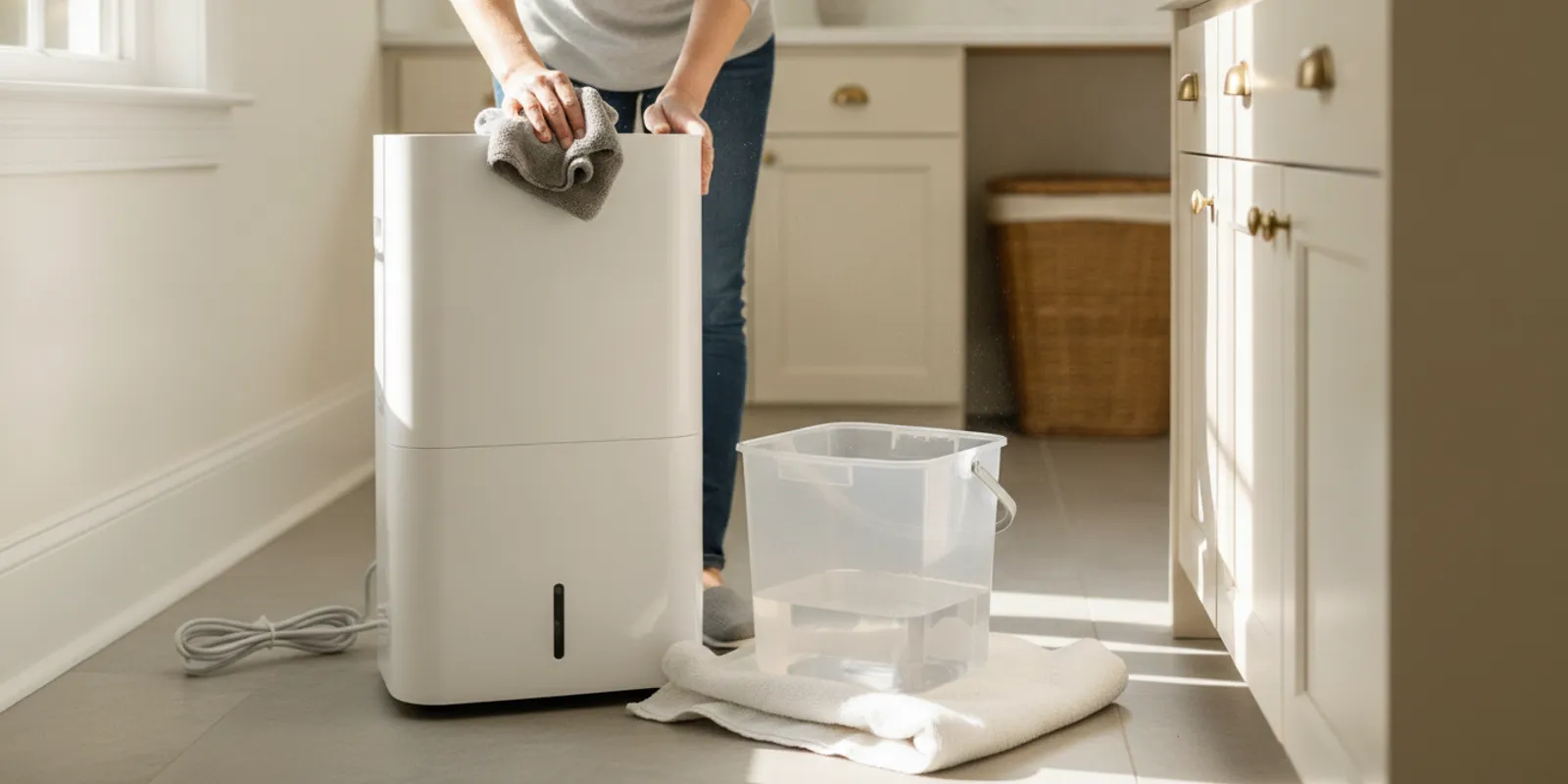
Knowing how to clean a dehumidifier helps reduce dust and residue that can collect during normal use. Work with the unit unplugged, follow its manual, and clean only parts the manufacturer identifies as user-accessible. This guide covers a removable bucket, washable filter, accessible coils, and exterior without treating cleaning as a repair.
What should you check before cleaning a dehumidifier?
Start with the appliance manual, not a general cleaning recipe. Dehumidifiers differ in filter design, bucket sensors, drain connections, coil access, and cleaning directions. The manual explains which parts can be removed and whether the filter can be rinsed. If the instructions say not to open a panel or wash a part, leave it in place.
Look for the model number on the unit label and find the manufacturer’s instructions for that exact model. Keep those instructions nearby while you work. In particular, check whether the unit uses a washable or replaceable filter, whether the bucket is dishwasher-safe, and how the maker says to clean the coils. Never assume a part is washable just because it comes off.
Before you begin, check the unit for damage or signs that go beyond routine dirt. Stop if you see a frayed cord, a cracked housing, a burning smell, unusual heat, leaking near electrical parts, or a persistent unusual noise. Do not take the unit apart to investigate. Cleaning cannot correct a mechanical or electrical fault; use the manufacturer’s support or a qualified appliance technician.
Gather a soft cloth, a small amount of mild dish soap if the manual permits it, a soft brush, and clean water. A towel can protect the floor and give parts a clean place to dry. Avoid abrasive pads, strong solvents, bleach, spray cleaners, and sharp tools unless the manufacturer specifically directs otherwise. Those products can damage plastic, coatings, or electrical components.
How do you prepare the unit safely?
- Turn the dehumidifier off. Use its power button, then unplug it from the wall. Do not rely on the control panel alone.
- Wait for moving parts to stop. Give the fan time to stop fully. If the appliance was running, allow it to cool before handling it.
- Move it only if you can do so safely. Keep it upright, and do not pull it by the cord. If it is heavy or awkward, ask for help rather than risking a drop.
- Protect the surrounding area. Place a towel under the unit or move it to a dry, stable surface. Keep water away from the plug, outlet, controls, and openings that lead to electrical parts.
Do not pour water over the unit, immerse it, or spray liquid into its vents. The unplugged state reduces electrical risk, but it does not make internal components safe to soak. Routine cleaning should stay limited to removable parts and surfaces the manual permits you to clean.
How do you clean the water bucket?
The bucket collects water from the air, so empty it before you clean the rest of the appliance. Pull it out according to the manual, keeping it level to avoid spills. Pour the water into a sink or drain. If the bucket has a float, sensor, or other removable piece, do not detach it unless the instructions say it can be removed.
- Rinse the bucket with clean water to loosen loose residue.
- Wash the inside and outside with a soft cloth or sponge and mild dish soap, if allowed by the manufacturer.
- Use a soft brush on corners and narrow seams where residue may collect. Do not force a brush into a sensor opening.
- Rinse away all soap, then wipe the bucket with a clean towel.
- Leave it out to air-dry fully before returning it to the unit.
A bucket that still smells or has visible buildup after a normal wash may need the manufacturer’s recommended cleaning method. Do not mix cleaning products or improvise a disinfecting solution. If the manual permits a specific solution, use only its stated dilution and process. A dishwasher is appropriate only if the manual explicitly says the bucket is dishwasher-safe.
Before reinserting the bucket, check that it is dry, undamaged, and seated in its correct position. A bucket that is crooked or not fully inserted can prevent some models from operating. If the unit continues to show a full-bucket warning when the container is empty and correctly seated, consult the manual or support rather than forcing the sensor.
How should you clean the filter?
The air filter catches dust and lint before they reach the unit’s interior. A clogged filter can restrict airflow, so checking it regularly is useful. First, unplug the appliance. Open the intake grille and remove the filter only as described in the manual. Some models use a reusable filter that can be rinsed; others require replacement instead.
For a washable filter, gently remove loose dust with a soft brush or vacuum attachment only if the manual permits it. If rinsing is allowed, use lukewarm water and avoid scrubbing or bending the mesh. The filter-cleaning instructions for a hOmeLabs dehumidifier, for example, describe unplugging the unit before removing and rinsing its reusable filter. Treat that as model-specific guidance, not a substitute for the instructions for your own appliance.
Do not use soap on the filter unless the manufacturer approves it. Rinse away any remaining dust and set the filter aside to dry completely. Do not reinstall a damp filter: moisture can be carried into the unit and may affect operation. Avoid using heat, a hair dryer, or direct high heat to speed drying, as this may distort the filter.
If the filter is disposable, damaged, torn, or no longer fits securely, use the replacement type and schedule specified by the manufacturer. Do not run the unit without a filter unless its instructions specifically allow that. Replace the grille as directed and check that it is securely in place before reconnecting power.
How do you clean accessible coils and the exterior?
Coils can collect dust, but access varies. Some manufacturers permit gentle cleaning of visible, exposed coil surfaces; others advise owners not to touch them. Never remove a cabinet panel just to reach a coil. If the manual does not describe coil cleaning as an owner task, stop at the filter and exterior and contact the manufacturer for guidance.
When accessible coil cleaning is allowed, keep the appliance unplugged. Use a soft brush to lift loose dust gently, following the direction recommended by the manufacturer. Do not press, scrape, bend, or straighten coil fins. Do not use water, coil cleaner, compressed air, or a vacuum directly on the coils unless the manual specifically approves the method. Stop if dust is packed deep inside or the surface appears damaged.
Wipe the exterior with a slightly damp soft cloth, then dry it with another cloth. Keep moisture away from the controls, air openings, power cord, plug, and any seams that could let liquid enter the housing. Clean the intake and outlet grille gently with a soft brush or dry cloth if the manual allows it. Do not push tools through the grille.
Do not confuse a dusty exterior with a reason to open the casing. Internal cleaning, refrigerant work, electrical inspection, or repair is not part of routine household cleaning. If the appliance has a persistent odor or visible buildup that cannot be reached through an approved access point, ask the manufacturer or an appliance technician what to do next.
What should dry before you use the dehumidifier again?
Let the bucket and washable filter dry completely. Check that the exterior is dry and that no water has run into the unit’s vents or controls. Reinstall only parts that are dry and correctly seated. Close the intake grille and confirm that the cord and plug are dry and undamaged.
Once everything is dry, reconnect the plug and follow the manufacturer’s startup instructions. If the unit displays an error, trips a circuit, smells hot, leaks, or makes an unfamiliar sound, turn it off and unplug it. Do not keep restarting it to see whether the problem clears. Cleaning does not diagnose or fix an electrical or mechanical issue.
How often should you clean a dehumidifier?
Use the manual’s schedule as your baseline. How often the unit needs attention can depend on how frequently it runs, the amount of dust in the room, and how quickly the bucket fills. A simple routine is to empty the bucket when it is full, inspect the filter regularly, and clean removable parts when they show residue or at the intervals the manufacturer recommends.
| Part or check | What to do | Important limit |
|---|---|---|
| Water bucket | Empty as needed; wash and dry when residue appears or the manual calls for it. | Use only approved cleaning products and methods. |
| Air filter | Inspect regularly; rinse a reusable filter or replace a disposable one as directed. | Confirm that the filter is fully dry before reinstalling. |
| Accessible coils | Remove loose dust only if the manufacturer identifies this as user maintenance. | Do not open panels, bend fins, or apply liquids without approval. |
| Exterior and grille | Wipe with a soft cloth and gently clear surface dust. | Keep liquid out of vents, controls, and electrical areas. |
| Before restarting | Check that parts are dry, seated correctly, and the cord is intact. | Stop if there is damage, an error, a leak, or unusual operation. |
A brief visual check each time you empty the bucket can help you notice a full filter or residue early. Follow any interval printed in the manual if it differs from this general routine. Conditions and designs vary, so a calendar schedule should not override the manufacturer’s directions.
What cleaning mistakes should you avoid?
- Cleaning while plugged in: Switch off and unplug before handling removable components or wiping the appliance.
- Using too much water: Wash only approved removable parts. Keep the housing and electrical areas dry.
- Reinstalling a damp filter or bucket: Give each part enough time to air-dry completely.
- Using harsh chemicals or abrasives: Stick to methods approved for the materials and model.
- Forcing access: Do not pry open panels or remove unfamiliar pieces to reach internal components.
- Assuming every filter is washable: Check whether yours is reusable or requires a specific replacement.
- Treating a fault as dirt: Odors, leaks, error messages, heat, or unusual sounds may need support, not more scrubbing.
When should you ask for help?
Contact the manufacturer or a qualified appliance technician if the cord or casing is damaged, the unit leaks near electrical areas, an error remains after you follow the manual, or the appliance behaves unusually after cleaning. Ask for help if coils or other parts are inaccessible, or if the instructions do not make clear whether a component can be washed. Do not attempt electrical repairs or refrigerant work yourself.
For general household upkeep, decide which tasks you can handle comfortably and which you would rather delegate. Clear Choice Home Cleaning Services LLC is locally owned and veteran-owned, based in Alpharetta, and serves Metro Atlanta. The team offers home cleaning options such as deep cleaning and standard cleaning; learn more about its cleaning services or the company’s local ownership and approach. Appliance cleaning itself remains subject to your model’s manual.
Contact us to request an estimate
Frequently Asked Questions
Can I clean a dehumidifier with vinegar?
Use vinegar only if the manufacturer’s instructions approve it for the specific part and explain how to apply it. Some materials or components may be damaged by acidic cleaners. When the manual does not recommend vinegar, use the approved method instead.
Can I wash a dehumidifier filter in the sink?
Only if the filter is designed to be washable. Check the manual, rinse gently if allowed, and let the filter dry fully before reinstalling it. A disposable filter should be replaced with the specified type rather than washed.
Can I clean the coils myself?
Only clean exposed coils if the manufacturer identifies that as user maintenance and explains how. Do not remove cabinet panels, bend fins, or put liquids on the coils without explicit instructions. Otherwise, leave internal coil cleaning to a qualified technician.
Why does my dehumidifier still smell after cleaning?
Check that the bucket and filter are clean and completely dry, then consult the manual’s odor guidance. A smell that persists, returns quickly, or seems electrical or hot is a reason to turn the unit off and contact the manufacturer or an appliance technician rather than applying stronger chemicals.
What is the safest way to get started?
Unplug the unit, check its manual, and clean only the removable parts and surfaces the manufacturer says are safe to handle. Let everything dry fully before restarting, and stop if you find damage or signs of a fault.