
How to Clean a Couch by Upholstery Type
Published · Clear Choice Home Cleaning Services
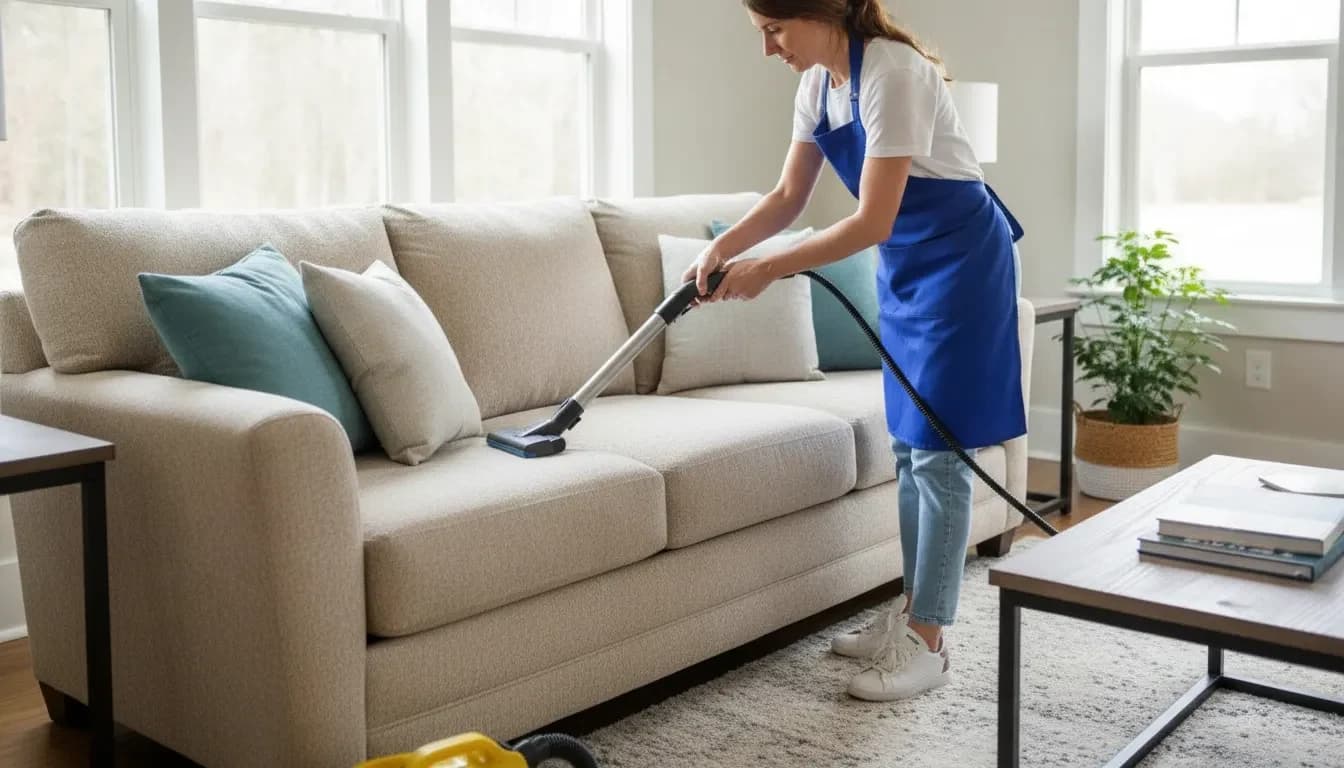
A couch can look sturdy while its upholstery reacts differently to water, solvents, heat, and scrubbing. If you are learning how to clean a couch, start with the fabric and care code rather than a favorite household recipe. A label check, gentle vacuuming, and a hidden-area test can help you avoid color change, shrinkage, rings, or texture damage.
Explore deep cleaning for a fresher home
The safest couch-cleaning routine is to identify the upholstery code, remove loose soil with gentle vacuuming, and test any permitted product in an inconspicuous area. Blot instead of rubbing, use only the moisture the label allows, and stop if the fabric changes color or texture.
What to Check Before You Clean a Couch
Before applying water, foam, or a spot cleaner, determine what the couch can safely tolerate. Fiber content, fabric construction, dyes, backing, and applied finishes all affect the appropriate method. The New Mexico State University upholstery guide recommends checking the furniture label or hang tag for item-specific instructions before cleaning.
Find the care label and cleaning code
Look under the seat cushions, along the platform, beneath the frame, or in the original furniture paperwork. The label may show a cleaning code that limits the products and methods you should use. If the label is missing or unclear, do not assume that a sturdy-looking fabric can handle a wet-cleaning method. Start with dry soil removal and seek manufacturer or professional guidance before using liquid.
Vacuum before spot cleaning
Inspect seams, cushion edges, and the gaps around the arms and back. Use an upholstery attachment with gentle passes instead of pressing hard into the fabric. A crevice tool can reach narrow gaps, while a soft brush may lift surface debris when the care label permits brushing. Avoid aggressive agitation on delicate or textured upholstery.
Loose dirt is easier to remove before it becomes embedded. Regular vacuuming also reduces the grit that can contribute to abrasion between fibers. If the couch carries a code X label, this dry method may be the complete routine the manufacturer allows.
Prepare a hidden spot test
Choose an inconspicuous area, such as the back edge or underside of a cushion. Use only the product and amount allowed by the care instructions. Apply gently, then blot rather than rub. Let the test area dry completely before judging the result. If the color transfers to the cloth, the texture changes, or a ring remains, stop and reassess instead of treating the visible area.
How to Clean a Couch by Upholstery Code
The care code is a limit, not a suggestion. The University of Illinois upholstery-care guidance describes testing an inconspicuous area for damage or color change before spot cleaning. Use the code together with the furniture maker’s instructions, because a code does not make every product or technique safe.
Upholstery cleaning codes and their limits
| Code | What it generally allows | Important limit |
|---|---|---|
| W | Spot cleaning with the foam from an approved water-based cleaner. | Use foam rather than soaking the fabric. Test first. |
| S | Spot cleaning with an approved solvent. | Do not substitute a water-based cleaner. Follow ventilation directions. |
| S-W or WS | Spot cleaning with an approved solvent or water-based foam. | Choose one method, test it, and avoid saturation. |
| X | Vacuuming or light brushing to remove surface soil. | Do not use liquid cleaning agents. A stain may need specialist help. |
For a W fabric, water-based foam may be suitable, but excess moisture can still leave marks or affect the backing. For an S fabric, a water spray can be the wrong choice even when it seems gentle. S-W or WS offers more flexibility, but a hidden-area test remains useful. Code X upholstery should stay dry unless the manufacturer provides different instructions.
Steam and hot-water extraction are not universal couch-cleaning methods. A machine that works on one water-tolerant textile may damage another material, leave moisture in the cushion, or conflict with the care label. Do not choose a machine solely because it is convenient. If the code is missing, the fabric is delicate, or the whole couch needs cleaning, a qualified upholstery professional can assess the safest path.
The Safest Step-by-Step Couch Cleaning Process
A careful process matters more than a strong cleaning solution. Use this sequence after confirming the label and code.
- Prepare the area. Move nearby objects out of the way and protect flooring that could be affected by drips. Remove loose cushions only if the design allows it. Check seams and the space beneath cushions for crumbs, grit, and other debris.
- Vacuum or lightly brush. Work across the seat, back, arms, sides, seams, and cushion edges. Use gentle passes and a tool that will not snag the fabric. For code X upholstery, do not continue to liquid cleaning.
- Confirm the permitted method. Treat W, S, S-W or WS, and X as different instructions. If you cannot identify the code, do not guess. Read the manufacturer information or ask a qualified professional.
- Spot-test the approved product. Apply the smallest practical amount to a hidden area. Let it dry fully, then check for fading, rings, stiffness, texture changes, or color transfer.
- Apply minimal product. Follow the care label and product directions. Use approved foam or solvent as directed, rather than flooding the upholstery. Work in a small area so you can observe how the fabric responds.
- Blot instead of rubbing. Press a clean, absorbent cloth against a spot and change to a clean section as needed. Rubbing can spread a mark, disturb the nap, or push soil deeper.
- Remove residue only when allowed. Follow the cleaner’s directions. Do not add a rinse or second solution unless the code and product instructions permit it. For code X, skip liquid residue removal.
- Dry the couch completely. Separate cushions when appropriate, improve air circulation, and keep the couch out of use until the fabric and underlying padding are dry. Inspect the area only after drying.
Stop if the fabric bleeds, changes texture, develops a ring, stays damp, or develops an odor. No home method guarantees that every stain will disappear. When the surrounding room also needs attention, Clear Choice offers professional house cleaning services, while specialty upholstery restoration should be matched with a qualified specialist.
How to Handle Common Couch Stains
Stain care starts with the cleaning code, not with the stain itself. A food spill on a code W cushion may tolerate an approved water-based foam, while code S calls for solvent-only spot cleaning and code X allows only vacuuming or light brushing. If the tag is missing, test any proposed method in a hidden area before treating a visible spot.
Food and drink spills
Remove solids carefully without grinding them into the fabric. Blot liquid promptly with a clean, absorbent cloth. Do not rub. Continue with the least aggressive method allowed by the code, using small amounts rather than saturating the cushion. If color transfers, the fabric changes, or the spot spreads, stop and let the area dry before reassessing.
Grease and oily marks
Grease can become a larger ring when treated with water or an untested powder. Check the label and manufacturer’s instructions first. For code S upholstery, use only an appropriate solvent and provide ventilation as directed. For code W, do not assume that a solvent or vinegar mixture is acceptable. Avoid copying a treatment from one furniture site to every couch, because fabric construction and finishes vary.
Pet messes, ink, and odors
For pet messes, remove surface material promptly and blot moisture without rubbing. Persistent odor may indicate contamination below the fabric or inside the cushion, where a surface treatment may not solve the problem. Ink can spread quickly when rubbed or exposed to the wrong solvent. Use a method only when the code and product instructions permit it, and stop if the mark spreads or the fabric changes.
Ventilate the room while using an approved solvent and let treated upholstery dry fully. Do not keep adding product because a first attempt did not work. Careful restraint is often safer than repeated spot treatments.
How to Clean Couch Cushions and Maintain the Fabric
Cushions collect crumbs, hair, dust, and body oils in places that are easy to miss. Before removing a cover or adding moisture, check its label and the furniture instructions. A removable cover is not automatically machine washable. Wash or spot-clean it only when the label permits that method, temperature, detergent, and drying process.
Start with dry work. Remove loose cushions if the design allows, then vacuum both sides with an upholstery attachment. Work slowly along seams, piping, corners, and the zipper area. Lift cushions to clean the deck beneath them, but avoid pulling loose threads or scraping the upholstery. Do not assume a protective finish eliminates the need for regular fabric care.
If a spill occurs, follow the code and blot promptly with a clean cloth. Do not rub, saturate the cushion, or introduce a household recipe simply because it worked on another sofa. Once cleaning is complete, let every surface dry fully before replacing cushions. Never stack wet cushions together, and avoid heat that the care label does not approve.
For ongoing maintenance, vacuum high-use seating regularly when practical, adjusting for household activity, pets, children, and fabric condition. Turn or reverse loose cushions only when the cushion design and manufacturer instructions allow it. Fixed cushions cannot be turned, so focus on gentle vacuuming and prompt attention to spills. A deeper cleaning interval should remain flexible rather than a fixed promise.
When Should You Call a Professional Upholstery Cleaner?
DIY care is more reasonable when the code is clear, the area is small, and the recommended method is straightforward. It is time to stop experimenting when you cannot identify the safest approach. If the care label is missing, unclear, or damaged, a professional may be safer than choosing a product by guesswork.
Delicate or specialty materials
Silk-like textiles, velvet, antique furniture, loose weaves, and other specialty fabrics deserve extra caution. A method that works on a durable, code-approved fabric may leave another material distorted, watermarked, shrunken, or discolored. Do not assume that steam, hot-water extraction, vinegar, powder, or a general upholstery spray is safe for every couch. Manufacturer instructions should take priority.
Whole-couch soil, water damage, or persistent odor
A small, fresh mark is different from widespread soil across the seat, arms, back, and cushions. Seek professional assistance when the furniture needs an even overall appearance instead of isolated spot treatment. Also ask for appropriate help after water damage, an over-wet cushion, slow drying, or moisture that has reached the filling.
Clear Choice Home Cleaning Services is a general residential cleaning company, not a specialist upholstery restoration service. The team can help with broader home upkeep, including living-area cleaning, while upholstery restoration, specialty fabric treatment, and water-damage remediation should be matched with a qualified specialist.
Request a quote from Clear Choice Home Cleaning Services
Frequently Asked Questions
How do you deep clean a fabric sofa at home without a machine?
Start by checking the care code, then vacuum seams, cushions, and the frame. Spot-test any approved cleaner in a hidden area. Apply only the amount allowed for the fabric, blot rather than rub, and let the upholstery dry completely. For code X fabric, use vacuuming or light brushing only. If the code is missing or the whole sofa needs cleaning, a professional may be safer.
Can I use a steam cleaner on every couch?
No. Steam and hot water are not universal upholstery solutions. Follow the furniture label and cleaning code before adding moisture. Code W may allow water-based foam, code S calls for solvent-only spot cleaning, and code X permits vacuuming or light brushing without liquid cleaners. When instructions are unclear, seek qualified advice.
How often should I deep clean my fabric sofa?
There is no single schedule for every household. Vacuum or lightly brush regularly, especially in high-use areas, and address spills promptly. Consider deeper cleaning when overall soil is visible, odors persist, or normal maintenance no longer keeps the fabric fresh. Children, pets, allergies, and frequent use may mean the sofa needs attention sooner.
What is the safest way to remove pet odors from a couch?
First identify the upholstery code and remove loose soil by vacuuming. Do not spread a baking soda, vinegar, or water-based recipe across every couch without checking the label. Persistent odor may involve the cushion filling or material below the surface. If the odor returns after careful, code-approved cleaning, ask a qualified professional for an assessment.
When should I call a professional upholstery cleaner?
Call for help when the code is missing, the fabric is delicate, the soil covers the whole couch, a stain keeps spreading, or the cushion remains damp or odorous. Professional guidance is also sensible for valuable or specialty furniture. Do not keep adding products after the fabric changes color, texture, or appearance.