Knowing how to clean a blender after everyday use helps prevent dried smoothie residue, lingering odors, and buildup around the blade assembly. The safest routine is simple: unplug the appliance, separate only the parts your model allows, wash the jar and lid, wipe the base, then let everything dry fully before storing it.
Request a quote for a professional deep cleaning when your kitchen needs more than everyday upkeep.
How to clean a blender in 7 safe steps
To clean a blender after everyday use, unplug it, empty the jar, separate removable parts, wash the jar and lid with warm soapy water, clean around the blades and seal carefully, wipe the motor base without submerging it, rinse away soap, and air-dry every part completely.
- Unplug the blender and clear the counter. Disconnect the cord before touching the jar, blade area, or controls. Empty leftover food into the appropriate container or trash, and use a spatula to remove thick residue if needed. Do not reach into a plugged-in blender, even if the controls are turned off.
- Separate the parts your model permits. Remove the lid, lid plug, jar, and any removable blade assembly, gasket, or seal according to the owner’s manual. Some blender jars have fixed blades, while others are designed to come apart. Never force a threaded base, gasket, or blade assembly that is not meant to be removed.
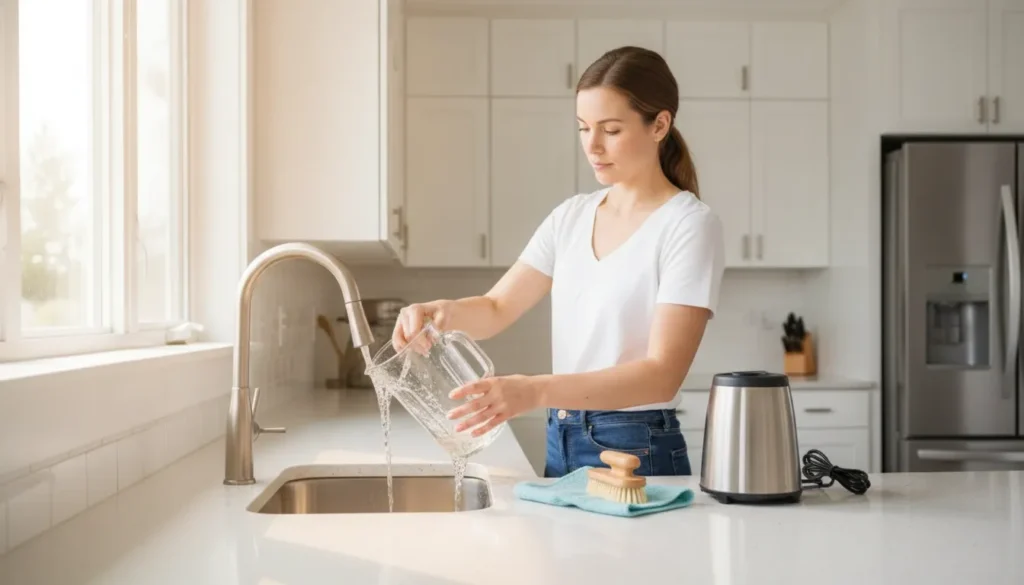
- Wash the jar, lid, and removable pieces. Fill the sink or a basin with warm water and a small amount of mild dish soap. Wash the jar and lid with a soft sponge or dish brush. Clean the lid plug, seal, and other small parts separately so food does not remain in grooves. If the manufacturer says a part is dishwasher-safe, follow the manual’s rack and temperature guidance.
- Clean around the blades without rushing. Blender blades can be sharp, and the underside can hold food particles. Keep the blade assembly pointed away from your fingers. Use a soft brush or the corner of a sponge to loosen residue around the edges and beneath the seal. For a fixed-blade jar, do not try to remove the blade. A short soak in warm soapy water can soften residue before brushing.
- Wipe the motor base by hand. Use a slightly damp microfiber cloth to wipe the base, buttons, cord, and the area where the jar sits. For splashes near seams, use a barely damp cotton swab or cloth, then wipe again with a dry cloth. Keep water away from the motor housing, vents, and electrical connections. Never place the base in the sink or dishwasher.
- Rinse away every trace of soap. Rinse the jar, lid, blade assembly, and seals under clean running water if the parts are designed for that treatment. Check the underside of the lid and the groove around the gasket. Soap left behind can affect the next drink or food mixture and may attract residue.
- Dry before reassembling. Place the parts upside down or on a clean drying rack where air can reach the openings and seal grooves. Wipe the motor base dry. Wait until the jar, blade area, seal, and lid are fully dry before putting the blender back together or closing it for storage.
What is the safest way to clean blender blades and seals?
The safest way to clean blender blades and seals is to unplug the appliance, follow the model’s disassembly instructions, and use warm soapy water with a soft brush. Do not grab sharp edges, force removable parts, or use metal tools that could damage the blade, gasket, or jar.
| Part | Everyday cleaning approach | Safety check |
|---|---|---|
| Fixed blade assembly | Soak briefly in warm soapy water, then brush around the blade and underside. | Do not try to unscrew or pull out a blade that is fixed to the jar. |
| Removable blade assembly | Remove only as directed, then wash the blade, gasket, and threads separately. | Keep fingers away from sharp edges and reinstall the seal correctly. |
| Rubber or silicone seal | Wash the groove and both sides with a soft brush to remove food film. | Check for tears, stretching, or an incorrect fit before using the blender. |
| Lid and lid plug | Wash the underside, vent, and plug where splashes collect. | Allow the pieces to dry separately so moisture does not stay trapped. |
How do you remove stuck-on blender residue?
For stuck-on blender residue, cover the residue with warm water and a little dish soap, let it soften, and use a soft brush or non-scratch sponge. Repeat the soak rather than scraping hard. If residue remains around a seal or blade, consult the appliance manual before using a cleaner or removing a part.
For smoothie, soup, or sauce residue
Start with a warm-water soak for several minutes. Pour out the loosened liquid, then brush the jar walls, corners, lid underside, and blade area. A long-handled soft bottle brush can reach the bottom of a tall jar without putting your hand near the blade. Rinse until the water runs clear.
For dried food around a gasket
Use a soft toothbrush or narrow cleaning brush to work along the seal groove. Avoid knives, forks, scouring pads, and other sharp objects. Scratches can make a surface harder to clean, while a damaged gasket can affect the jar’s seal. If the seal cannot be cleaned without forcing it, check the model’s care instructions or replace the part through the manufacturer.
Do not combine household cleaners inside the blender jar. Use only products the manufacturer approves for the jar, blade assembly, and seals, and rinse thoroughly after cleaning.
How should you clean the blender base?
Clean the blender base with a soft, damp cloth while the appliance is unplugged. Wipe spills from the buttons, jar seat, and cord, then dry the surface. Do not pour water over the base, submerge it, spray cleaner into openings, or put the motor housing in a dishwasher.
If food has dried around the jar seat, loosen it with a damp cloth rather than flooding the area. Use a dry cotton swab for narrow seams, and check that the base is completely dry before plugging the blender back in. This small step helps keep everyday splashes from becoming sticky buildup.
How often should you clean a blender?
Clean the jar, lid, blade area, and base after every use. A quick rinse may be enough for plain water or a thin mixture, but a soapy wash is better after smoothies, sauces, soups, nut butters, or any blend that leaves oil or pulp. Inspect seals and grooves during a deeper wash.
- After every use: Empty, rinse, wash food-contact parts, wipe the base, and dry.
- When residue appears: Soak first, then brush gently instead of scraping.
- Every few uses: Inspect the gasket, threads, lid vent, and underside of the blade area.
- After a long storage period: Wash and dry the parts before making food or drinks.
- When an odor lingers: Repeat the soap-and-water cleaning and check hidden grooves for trapped food.
Want a cleaner kitchen beyond the blender? Get a quote for Clear Choice Home Cleaning Services.
When does a deeper kitchen clean make sense?
Everyday blender care handles the appliance itself, but a deeper kitchen clean may help when grease, dust, and food residue have accumulated on surrounding counters, cabinet fronts, floors, or hard-to-reach areas. Clear Choice Home Cleaning Services provides quote-based residential cleaning in Alpharetta and nearby North Metro Atlanta communities.
For routine upkeep, a standard cleaning service can help maintain the kitchen and other frequently used rooms. For heavier buildup, review the deep cleaning service details and request a quote. Customers do not need to supply cleaning products or equipment.
Blender cleaning FAQs
Can you clean a blender by blending soapy water?
Some manufacturers recommend briefly running warm water with a small amount of dish soap for certain models. Only use that method when the owner’s manual allows it. Keep the lid secured, avoid overfilling, unplug the blender before handling the jar, and hand-wash the blade area afterward if residue remains.
Can you put a blender jar in the dishwasher?
It depends on the model and the individual part. Check the owner’s manual for the jar, lid, blade assembly, and seal before using a dishwasher. The motor base should be cleaned by hand and should never go in the dishwasher or sink.
How do you clean under a blender seal?
If the seal is designed to come out, remove it as directed and wash the seal and groove with warm soapy water and a soft brush. If it is fixed, clean around it without forcing or prying. A damaged or stretched seal should be replaced according to the manufacturer’s instructions.
Why does my blender still smell after washing?
A lingering smell often comes from food trapped under a lid seal, around the blade assembly, in a vent, or in a small groove. Repeat a warm soapy soak, brush those areas, rinse well, and let the parts air-dry separately. If the odor persists, check the manual for approved care or replacement parts.
How do you dry a blender after cleaning?
Set the jar, lid, blade assembly, and seal separately on a clean drying rack so air reaches the openings and grooves. Wipe the base dry with a clean cloth. Do not close or reassemble the blender while moisture is trapped inside.