
Basement Wall Cleaning: How to Clean a Basement Wall and Remove Dust, Marks, and Buildup
Published · Clear Choice Home Cleaning Services
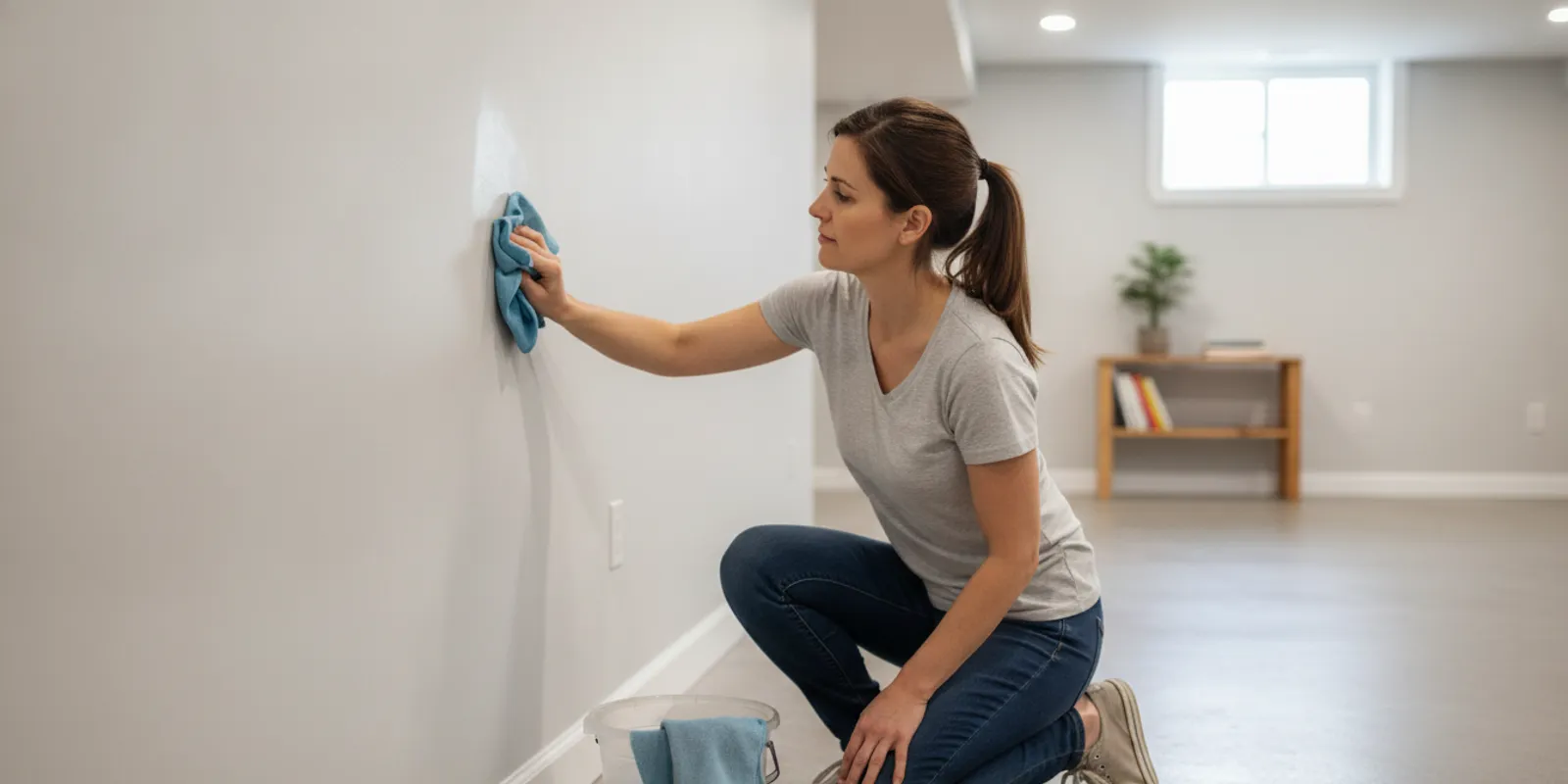
Knowing how to clean a basement wall starts with identifying what it is made of and whether the mark is ordinary dirt or a sign of moisture. Painted drywall, bare concrete, and masonry need different approaches, and soaking the wrong surface can create a bigger problem. Start gently, test a small area, and stop if you find dampness, peeling, or suspected mold.
What should you check before cleaning a basement wall?
Look over the entire wall in good light before you bring out water or cleaner. Note the surface, the size and location of marks, and any changes in the wall finish. A little dust or a few fingerprints call for a different response than a dark patch that keeps returning.
- Identify the material. Is it painted drywall, unfinished drywall, poured concrete, brick, or another masonry surface? If you are not sure, begin with a dry cloth in a hidden spot rather than assuming the wall can take water.
- Check for moisture. Look for damp areas, water stains, bubbling paint, loose wallpaper, soft or swollen drywall, and musty odors. Do not cover or scrub over a possible leak.
- Check the mark. Dust and light surface soil are usually different from rust, efflorescence (a chalky mineral deposit), grease, or possible biological growth. Avoid aggressive treatment until you know what you are dealing with.
- Clear the work area. Move furniture and stored items away from the wall. Protect nearby belongings and the floor from drips, and make sure you can work without reaching over clutter.
If the wall is wet, the finish is failing, or the source of a stain is unclear, pause. Cleaning removes surface soil; it does not repair water intrusion or a damaged wall. For general information about indoor air and moisture, you can consult the U.S. Environmental Protection Agency.
What supplies do you need to clean a basement wall?
Keep the kit simple. For routine dust and light marks, a soft microfiber cloth, a vacuum with a brush attachment, a small bucket, and clean water are often enough. A soft sponge can help with washable surfaces. Use a mild, surface-appropriate cleaner only when water alone is not enough, and follow its label.
- Soft microfiber cloths or a nonabrasive sponge
- Vacuum with a soft brush attachment, if available
- Clean water and a small bucket
- Mild cleaner labeled as suitable for the wall’s finish
- Dry towels for blotting and drying
- Gloves, if the cleaner label recommends them or you prefer them
Avoid scouring pads, stiff brushes, and strong chemicals unless a product label specifically says it is suitable for the material and mark. Never mix cleaning products. In particular, do not combine bleach with ammonia or other cleaners. Keep the area ventilated and follow all product directions. If you are unsure whether a cleaner is safe for a finish, check with the paint or surface manufacturer before using it.
How do you clean a basement wall step by step?
This sequence works for ordinary dust and light surface soil. It is deliberately gentle: start with the least wet method, then add a little moisture only if the surface can handle it.
- Move items and inspect. Pull furniture, boxes, and textiles away from the wall. Look for leaks, dampness, peeling finishes, and suspicious patches. Do not clean over a problem that needs repair or assessment.
- Remove loose dust. Work from the top down with a vacuum brush or dry microfiber cloth. Use light strokes so you do not grind grit into paint or scatter dust over items below.
- Test a hidden area. Dampen a cloth with clean water and wring it out well. Wipe a small inconspicuous patch. Wait until it dries and check for color transfer, dullness, swelling, or other changes.
- Wipe in small sections. If the test is fine, wipe a manageable area gently, using overlapping strokes. Rinse the cloth often in clean water so you are not spreading soil from one part of the wall to another.
- Use cleaner only as needed. Follow the label, use the smallest amount needed, and apply it to the cloth rather than spraying broadly. This gives you more control around outlets, trim, and unfinished edges.
- Rinse if the product directions require it. Use a separate cloth with clean water. Do not leave residue on a surface unless the product instructions say that is appropriate.
- Dry the surface. Blot or wipe with a dry towel. Let the area dry fully before putting stored items back or deciding whether a mark has lifted.
Work from top to bottom so loosened dust and drips do not soil a clean section. Keep the cloth damp, not dripping. If a mark does not lift with gentle wiping, do not keep scrubbing harder; the finish may be delicate, or the stain may be beneath the surface.
How should you clean different basement wall materials?
The safest method depends on the wall. A test patch matters because even two painted walls can have different finishes, age, and condition.
| Wall surface | Good first step | Use extra care with | Stop if you notice |
|---|---|---|---|
| Painted drywall | Dry dusting, then a barely damp cloth on a tested spot | Flat or older paint, excess water, abrasive scrubbing | Color transfer, bubbling, soft spots, or peeling |
| Unfinished drywall | Dry dusting only; check with a wall professional before wet cleaning | Water, which can soak into the paper facing and core | Softness, swelling, discoloration, or a musty smell |
| Sealed concrete or masonry | Dry brush or vacuum, then a damp cloth after testing | Unsealed pores, rough texture, and cleaner residue | Persistent dampness, powdery deposits, or recurring marks |
| Wallpaper or specialty finish | Check care instructions and test in a hidden area | Water at seams, adhesive, and textured coatings | Lifting edges, bubbles, color changes, or peeling |
Painted drywall: Keep moisture to a minimum, especially on flat, chalky, or older paint. Do not repeatedly scrub one spot, since friction can change the sheen or wear through the finish. If the paint is already peeling or bubbling, address the underlying issue before cleaning.
Unfinished drywall: Avoid wet wiping. Dry dusting may remove loose dust, but staining or suspected growth on drywall can extend beyond what is visible. If it is damp or damaged, ask a qualified building professional about the wall and its moisture source rather than trying to wash it in place.
Concrete and masonry: These surfaces can be rough and porous. Remove loose dust gently and test any damp-cleaning method in an inconspicuous location. A chalky white deposit can be mineral residue associated with moisture movement, not ordinary dirt; repeated brushing without addressing moisture may not resolve why it returned.
Wallpaper and decorative coatings: Do not assume they are washable. Check the product guidance if you have it, and test a hidden spot. If seams lift or the surface changes, stop and let it dry instead of adding more water.
For a broader reset of the room, see our guide to what deep cleaning covers. Clear Choice also describes its deep cleaning service for homes in its service area.
How do you handle common marks and buildup?
Dust and cobwebs: Use a vacuum brush or dry cloth from top to bottom. Dust the corners and the wall-to-ceiling edge, then clean the trim separately. A dry method is a useful first choice because it avoids spreading dust into a wet smear.
Fingerprints and light smudges: Test a barely damp microfiber cloth on a hidden area, then blot or wipe gently. If the paint is flat or the mark remains, stop before the finish gets shiny or worn. A touch-up may be more appropriate than stronger scrubbing.
Scuffs: Try a soft, damp cloth first. Do not reach immediately for an abrasive sponge or a concentrated cleaner. Some scuffs are transferred material; others have scratched or removed paint, and cleaning cannot restore a damaged finish.
Greasy marks: Check the surface and cleaner label before proceeding. Use a cleaner only if it is compatible with the finish, apply a small amount to a cloth, and test discreetly. Avoid letting solution run down the wall or sit for longer than its directions allow.
Chalky residue or recurring stains: Do not treat an ongoing moisture-related mark as a routine cleaning problem. Photograph it, note whether it changes after rain or plumbing use, and investigate possible water entry. Wiping may remove some surface residue without solving the source.
What should you do if you find a musty smell or possible mold?
A persistent musty odor, a damp patch, or suspected mold changes the job. Do not dry-brush or aggressively scrub a suspicious area, since that can spread material. Avoid painting over it or sealing it behind stored belongings. First consider whether there is a leak, condensation, drainage issue, or another source of moisture that needs attention.
Keep children and pets away from the affected area while you decide what to do. If the area is extensive, keeps returning, involves damaged drywall, or you have health concerns, contact a qualified remediation or building professional for advice. A normal house-cleaning visit is not a substitute for diagnosing water intrusion or remediating a building-material problem.
When you do not know whether a mark is ordinary grime, mineral residue, or a moisture problem, take a photo and get an appropriate assessment before applying a strong product. This protects the wall and avoids treating the wrong cause.
What basement wall cleaning mistakes should you avoid?
- Using too much water. Wet drywall, unsealed masonry, seams, and damaged paint can all be vulnerable to excess moisture.
- Skipping the test patch. A cleaner that works on one wall may discolor another finish.
- Scrubbing harder when a mark will not lift. More force can damage paint without removing a stain below the surface.
- Mixing products. Use one product at a time and follow the label. Never combine cleaners.
- Cleaning before fixing the source. A stain caused by a leak or recurring dampness is likely to return unless the source is addressed.
- Putting boxes back against a damp wall. Wait until the surface is fully dry, and avoid hiding an area you still need to monitor.
How often should you clean basement walls?
There is no single schedule for every basement. A finished room used every day may collect fingerprints and dust sooner than a storage area. Check the walls when you clean the room, and spot-clean ordinary marks as needed. A periodic dry dusting can help keep cobwebs and loose soil from building up.
Pay attention to changes between cleanings. New discoloration, a musty odor, or a patch that returns in the same location deserves investigation, not simply a more frequent wipe-down. If you store belongings near the walls, leave room to see the surface and check it periodically.
When should you ask for cleaning help?
Consider getting help when the basement needs more than a quick wall wipe: for example, when dust and ordinary buildup are spread throughout the room, the space needs a thorough reset, or you need help cleaning the surrounding finished areas. Clear Choice Home Cleaning Services is locally owned and serves North Metro Atlanta. The team brings cleaning supplies and equipment, and owner Michael Jones personally handles scheduling and makes a satisfaction check-in call.
For residential cleaning options, you can review the available cleaning services, read answers to common cleaning questions, or learn more about Clear Choice. Service availability and the right scope depend on the property and the work needed. Cleaning help is not a replacement for a contractor or remediation professional when the wall is damaged or a moisture issue needs diagnosis.
Ask about cleaning for your home
Frequently Asked Questions
Can I use vinegar to clean basement walls?
Do not assume vinegar is suitable for every surface or stain. It may affect some finishes and does not fix moisture behind a wall. Check the surface care instructions and use a tested, compatible method. Never mix vinegar with bleach or other cleaning products.
Can I use a magic eraser on painted basement walls?
Use caution. Melamine foam can be abrasive and may dull or remove paint, especially with pressure. If you choose to try it, check the wall and product guidance, test an inconspicuous spot, and stop if the finish changes. A soft damp cloth is a gentler first step.
Why does a white powder keep appearing on a concrete wall?
It may be mineral residue left as moisture moves through masonry, rather than ordinary dust. Brush off only loose material gently if appropriate, but investigate why the wall is getting damp. If it returns, do not rely on repeated cleaning alone.
Should I wash unfinished basement drywall?
Generally, avoid wet washing unfinished drywall because its paper facing can absorb moisture. Dry dusting may remove loose dust, but dampness, staining, softness, or suspected mold calls for an assessment of the wall and its moisture source.
What is the safest way to get started?
Identify the wall material, check for moisture, and begin with dry dust removal. Test any damp cloth or cleaner in a hidden spot, use as little moisture as possible, and stop if the surface changes or the mark appears to signal a deeper issue. A careful first pass can clean ordinary buildup without turning a small job into wall repair.