Construction Cleaning Services Post-Project Guide
Published · Clear Choice Home Cleaning Services

When the trades leave a remodeled home, office, or newly built property, it can look finished.
Fine dust may remain on trim, fixtures, vents, cabinetry, glass, and floors. That final layer of cleanup affects how confidently an owner, buyer, tenant, or client experiences the property.
Construction cleaning services prepare a property for its next use by removing ordinary dust and debris, detailing finished surfaces, and clarifying what is ready for handoff. A sound plan confirms the rooms included, surface care, access, disposal boundaries, and the timing of any remaining trade work.
Request a custom quote for your post-project cleanup
For builders, remodelers, property owners, property managers, and real estate professionals across North Metro Atlanta, a clear scope makes the handoff easier to coordinate. The sections below explain what to evaluate before contacting a provider.
What Do Construction Cleaning Services Include After the Trades Leave?
Post-project cleaning commonly includes ordinary debris pickup within the agreed scope and top-to-bottom dust removal. It may include floor care, accessible glass and fixture cleaning, cabinetry and trim detailing, and a final review. The provider and project contact should define rooms, materials, access conditions, and disposal responsibilities before service.
A property may need more than a quick sweep after painting, sanding, cabinetry installation, flooring work, or another renovation activity. Dust settles on high and low surfaces, while packaging and loose project debris collect in corners, closets, thresholds, and shared areas. The right checklist follows the property’s condition rather than relying on a generic room count.
A practical post-project cleaning checklist
- Ordinary debris pickup: Remove loose materials that fall within the agreed cleaning scope. Clarify who handles larger pieces, containers, scrap lumber, unused supplies, and waste requiring specialized disposal.
- Fine dust removal: Detail ledges, trim, doors, baseboards, shelves, fixtures, and other surfaces where particles settle. Cleaning only the floor leaves much of the post-project dust untouched.
- Floor care: Vacuum, sweep, and mop suitable flooring with a method appropriate for the material. Include edges, corners, thresholds, and accessible areas beside furnishings.
- Windows and glass: Clean accessible interior glass, frames, tracks, and sills when final window cleaning is part of the quote.
- Fixtures and fittings: Wipe accessible switches, hardware, vents, light fixtures, and installed features carefully.
- Cabinets and storage: Clean cabinet faces, handles, shelves, drawers, and accessible interiors when included, especially after woodworking or a kitchen renovation.
- Final review: Walk through the property with the responsible contact. Note restricted areas, late trade activity, and conditions outside routine cleaning.
This scope describes ordinary cleaning, not hazardous-material remediation, specialty restoration, or correction of construction defects. If a project involves suspected hazardous materials or regulated waste, the contractor or an appropriately qualified specialist should determine the next step before routine cleaners enter the area.
Clear Choice Home Cleaning Services provides its cleaning supplies and equipment. The final quote remains property-specific and quote-based, reflecting the requested rooms, surfaces, conditions, and priorities. See the company’s post-construction cleaning service for the service-specific starting point.
How Should Cleaning Fit Into a Project Handoff?
Schedule post-project cleaning after dust-producing trades have substantially finished, then coordinate it with the builder walkthrough, inspection, listing photography, occupancy, or owner handoff. Leave room for a follow-up touch-up if another trade returns. Cleaning cannot prevent later dust or guarantee approval of construction work.
Cleaning works best as a planned transition between active construction and the next use of the property. Scheduling too early can mean that sanding, drilling, painting, or installation work soils surfaces again. Scheduling without enough coordination can leave the team unable to enter rooms, reach utilities, or remove ordinary debris included in the agreed scope.
A five-step handoff sequence
- Confirm trade completion. Ask the project lead which rooms are ready and whether painting, cutting, sanding, installation, or other dust-producing work remains. Separate active work from areas ready for cleaning.
- Walk the property. Identify floors, rooms, fixtures, cabinetry, windows, shared areas, and priority surfaces. Record restricted areas or spaces awaiting a final installation.
- Define the cleaning scope. Separate routine dust, surface care, and ordinary debris from construction defects, restoration, or waste requiring another provider. Put exclusions in the quote discussion.
- Coordinate the review point. Plan the visit before a walkthrough, listing appointment, tenant turnover, or occupancy handoff when practical. Treat the date as a coordination target, not a guaranteed completion promise.
- Review the result. Have the project lead, owner, property manager, or agent compare the cleaned areas with the agreed scope. Note changes caused by late trade work or newly available rooms.
The OSHA housekeeping standard offers background on keeping construction work areas, passageways, and stairs clear of debris. It does not replace a project-specific cleaning scope or make a cleaning provider responsible for construction-site compliance.
Clear Choice can discuss a property-specific plan for North Metro Atlanta projects. The company’s full service overview can help a project contact distinguish post-construction work from related cleaning needs.
Which Surfaces Belong on a Post-Project Cleaning Checklist?
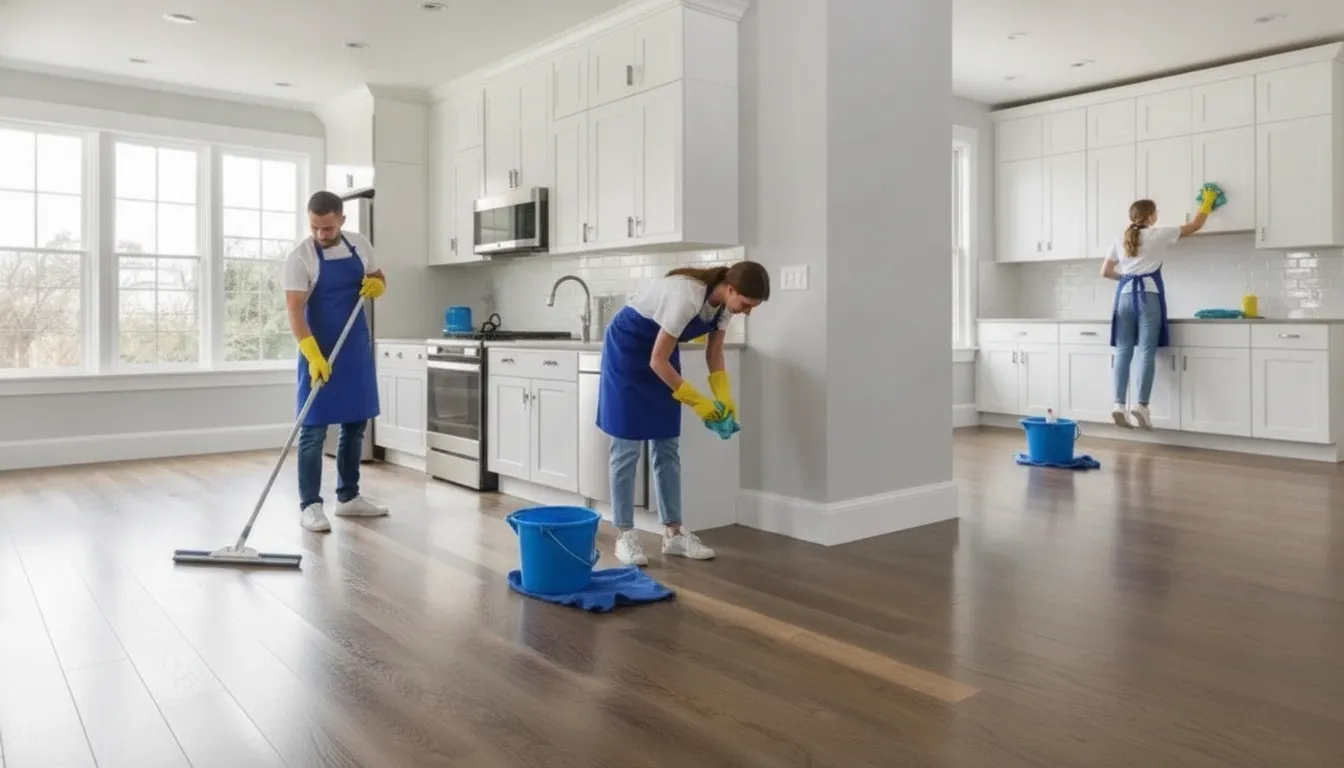
A complete checklist moves from higher surfaces to lower ones and covers more than visible floors. It should address accessible ceilings and fixtures, walls and trim, windows, cabinetry, counters, floors, thresholds, corners, shelves, and other places where dust settles. Methods should match the material and agreed scope.
Construction dust travels through a space as people move, doors open, and air circulates. A top-to-bottom sequence reduces the chance that a lower surface is cleaned before dust from an overhead area is removed. The EPA structure-cleaning protocol provides additional background on thorough cleaning approaches, although each service should still reflect the property’s condition.
Overhead surfaces and installed fixtures
Check accessible ceilings, light fixtures, fan housings, vents, registers, and trim around installed features. These areas can hold settled dust even when the floor looks clear. Confirm that fixtures are cool and accessible before cleaning. Routine vent and register cleaning is surface care, not HVAC-system remediation or an air-quality guarantee.
Walls, trim, doors, and windows
Walls, corners, door tops, casings, baseboards, frames, tracks, and sills deserve a deliberate inspection. Use methods suited to the paint, wall covering, wood, or other finish. Accessible interior glass can be included when requested, but glass restoration, damage repair, and construction-defect correction should not be assumed as ordinary cleaning.
Cabinetry, counters, and floors
Detail cabinet faces, handles, shelves, drawer openings, counters, backsplashes, vanities, and other installed horizontal surfaces when included. Floors need loose debris removed before the final vacuuming, sweeping, or mopping pass. The project contact should identify delicate materials and provide known care requirements.
Edges and hard-to-reach areas
Look at closet shelves, exposed niches, stair rails, ledges, corners, thresholds, tops of doors, and accessible spaces beside fixtures. These locations are easy to skip when a property is cleaned quickly. Listing them allows the responsible contact to decide whether they belong in the requested scope.
What Access and Debris Details Should You Coordinate First?
Before booking, provide entry instructions, an on-site contact, room access, working utilities when needed, parking or loading details, occupancy information, and the location of ordinary debris. Identify materials or waste outside routine cleaning so the contractor or qualified specialist can manage those responsibilities.
Access planning protects finished surfaces and prevents avoidable delays. A cleaning team may need to move between rooms with equipment, reach closets or cabinets, and work around other crews. The project lead should explain what is open, what is restricted, and what may change before the visit.
Confirm entry, utilities, and room status
- Share the address, entry method, lockbox or key instructions, alarm procedures, and on-site contact.
- Confirm which rooms, closets, cabinets, stairways, and shared areas are included and accessible.
- Identify whether electricity and water are available if the agreed cleaning tasks require them.
- List rooms where another trade is still working or where the finish is not ready for routine cleaning.
Plan for occupancy, parking, and equipment movement
Explain whether the home, apartment, office, or commercial space is vacant, partially occupied, or operating during service. Identify furniture, equipment, tools, or personal belongings that should stay in place. Provide parking, loading, elevator, gate, and building-access details so the team can plan how to bring supplies inside.
Set clear debris and disposal boundaries
Do not assume every item left by a trade is included. Discuss packaging, scrap, loose dust, unused materials, large building components, furniture, containers, and waste that must remain for the contractor to remove. Project owners and contractors should set the disposal plan and manage regulated waste through the appropriate channel. Cleaning services should not be expected to identify, transport, or remediate hazardous materials such as asbestos or lead-contaminated debris.
What Should You Ask Before Requesting a Construction Cleaning Quote?
Give the provider the property type, approximate size, rooms, project stage, surfaces, remaining debris, access instructions, occupancy status, priority areas, and desired handoff point. Ask what the quote includes, what falls outside routine cleaning, what supplies are provided, and whether follow-up service can be discussed.
A specific project brief produces a more useful quote than a general request. It gives the cleaning company a clear basis for discussing scope and scheduling without implying a flat rate or guaranteed completion date.
| Quote detail | Why it matters |
|---|---|
| Property type and size | Sets the scale and identifies rooms, floors, and separate areas. |
| Project stage | Shows whether more dust-producing trade work is expected. |
| Surfaces and priorities | Clarifies care for floors, glass, cabinetry, fixtures, and trim. |
| Access and occupancy | Helps plan entry, equipment movement, utilities, and work around people. |
| Debris boundaries | Separates ordinary cleaning from contractor or specialist responsibilities. |
Questions to include in your project brief
- What is the property type, approximate size, number of rooms, and number of floors?
- Which trades have finished, and which crews may return after cleaning?
- Which surfaces need attention, including flooring, glass, cabinetry, counters, fixtures, vents, trim, and stairs?
- What ordinary dust, packaging, sawdust, or loose debris remains, and who handles larger or regulated waste?
- How will the team enter, park, unload, and access every area in the requested scope?
- Will the property be vacant, partially occupied, shown to buyers, or operating as an office during service?
- What matters most at handoff, such as a builder walkthrough, listing photography, tenant turnover, or owner review?
- Would a one-time clean or a follow-up maintenance visit better fit the property’s next phase?
- Does the provider bring its own products, tools, and equipment?
Clear Choice Home Cleaning Services uses quote-based service rather than published pricing. The locally owned company serves Alpharetta and communities across North Metro Atlanta, including Cumming, Johns Creek, Roswell, Sandy Springs, Milton, Suwanee, Duluth, Peachtree Corners, Norcross, and others. The team brings eco-friendly cleaning supplies and equipment. Owner Michael Jones is personally involved in scheduling and satisfaction follow-ups.
When Does a Newly Finished Space Need Follow-Up Cleaning?
A follow-up visit may help after furniture delivery, final fixture installation, renewed trade activity, or early occupancy stirs up settled dust. The need depends on the property’s condition and agreed scope. Weekly, bi-weekly, monthly, or custom recurring service can be discussed when ongoing care makes sense.
A one-time post-project clean may be enough for a vacant property that moves directly to handoff. Other spaces change after the first visit. Furniture arrives, doors open, occupants move through rooms, and a final installer may return. A focused touch-up can address areas affected by those changes without treating the original scope as a promise that later conditions will remain unchanged.
When ongoing maintenance is practical
Regular service may be useful for a home after a major renovation, an apartment between residents, a rental portfolio, or an office returning to normal operations. Property managers and real estate professionals may also coordinate support before showings or a new resident’s arrival. See the real estate cleaning service when property preparation is part of the next phase.
How to plan the next visit
Note which areas changed after the initial cleanup, whether trade work remains, and which surfaces now need attention. Share that information when requesting a follow-up quote. A custom schedule can be considered around occupancy, property access, and ongoing activity. For routine upkeep after the project, the office and workspace cleaning service or deep cleaning service may address a different phase of care.
How Can You Evaluate a Local Post-Construction Cleaning Partner?
Evaluate a local provider by asking whether Clear Choice Home Cleaning Services will define the scope. Distinguish routine cleaning from specialist work, coordinate access and remaining trades, bring necessary supplies and equipment, explain quote-based service, and discuss follow-up needs. Local familiarity and a clear point of contact can make project communication easier.
For a North Metro Atlanta project, look for a cleaning partner that listens to the handoff requirements instead of treating every property the same. The provider should be comfortable discussing surface priorities, room access, debris boundaries, occupancy, and the review point. It should also be clear about what ordinary cleaning does not cover.
Clear Choice Home Cleaning Services is locally owned and serves residential and commercial properties from its Alpharetta base. Its service options include post-construction cleaning, move-in and move-out cleaning, real estate cleaning, office and workspace cleaning, deep cleaning, and other property-specific needs. The company brings its supplies and equipment, and scheduling can be one-time or recurring based on the agreed request.
Before contacting a provider, gather the project brief described above. Then use the North Metro Atlanta service-area information and contact page to confirm whether the property is within the company’s coverage and to request a project-specific conversation.
Talk with Clear Choice about your post-project cleaning scope
Frequently Asked Questions
What is included in construction cleaning services?
Construction cleaning services commonly include ordinary dust and debris removal, top-to-bottom surface detailing, floor care, accessible glass and fixture cleaning, cabinetry or trim cleaning, and a final review. The exact scope depends on the property, surfaces, access, debris, and priorities agreed before service.
When should construction cleaning be scheduled?
Construction cleaning should be scheduled after the relevant dust-producing trades have substantially finished and before the planned walkthrough, photography, occupancy, or handoff when practical. If another crew returns afterward, the project contact and cleaning provider can discuss whether a follow-up touch-up may be useful.
Is construction cleaning different from standard house cleaning?
Yes. Construction cleaning is organized around post-project dust, ordinary debris, finished surfaces, access, and handoff coordination. Standard house cleaning usually supports routine upkeep. A provider should confirm which tasks and materials are included instead of assuming one service covers every condition.
Do I need to be present for construction cleaning services?
The property owner or project lead does not necessarily need to stay on site. A reliable entry plan, access to the agreed rooms, and working utilities when needed can support service when the owner cannot remain present. The project contact should confirm how the final review will be handled.
Can follow-up cleaning be arranged after the initial project cleanup?
Clear Choice Home Cleaning Services can discuss follow-up cleaning when later trade activity, furniture delivery, occupancy, or settled dust changes the property’s condition. One-time, weekly, bi-weekly, monthly, or custom recurring scheduling may fit different needs. The scope and quote remain based on the property and request.