Commercial Kitchen Cleaning Services: A Safer Workplace Routine
Published · Updated · Clear Choice Home Cleaning Services
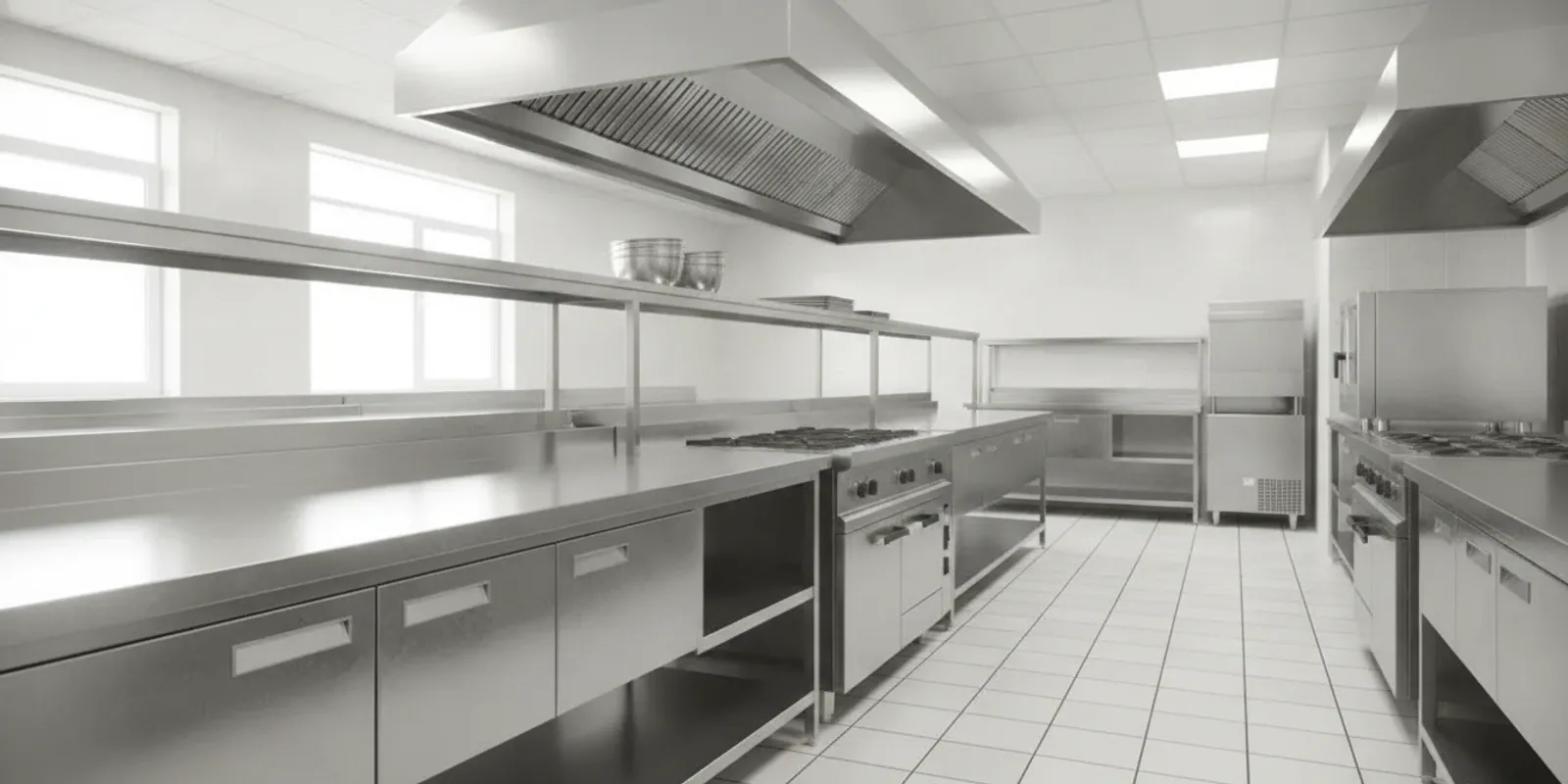
Commercial kitchen cleaning services can help keep a busy food-preparation area orderly, but a clean kitchen depends on a clear routine between professional visits, too. The right plan separates tasks by frequency, identifies who owns each job, and protects equipment while work is underway. Here is how to build that plan, what to clarify before hiring help, and where to start if your North Metro Atlanta business needs cleaning support.
Request a Commercial Kitchen Cleaning Quote
What should commercial kitchen cleaning cover?
A commercial kitchen is not one surface or one task. It is a work area with food-contact surfaces, floors, equipment, storage, sinks, and places where grease and dust can collect. A useful cleaning plan names each area and states what should happen there. That makes the work easier to assign, check, and adjust when the kitchen's schedule changes.
Begin by defining the scope in practical terms. For example, “clean the kitchen” is too broad to guide a shift handoff. A clearer instruction could say: remove debris from the floor, clean and sanitize designated food-contact surfaces according to product directions, wipe exterior surfaces, and record any equipment that could not be reached safely. The exact procedure depends on the surface, equipment, products, and the business's food-safety procedures.
Cleaning and sanitizing are related but not interchangeable. Cleaning removes visible soil and residue. Sanitizing is a separate step intended to reduce microorganisms on a surface to an appropriate level, when done with a product and method suitable for that surface. Follow the product label and your establishment’s food-safety procedures; do not assume that one wipe or one chemical performs both steps. Keep chemicals away from food and food-contact items unless the label and approved procedure direct otherwise.
In addition to scheduled work, write down what is outside the scope. Examples may include internal servicing of specialized machinery, hood or exhaust work requiring qualified technicians, pest-control work, or repairs. A cleaning team should not be expected to take apart equipment or perform maintenance unless that work is explicitly agreed and the worker is qualified to do it.
How should you divide cleaning tasks by frequency?
Set a baseline routine around the kitchen’s actual use. A lightly used prep area and a high-volume line will not have the same needs. Local food-safety rules, equipment instructions, and your own operating procedures also matter. Use the table as a planning framework, then assign specific tasks and timing to your operation rather than treating it as a universal code checklist.
| Timing | Typical focus | Who should confirm completion? | Planning note |
|---|---|---|---|
| During and at the end of each shift | Spills, food debris, work surfaces, sinks, utensils, and floor areas that need attention | Assigned station or shift staff | Use the approved cleaning and sanitizing procedure for each surface. |
| Daily close | Accessible counters, equipment exteriors, sinks, waste areas, and floors | Closing lead or manager | Allow equipment to cool or be safely shut down as required before cleaning. |
| Weekly or on a set rotation | Reachable ledges, shelving, splash zones, and other areas that collect residue | Manager or designated checklist owner | Adjust the rotation for traffic, soil, and equipment directions. |
| Periodic deep clean | Approved hard-to-reach areas and built-up residue within the agreed scope | Manager and cleaning provider | Agree in advance on access, disassembly limits, products, and timing. |
| As needed or by qualified provider | Specialized equipment interiors, exhaust systems, repairs, or other technical work | Qualified technician or responsible specialist | Do not treat ordinary surface cleaning as equipment service. |
Assign a named role to every recurring task, even if the person changes by shift. A checklist is useful only when someone can tell whether an item is complete, deferred, or blocked. Add a short notes field for problems such as a damaged surface, a leaking dispenser, or equipment that could not be moved. A record of the issue makes it less likely that a future shift assumes the work was finished.
What is a practical daily kitchen-cleaning sequence?
Order matters. A consistent sequence helps prevent a freshly cleaned area from being soiled again and makes it easier to keep dirty tools away from clean surfaces. Adapt these steps to your approved procedures and equipment instructions.
- Prepare the space. Remove or protect food, utensils, and other items as required by your procedure. Tell staff which area is being cleaned and keep people away from wet floors or active work zones.
- Handle equipment safely. Follow the manufacturer's directions before cleaning. If an appliance must be switched off, cooled, unplugged, or isolated, follow the prescribed process. Do not reach into moving, hot, or energized equipment.
- Clear loose debris. Remove food scraps and disposable waste using the method designated for the area. Keep waste containers managed so they do not spill or contaminate cleaned surfaces.
- Work from cleaner or higher areas toward dirtier or lower areas. Clean shelves and accessible surfaces before the floor where practical. Use separate, clearly managed cloths or tools for different zones, as required by your procedures.
- Clean, rinse, and sanitize when required. Use only products suitable for the task and follow label directions for dilution, contact time, rinsing, and any other specified steps. Do not mix cleaning chemicals.
- Finish with floors and waste areas. Use appropriate signs or barriers when floors are wet. Let surfaces dry as directed before returning equipment, utensils, or food items.
- Check and document. Review the checklist, record incomplete items, and report anything that needs maintenance or a different specialist.
For small detachable parts, do not assume that “easy to remove” means safe to remove. A Sacramento City College food-safety learning resource describes locking out a machine by unplugging it and removing attachments and the bowl before washing surfaces. Use your own equipment manual and workplace procedures as the authority for the specific machine and task: review the workplace sanitation guidance.
How can you protect kitchen equipment and surfaces?
Commercial equipment can have sensitive controls, coatings, seals, and electrical components. A generic cleaner or overly wet cloth may damage a finish or create a safety risk. Check manufacturer instructions before applying a product, using an abrasive pad, directing water near controls, or removing a panel or part. If instructions are missing, identify the model and ask the manufacturer or qualified service provider rather than guessing.
- Match the product to the surface. Stainless steel, painted metal, glass, plastic, and flooring may each have different care requirements. Use products labeled for the intended use and follow directions.
- Keep chemical products identified and stored appropriately. Keep them in their original or correctly labeled containers and away from food and food-contact items, following workplace procedures.
- Do not mix products. Combining cleaners can create dangerous reactions. Use one product as directed, then complete any required rinse or next step.
- Keep water away from electrical components. Use the method specified by the equipment maker. Do not spray into vents, controls, or openings unless the instructions expressly permit it.
- Avoid unauthorized disassembly. Remove only parts the operator is permitted and trained to remove. Leave service panels, gas connections, and specialized components to qualified people.
- Use tools by zone. A simple color or label system can help staff avoid using a tool from a floor or waste area on a food-contact surface.
Make the plan visible where staff can use it. A short station checklist, a labeled storage location, and accessible product directions are more useful than a long procedure hidden in an office. If a product or method changes, update the instructions and make sure the people doing the work know what changed.
How should staff respond to spills and persistent residue?
Respond to a spill according to the substance, location, and workplace procedure. First, keep people away from a slippery or otherwise affected area and alert the person responsible for the kitchen. Use the prescribed method and suitable protective equipment, if required. A spill involving an unknown chemical, broken glass, hot liquid, or a product that may react with another substance should not be treated like an ordinary food spill. Follow the site's response procedure and get a manager or qualified responder involved.
For routine food residue, remove it promptly using the method assigned to that surface. Avoid pushing debris into seams, drains, or equipment openings. Use the correct tool for the area, then complete the cleaning and sanitizing steps required for the surface. If residue remains after the approved method, do not keep escalating to harsher chemicals or abrasives without checking the equipment instructions. A persistent mark may be damage, baked-on soil, or a sign that the surface needs specialist attention.
Repeated spills in the same place may point to a process issue rather than a need for stronger cleaner. Check whether a container is leaking, a station is overcrowded, a bin is poorly placed, or staff lack a nearby tool or clear procedure. Correcting the cause can reduce repeat work and help keep walkways usable. Record recurring problems briefly so the manager can spot patterns and adjust station setup or task assignments.
How can you tell whether the routine is working?
A useful cleaning routine is consistent, understandable, and safe to complete. Look beyond whether a box is checked. A supervisor can periodically review a few representative areas, compare the result with the written task, and ask staff whether they had the right time, tools, and instructions. This is a practical quality check, not a substitute for any required inspection or food-safety monitoring.
Watch for patterns: the same task repeatedly marked incomplete, equipment that cannot be accessed during the scheduled window, or a surface that looks dirty again soon after cleaning. These observations may call for a different frequency, clearer responsibility, an equipment repair, or a revised work sequence. When a provider performs periodic work, agree on how completion will be confirmed and how exceptions will be reported. A brief handoff with the kitchen manager can flag anything that needs attention before the area returns to use.
How do you decide whether to handle work in-house or hire a provider?
Routine tasks tied closely to food preparation usually need clear in-house ownership because they occur throughout the day and depend on the kitchen's operating procedures. Outside help may be useful for an agreed periodic cleaning scope, support during a closure, or work on areas the regular team cannot address in its normal schedule. Specialized servicing should remain with a qualified technician or provider whose scope covers that work.
Before requesting a quote, list the rooms and surfaces, the desired timing, the condition of the area, access requirements, and any equipment that must remain untouched. Describe whether the work is a one-time reset or a recurring need. Share the operating window and whether the space can be cleared or must be cleaned around installed equipment. Clear information helps a provider assess what is feasible; it does not replace a site-specific scope or safety review.
Ask prospective providers questions such as:
- Which specific areas and surfaces are included, and which are excluded?
- Does the scope cover routine surface cleaning only, or any specialized work? Who is responsible for equipment disassembly?
- What products and methods are planned, and how will they be matched to the surfaces and your procedures?
- What preparation must your staff complete before the visit, including food, utensils, waste, and access?
- When can work take place, how long might the area be unavailable, and who will confirm the handoff?
- How will you report blocked tasks, damage, or maintenance concerns?
Compare proposals by scope and assumptions rather than the headline alone. One quote may cover accessible surfaces while another includes additional agreed areas. Ask for unclear items to be written down. Commercial cleaning needs vary by facility, condition, frequency, access, and service scope, so request a custom quote rather than relying on a generic estimate.
How can you prepare the kitchen for a scheduled cleaning visit?
Preparation starts with one contact person. Choose a manager who can answer questions about access, approved products, equipment limits, and which areas are available. Share the written scope with that person and the provider before the visit. If the kitchen has areas that must remain in use, identify them in advance instead of asking a cleaner to work around an active food-preparation station without a clear plan.
Confirm the service window against deliveries, production, and closing duties. Allow time for the work and any required drying or reset before staff use the area again. Decide how the team will enter and leave, where approved supplies can be stored, and how the manager will be contacted if a task is blocked. Keep access details secure and provide them only through the business's normal process.
Before work begins, staff should handle food, utensils, and movable items according to the kitchen's procedures. Mark equipment that must not be moved or cleaned, and identify known damage or maintenance concerns. Do not ask a provider to guess whether a machine can be shifted, opened, or disconnected. If a task depends on access to a particular surface, settle who will make that surface available and when.
After the visit, reserve a short handoff for the manager to review the agreed scope, note any exceptions, and confirm what needs follow-up. This is especially helpful when the work happens outside normal operating hours. A concise written record can include the date, completed areas, blocked tasks, and issues reported, without turning the process into unnecessary paperwork.
What should a kitchen-cleaning checklist include?
Keep the checklist short enough to complete and specific enough to verify. For example, “wipe down” is difficult to assess; “clean the outside of the reach-in refrigerator, including handle, without spraying controls” is clearer. Divide the checklist into stations or zones, and note which entries are daily, scheduled, or assigned to a provider.
- Area or equipment name, with the applicable procedure or product reference.
- Task and frequency, including what “complete” means.
- Responsible role or shift, plus a simple completion record.
- Any required cooling, shutdown, access, or protective steps before work begins.
- What to do when an area is blocked, a product is unavailable, or damage is noticed.
- A manager review step for missed work and recurring issues.
A checklist should not encourage staff to clean unsafe equipment or perform tasks outside their training. Build in a clear stop-and-report instruction: if an item cannot be cleaned safely using the approved method, leave it out of service if required by your procedure and notify the responsible manager. Do not improvise around a hazard.
How can a North Metro Atlanta business request cleaning support?
Clear Choice Home Cleaning Services is locally owned and serves residential and commercial customers in North Metro Atlanta. Its commercial offering is office and workspace cleaning; a commercial kitchen has different surfaces, access needs, and operating procedures, so confirm the exact space and requested tasks before assuming a particular kitchen-cleaning scope. The team can discuss the request and whether the work matches the service available.
When you reach out, include the business location, approximate kitchen area, requested tasks, preferred schedule, and any access or equipment restrictions. Avoid sending sensitive access details in an initial inquiry. A clear description lets the conversation focus on scope, timing, and a quote. Learn more about office and workspace cleaning, review the broader cleaning services in North Metro Atlanta, or check the service areas to see whether your location is covered.
Clear Choice is an Alpharetta-based local company, and owner Michael Jones is personally involved in scheduling and satisfaction follow-ups. For a kitchen-specific request, provide enough detail for the team to confirm fit rather than assuming a standard package. You can also read the cleaning service FAQs or learn more about Clear Choice.
Contact Clear Choice to Discuss Your Cleaning Needs
Frequently Asked Questions
How often should a commercial kitchen be cleaned?
There is no single schedule that fits every kitchen. Plan for routine cleaning during and after work, then set periodic tasks based on traffic, residue, equipment directions, and applicable food-safety procedures. The person responsible for the kitchen should review the schedule and adjust it when use or conditions change.
Can staff use the same cleaner on every kitchen surface?
No. Product suitability depends on the surface and the task. Follow product labels and manufacturer directions, and use the cleaning and sanitizing procedures established for the workplace. Never mix products or apply a product to food-contact surfaces unless its directions and the procedure allow it.
Should a cleaning provider take apart commercial equipment?
Only when disassembly is included in the agreed scope and the person doing it is qualified and authorized. Many routine cleaning tasks should not involve opening service panels or handling gas, electrical, or other specialized components. Confirm limits before work begins.
Does Clear Choice provide commercial kitchen cleaning?
Clear Choice lists office and workspace cleaning as its commercial service. Because kitchen cleaning can involve specialized surfaces, equipment, and operating requirements, contact the company with the specific location and tasks to confirm whether the request fits its service scope.
What information helps a provider prepare a quote?
Share the location, approximate size, requested areas, cleaning frequency, preferred time, condition, and any access or equipment restrictions. Ask the provider to clarify what is included and what requires a separate specialist. The quote should reflect the agreed scope rather than a generic price assumption.
A safer, more consistent kitchen routine starts with clear responsibilities, equipment-specific instructions, and a written scope for any outside help. Review the plan regularly so it still fits the way your kitchen operates.