
How to Clean Shower Drain Buildup and Prevent Slow Flow
Published · Clear Choice Home Cleaning Services
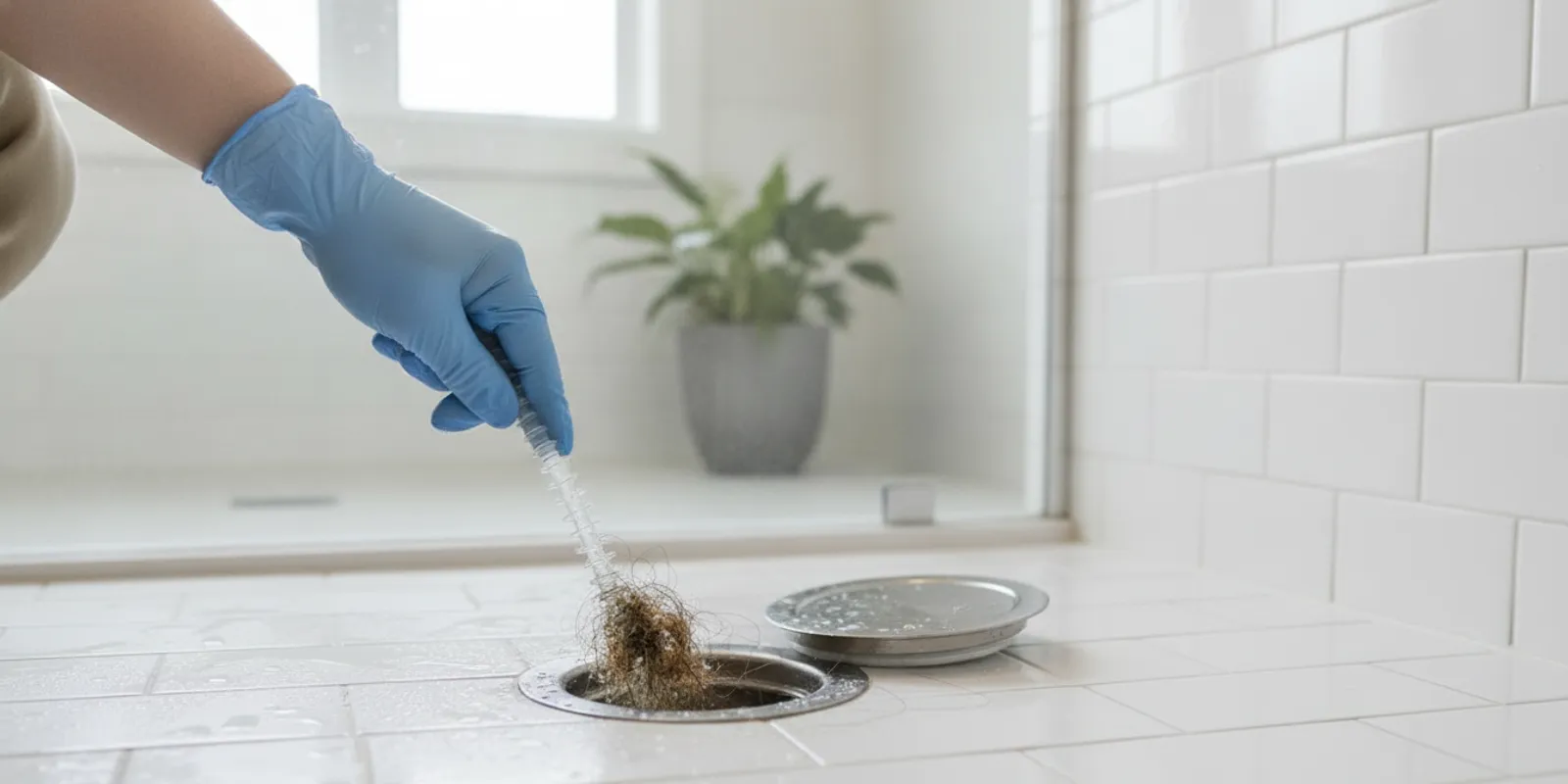
If you are wondering how to clean shower drain buildup, start with ordinary hair and soap near the grate before water begins pooling around your feet. The safest approach is to start at the grate, remove only what you can reach easily, and stop if the clues point to a plumbing problem farther down the line.
What should you check before cleaning a shower drain?
Take a moment to observe the problem before you touch the drain. Is water draining more slowly than usual, or is it standing in the shower? Can you see hair caught at the grate? Does the slowdown happen only in this shower, or are sinks and tubs affected too? A gradual slowdown with visible hair often starts near the opening. Water backing up in several places, recurring clogs, or gurgling may signal a problem beyond the part you can safely clean yourself.
Notice whether the symptoms are new or keep returning. If the drain was clear after cleaning but slows again soon afterward, note how long it took and whether the same fixtures are affected. This simple record can help a plumbing professional understand the pattern. A surface cleaning can remove accessible debris, but it cannot show whether the pipe farther along is clear.
Gather rubber gloves, a small waste bag or bucket, a soft toothbrush, a plastic drain hair-removal tool, dish soap, and a towel. A flashlight can help you see the cover and the top of the opening. Keep children and pets away while you work. Do not put bare fingers into the pipe or use a sharp object that could scratch a finish, snag inside, or become lodged.
Check how the cover is attached before lifting it. Some covers lift out; others have a screw or another fastening method. Use a suitable screwdriver if needed and keep small parts safely aside. If the cover resists, stop rather than prying hard. A fixed, damaged, or unfamiliar cover is a reason to ask for help, not to apply more force.
How do you clean a shower drain step by step?
- Make the area safe. Put on gloves and move bath mats or loose items that could get wet. If water is standing, carefully scoop it into a bucket so the grate is visible. Avoid splashing it onto the floor, and dry the area around the shower before setting down tools.
- Remove and wash the cover if it is designed to come off. Lift or unscrew it gently. Wash both sides with warm water and dish soap, using a soft toothbrush around the edges. Rinse it and set it on a towel. If it does not release with the expected motion, leave it in place.
- Lift out visible hair. Follow the instructions for a plastic hair-removal tool. Insert it only as far as the product is intended to go, then draw debris upward instead of pushing it down the pipe. Put the material straight into a waste bag. Do not force the tool if it catches or meets resistance.
- Wipe reachable surfaces. Use a damp, soapy cloth or the soft brush to clean the rim and other surfaces you can see and reach without inserting your hand into the pipe. Keep debris out of the drain. Do not remove plumbing parts or reach deep into the opening.
- Rinse with warm tap water. Use a modest flow and watch what happens. Avoid boiling water, especially when you do not know the pipe material or the fixture maker's care advice. If the water remains pooled or drains very slowly, stop rather than adding more tools or products.
- Refit the cover and test. Return the cover to its proper position and secure it without overtightening. Run the shower briefly. Check whether water clears at a normal pace, whether it pools, and whether there is any leak around the cover. Stop the test if water begins backing up elsewhere.
Pay attention to what comes out and how the drain behaves afterward. If a visible clump comes out and the water clears, that is consistent with debris near the opening. If almost nothing comes out and flow remains slow, avoid feeding the tool farther into the pipe. More attempts do not necessarily reach the source and may make the situation harder to address.
Which first step fits the problem?
Match the action to what you can actually observe. The table is a guide to a cautious first response, not a way to diagnose hidden plumbing. When the symptom does not fit a simple surface buildup, choose the safer option and get professional advice.
| What you notice | Reasonable first step | What to avoid |
|---|---|---|
| Hair caught at the grate | Remove an accessible cover and lift debris with a plastic tool as directed | Pushing hair deeper with wire or a sharp object |
| Soap film on the cover | Wash with warm water, dish soap, and a soft brush | Abrasive pads that may scratch the finish |
| Slow flow after visible debris is removed | Try a modest warm tap-water rinse and observe; stop if the slowdown remains | Repeatedly adding chemical products or forcing tools |
| Recurring clog or gurgling | Contact a qualified plumbing professional | Dismantling fittings or treating it as surface buildup |
| More than one fixture backs up | Limit water use and arrange professional assessment | Running more water to test other fixtures |
Should you use baking soda, vinegar, or drain cleaner?
Household mixtures may loosen light residue, but they are not a dependable way to pull out compacted hair. A fizzy reaction does not prove that a blockage has cleared. For hair that is visible near the grate, careful physical removal with an appropriate plastic tool is a more direct first step.
Commercial drain cleaners can be caustic. Read the full label, use a product only as directed, and keep it away from children and pets. Never mix drain cleaner with bleach, ammonia, vinegar, or another product. Combining cleaners can create hazardous fumes or cause liquid to splash. The U.S. Environmental Protection Agency is a source of federal information on household chemicals; for the safe handling and use of a specific product, follow that product's label.
If a chemical product has already been poured into a blocked drain, do not plunge, reach into it, or add a second cleaner. Liquid may splash back. Follow the product label for what to do next, and tell a plumbing professional which product was used before they work on the drain. If you are unsure what was poured in, do not guess or try another mixture.
How can you prevent shower-drain buildup?
- Use a drain screen that fits securely and still lets water flow freely.
- Remove captured hair after showers instead of letting it collect in the screen.
- Wipe the visible cover and rim during regular bathroom cleaning.
- Rinse away light soap residue with warm tap water as part of routine care.
- Notice changes in drainage early, while debris may still be accessible.
Choose a screen that suits the drain rather than covering it with an improvised object. A screen that shifts or blocks water can create a separate nuisance. Clean it over a wastebasket and throw the hair away instead of washing it into another drain.
There is no need to push a tool into the pipe every week as a precaution. A quick visual check and removal of material caught by the screen is usually more sensible. For a simple routine, check the screen when you clean the shower and clear it whenever hair begins to collect. If you share a bathroom, make the task part of the household routine so hair does not sit in the drain between cleanings.
Keep the drain-care task separate from cleaning the rest of the shower. A soft brush and suitable soap can handle the removable cover, while the surrounding shower may need its own surface-specific cleaning method. Clear Choice Home Cleaning Services' deep cleaning service addresses broader household cleaning tasks; it is not a plumbing repair.
What if the shower is in an apartment or a home being turned over?
In a rental or managed property, check the lease or maintenance procedure before removing a fixed cover or using a product. Take a photo of standing water or a leak and report recurring symptoms promptly. A tenant should not dismantle plumbing or use aggressive chemicals where the property manager may need to inspect the issue. If you have already used a product, share its name and the time it was applied.
For an apartment bathroom, distinguish a cleaning concern from a maintenance concern. Soap film around the cover and hair caught on a screen are visible cleaning tasks. Water that rises in another fixture, a persistent odor, or drainage that remains slow after accessible debris is removed should be reported as a plumbing concern. Do not assume that cleaning the bathroom surface resolves a hidden drain issue.
During a move, a clean cover and clear shower surface help make a bathroom presentable, but they do not prove that the drain line works properly. Test the flow briefly and document any recurring backup for the owner or manager. A broader move-in deep cleaning checklist can help plan cleaning tasks around a change of occupancy. Renters and managers can also review the company's apartment cleaning information for cleaning needs elsewhere in the unit.
When preparing a property for listing or a new occupant, make a short handoff note if the shower has drained slowly or backed up. Include what you observed, whether accessible hair was removed, and whether symptoms returned. That is more useful than describing the drain as fixed when only the cover was cleaned. For property-wide preparation, see the company's real-estate cleaning information.
When should you stop and call a plumber?
Contact a qualified plumbing professional if the drain stays slow after visible debris is removed, clogs return quickly, or more than one fixture drains poorly. Persistent gurgling, water backing up in another drain, or a sewage-like odor are also reasons to stop treating the issue as surface buildup. Cleaning the cover cannot resolve a blockage deeper in the system.
If you see water leaking around the drain or through a ceiling below, limit water use and seek prompt professional help. A leak can involve a failed seal or pipe; wiping the visible surface will not correct it. Avoid chemical treatments before a plumber visits, particularly if a product is already in the drain. Tell the professional what you tried, what was removed, and whether the symptoms changed.
A useful handoff is concise: describe when the slowdown began, whether the problem affects one or several fixtures, what you removed, and what products—if any—went into the drain. Mention a leak, gurgling, or odor rather than trying to label the cause. This helps keep the conversation focused on observable symptoms and avoids repeating steps that have already failed.
Clear Choice Home Cleaning Services handles cleaning, not plumbing diagnosis or repair. For regular care around the shower, use a gentle approach and avoid abrasive products on delicate finishes. The company's cleaning services overview describes cleaning options for homes and properties; a persistent blockage belongs with a plumbing professional.
Request an estimate for broader cleaning
Frequently asked questions
How often should I clean a shower drain?
Check the screen whenever you clean the shower and remove hair as it collects. The right interval depends on how much hair and residue enter the drain. Respond to slower flow rather than waiting for a full blockage.
Can I use a wire hanger to pull out hair?
A hanger can scratch surfaces, snag inside the pipe, or push debris farther down. Use a purpose-made plastic tool according to its directions, and stop if it catches or will not move easily.
Why does my shower drain smell after cleaning?
An odor that remains after washing the cover and removing visible debris may have a cause deeper in the drain or plumbing. Do not mask a persistent sewage-like smell with fragrance; ask a plumbing professional to investigate.
Will deep cleaning fix a clogged shower drain?
No. Household cleaning can address accessible hair and surface residue, and deep cleaning can address broader bathroom cleaning tasks. Neither replaces plumbing diagnosis or repair for a persistent blockage.
Choose a manageable next step
If the problem is visible hair at the grate, remove it carefully, rinse with warm tap water, and observe the result. If the drain keeps slowing, several fixtures are affected, or you see a leak, stop DIY attempts and contact a qualified plumbing professional. Keep routine bathroom cleaning and plumbing repair as separate tasks so each gets the right kind of attention.