
How to Clean Air Vents: A Clear Buyer Guide
Published · Clear Choice Home Cleaning Services
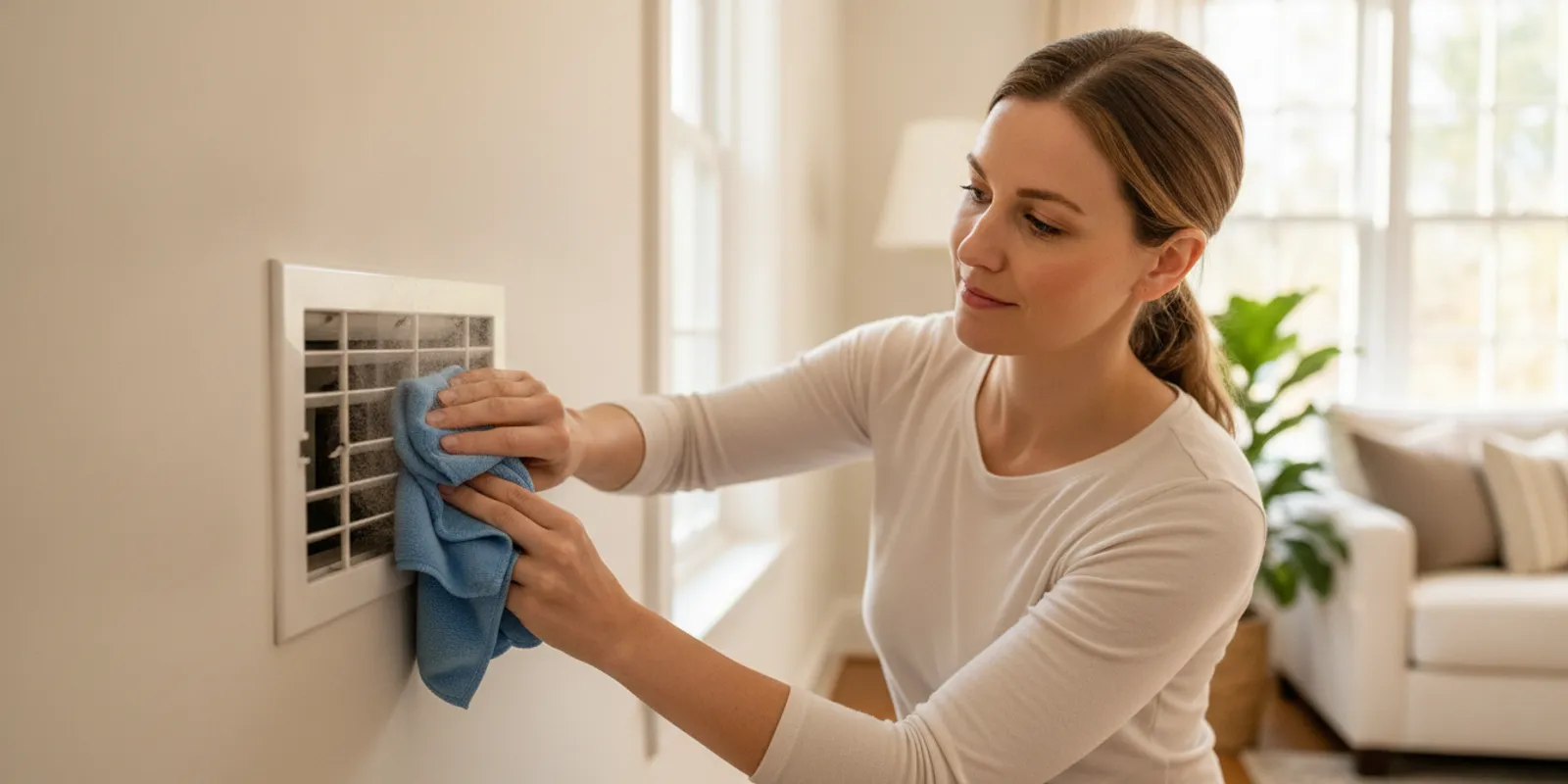
Knowing how to clean air vents starts with a simple boundary: clean the visible grille and only the immediate surface you can reach safely. Do not push tools deep into ductwork or disturb HVAC equipment. A careful surface clean can remove visible dust without turning a small household task into work that belongs to an HVAC professional.
What are you cleaning: a supply vent or a return grille?
A supply vent sends heated or cooled air into a room. A return grille draws room air back toward the heating and cooling system. Either can collect ordinary dust on its visible surface. You do not need to identify every part of the HVAC system to wipe the grille, but it helps to know what you are looking at before removing anything.
Look at the shape and location. A supply register often has adjustable louvers that direct air. A return grille may be larger and may have a fixed pattern. Some returns contain a filter, but do not remove or replace a filter based only on appearance or guesswork; follow the system or filter manufacturer's directions. If the vent has a control, filter, wiring, unusual fasteners, or a part you do not recognize, leave it in place and clean only the exterior surface.
Dust on the grille is not proof that the entire duct system needs cleaning. If you have persistent odor, dampness, a noticeable airflow change, unusual noise, or debris that seems to extend into the system, stop and ask an HVAC professional to assess the cause. For broader information about indoor air and environmental conditions, the U.S. Environmental Protection Agency website is a government source to consult.
For a household cleaning visit, the work is different from HVAC service. You can compare the scope of deep cleaning in Alpharetta with your vent concern: a cleaning team can address reachable household surfaces, while an HVAC provider handles ductwork and equipment.
What should you prepare before starting?
Gather a soft microfiber cloth or duster, a vacuum with a brush attachment, a small amount of mild dish soap, warm water, and a dry towel. You may also need a screwdriver if the grille is designed to come off easily and its fasteners are accessible. Keep a small container nearby for screws so they do not get lost. Avoid strong sprays, abrasive pads, and tools that can bend the grille.
Turn off the HVAC fan at the thermostat before dusting. This helps keep loose dust from moving while you work. If you cannot tell how to stop the fan, check the thermostat instructions rather than opening equipment. Place a towel or a sheet of paper below a floor or wall vent to catch dust. For a ceiling vent, use a stable step stool only if the grille is within comfortable reach; do not stand on a chair, lean sideways, or stretch from a ladder.
Consider your own sensitivity to dust. If dust triggers symptoms for you, wear a well-fitting mask, ask someone else to do the task, or leave it for a cleaning professional. Keep children and pets away from the work area until loose dust is cleaned up. Prepare the area before taking a grille down so you do not have to carry a dusty cover across the room.
Before removing the cover, check for paint sealing its edges, visible damage, rust, loose screws, or a position that is hard to reach. If it resists, stop. Forcing a painted or stuck grille can damage the wall finish, bend the cover, or cause a fastener to fall into an inaccessible place. When in doubt, surface dusting is enough for this task.
How do you clean an air vent safely?
- Switch off the system fan. Use the thermostat to stop the fan, then give any moving air a moment to settle. This is a surface-cleaning precaution, not a substitute for following the equipment manual.
- Remove loose dust first. Gently vacuum the visible grille with a brush attachment or wipe it with a dry microfiber cloth. Work from the outside edges toward the center, and avoid pressing hard on thin metal or adjustable louvers. Dry dusting first makes it easier to avoid smearing dust if you later use a damp cloth.
- Clean the immediate reachable edge. If the opening is clear and easy to reach, use the vacuum brush or cloth on the first visible edge only. Do not push your arm, a vacuum hose, a long brush, or another tool deep into the duct. Do not loosen insulation, reach around bends, or try to retrieve an object from inside.
- Decide whether the cover can come off simply. If the grille has accessible screws and is not painted in place, support it as you loosen the fasteners. If it is heavy, overhead, awkward, damaged, or does not release easily, leave it installed. Keep track of the screws and note how the cover sits so you can put it back in the same position.
- Wash only a removable cover. Take a simple grille to a sink or tub and wash it with warm water and a small amount of mild dish soap. Use a soft cloth, not a scouring pad. Do not submerge a cover that has an attached control, filter, electrical part, or material you cannot identify. Never pour water or spray cleaner into the vent opening.
- Rinse and dry it completely. Remove soap residue, then dry the grille with a towel and let it air-dry until no moisture remains, including around edges and screw holes. A damp cover should not go back over the opening.
- Reinstall without forcing anything. Align the grille as it was, replace its fasteners, and tighten them only enough to hold it securely. Do not overtighten or bend the cover. When it is secure, turn the system back on and check that the grille appears stable.
For a fixed grille, a gentle vacuum and wipe are usually the sensible limit. Stop if you see moisture, loose material, signs of pests, visible growth, or a large amount of debris beyond the edge. Do not try to clean or diagnose what you cannot safely reach. The purpose is to remove surface dust, not to take apart or service the heating and cooling system.
What should you avoid while cleaning?
- Do not spray fragrance, disinfectant, or another cleaner into the opening.
- Do not pour water into the vent or allow a damp cloth to drip inside.
- Do not push a vacuum hose, brush, or improvised tool deep into ductwork.
- Do not remove HVAC filters or access equipment unless the manufacturer’s directions tell you how.
- Do not pry off a grille that is painted, stuck, damaged, or difficult to reach.
- Do not use an unstable stool or ladder or lean beyond a safe position.
- Do not assume a dirty cover explains a smell, airflow issue, or equipment noise.
These limits matter in homes and in shared buildings. A ceiling grille may be above a desk, bed, counter, or work area; move what you can safely move and protect the nearby surface before dusting. If access requires moving heavy furniture or working over equipment, do not improvise. A quick exterior wipe is not worth a fall or damage to the room.
How often should you dust vent covers?
There is no single schedule that fits every room or household. Check vent covers as part of ordinary dusting and clean them when you can see buildup. Pets, open windows, nearby renovation work, frequent activity, and the location of the grille can all affect how quickly dust becomes noticeable. A room near an entry or a work area may need attention sooner than a quiet room.
Keep vent dusting separate from filter care. A clean grille does not mean a filter is clean, and cleaning a grille does not replace the system's maintenance instructions. Use the size and replacement or cleaning directions specified for your system. If a filter is difficult to access, does not fit, or appears to be part of a more complicated assembly, ask an HVAC professional rather than forcing it.
A simple reminder can make upkeep practical: check the visible covers when you dust a room, after nearby construction, or during a move-in or move-out clean. If the grille looks clean, there is no need to remove it just to follow a fixed calendar. If you see a repeated buildup soon after cleaning, look at the room's dust sources and ask an HVAC professional if you also notice a system-related concern.
How do surface cleaning and HVAC service compare?
| Task | What it includes | Appropriate next step |
|---|---|---|
| Routine vent dusting | Visible grille and immediate reachable edge | Use a soft cloth or vacuum brush; stop at the opening |
| Washing a simple removable grille | Cover only, washed gently and dried completely | Do it only if the cover comes off without force and can be reached safely |
| Filter care | Filter access, fit, cleaning, or replacement | Follow the specific system or filter manufacturer's instructions |
| Duct or HVAC inspection | Interior ductwork, equipment, persistent odor, moisture, or airflow concern | Contact an HVAC professional for assessment and service |
| Whole-room or home cleaning | Reachable household surfaces beyond the vent cover | Set the requested scope with a homeowner or residential cleaning service |
Does the right approach change for an apartment, office, or property turnover?
The safe cleaning boundary stays the same, but responsibility and access may change. In a rented apartment, check the lease or ask the property manager before removing a grille or filter. Tell management about a loose cover, moisture, unusual odor, or airflow change instead of trying to repair it. For renters who need help with the rest of the unit, see the details for apartment cleaning; that is separate from duct or equipment service.
In an office or workspace, confirm who is responsible for the HVAC system and whether the area can be cleaned while staff are present. An office manager can add visible, reachable grilles to a surface-cleaning checklist, but should route system concerns to the building's HVAC provider. Clear Choice's office and workspace cleaning information is relevant when the broader need is routine cleaning of an office, not ductwork.
During a move or property turnover, visible vents may be one item among many surfaces to inspect. Photograph damage or a concern before cleaning and share it with the property manager, owner, or HVAC professional. A clean cover can improve the appearance of a room, but it does not demonstrate that the duct system has been inspected. For a wider cleaning checklist and scope, review the company's cleaning services overview or the information about house cleaning in Alpharetta.
When should you call an HVAC professional?
Stop surface cleaning and seek an HVAC assessment if there is persistent odor, dampness, visible growth, signs of pests, loose insulation, unusual noise, reduced airflow, or debris that appears to continue into the duct. These signs do not identify a cause on their own. A qualified HVAC professional can inspect the system and explain whether any service is appropriate.
Get help as well when a grille is out of safe reach, cannot be removed without force, or appears attached to a filter or control. If the cover is damaged or no longer sits securely, avoid leaving it loose or trying to reshape it. Let the property owner or an appropriate service provider know what you observed and where it is located.
For household surface cleaning beyond the vent, decide what rooms and tasks you want included before requesting an estimate. Clear Choice Home Cleaning Services LLC is locally owned and veteran-owned, based in Alpharetta, and serves Metro Atlanta. Owner Michael A. Jones is personally available to discuss the requested scope. The company's cleaning service FAQs can help with general service questions, while a duct or HVAC concern should go to an HVAC professional.
Call (470) 622-8884 to discuss a cleaning estimate
Frequently asked questions
Can I vacuum inside an air vent?
You can gently vacuum the visible grille and the immediate edge you can reach without pushing the attachment inside. Do not send the hose deep into the duct. For interior duct cleaning or inspection, contact an HVAC professional.
Should I use a disinfectant or scented spray?
No. Routine vent dusting does not call for spraying products into the opening. A removable, washable grille can be cleaned with mild dish soap and water, then dried completely. Keep liquids and sprays away from the duct and equipment.
Does a dusty vent mean the ducts need cleaning?
Not by itself. The visible cover can collect ordinary room dust. If you also notice a persistent odor, moisture, airflow change, or material beyond the grille, ask an HVAC professional to assess the system rather than inferring the cause from dust alone.
Can a house cleaner clean the ducts?
Household surface cleaning and HVAC duct service are different tasks. A cleaning visit can address reachable surfaces within the agreed scope, while ductwork and equipment should be assessed and handled by an appropriately qualified HVAC provider.
Choose the right next step
For ordinary visible dust, switch off the fan, clean the grille gently, and stop at the reachable edge. If the task involves ductwork, equipment, an unexplained system concern, or unsafe access, leave it to an HVAC professional. If you need help with other household surfaces, call Clear Choice Home Cleaning Services at (470) 622-8884 to explain the space and request an estimate.