
How to Clean a Lampshade Without Damaging It
Published · Clear Choice Home Cleaning Services
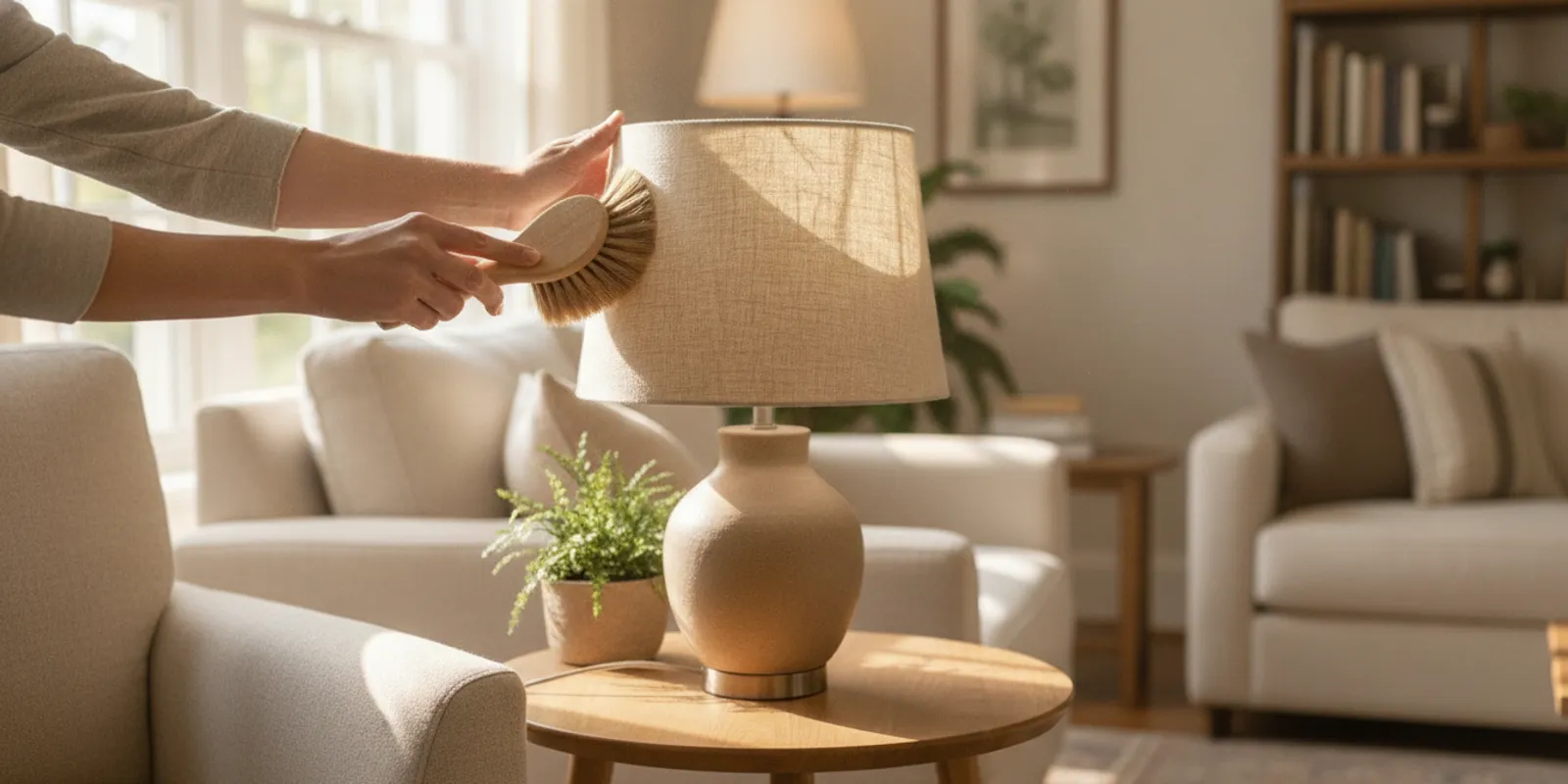
Knowing how to clean a lampshade starts with identifying its material and finish. Fabric, paper, glass, and plastic can react very differently to water, pressure, and cleaning products. Start with dry dusting, check the care instructions, and use the least aggressive method that can do the job.
Request a home cleaning estimate
What should you do before cleaning a lampshade?
Turn off the lamp, unplug it from the outlet, and wait for the bulb and shade to cool completely. Cleaning a warm shade can make handling uncomfortable, and moisture should never be allowed near a powered socket or wiring. For general consumer-product safety information, consult the U.S. Consumer Product Safety Commission. This guide is about surface care, not electrical repair.
Remove the shade only if it comes off easily and you know how it is secured. Do not twist or pull a stuck fitting. Place a removable shade on a clean, flat surface with enough room around it to keep it from rolling or tipping. For a large or fragile shade that must remain in place, support it gently while you work.
Before choosing a method, look for a maker's care label or product instructions. Check seams, glued trim, pleats, coatings, painted details, and existing cracks or loose fibers. Make a note of any old stain or discoloration so you can tell whether a test has changed the surface. If the material or finish is uncertain, stick to light dry dusting.
- Unplug the lamp and let every part cool.
- Remove the shade only if it is designed to come off easily.
- Read care instructions and inspect the shade for fragile or decorated areas.
- Prepare a clean, soft brush or microfiber cloth; use a vacuum brush attachment only on low suction if the shade is sturdy.
- Test any permitted spot treatment on a hidden area and let it dry before deciding whether to continue.
How do you dust a lampshade without damaging it?
Dry dusting is the safest starting point for nearly every lampshade. Use a clean, soft brush, a dry microfiber cloth, or a vacuum's clean brush attachment on low suction. Move from the top toward the bottom in light, steady strokes. Working in one direction helps avoid pushing dust back into the surface or catching on trim.
For pleats, move along the folds rather than across them. Use the brush tip to reach creases without pressing hard into the fabric. Hold a delicate shade from the opposite side to steady it, but do not squeeze it. On a firm shade, a low-suction vacuum can collect loose dust as you work; keep the nozzle from pulling the covering inward. Stop if the shade flexes, fibers lift, a seam catches, or the material starts to distort.
Keep your tools clean and dry. A cloth used on furniture can carry polish or grit that transfers to a pale shade. A sticky lint roller may tug loose threads or leave residue, so avoid it on fragile weaves, paper, and trim unless the maker approves it. If dust is stuck in a deep texture, make several gentle passes rather than trying to remove it with one forceful scrub.
How do you clean a fabric lampshade?
Start with a soft brush or low-suction brush attachment. Many fabric shades include a lining, adhesive, dye, or surface treatment that may react to liquid even when the outer fabric seems washable. Do not assume that a method suitable for a curtain or cushion is also safe for a shade built around a frame.
If the care instructions allow a damp spot treatment, use plain water and a clean, white cloth. Dampen the cloth slightly; it should not drip. First test a hidden spot and allow it to dry fully. If the test area changes color, texture, or shape, or develops a ring, stop and do not continue with moisture.
When the test is satisfactory, blot the mark gently from the outside edge toward the center. Avoid rubbing back and forth, which can spread the mark or roughen the weave. Work in small touches and use a dry cloth to lift extra moisture. Keep water away from seams, trim, and the inner lining. Let the shade air-dry completely before putting it back on the lamp. Do not use a hair dryer, radiator, or direct heat to speed drying.
Skip detergents, stain removers, fragrance sprays, and solvents unless the shade's maker specifically approves the product. These may leave residue or affect dye, finish, or adhesive. Do not soak a fabric shade or put it in a washing machine; the frame covering and joins may lose their shape.
How do you clean a paper lampshade?
Paper is easily creased and can show a permanent tide mark after contact with liquid. Use a soft, dry brush and gentle strokes, supporting the shade as you work. A clean, dry microfiber cloth may be suitable for a smooth, sturdy paper surface, but do not force it into a crease or use it if it snags.
Avoid water, wet wipes, sprays, and household cleaners unless the manufacturer explicitly says they are safe for that shade. Do not rub a stain with an eraser or rough cloth; friction can scuff the surface or remove a printed or coated finish. If a mark remains after light dusting, leave it alone until you can get guidance from the maker or a specialist. A visible stain is usually less costly than a tear or a large discolored patch caused by an untested treatment.
How do you clean a glass lampshade?
Plain glass is generally more tolerant of a damp wipe than paper or fabric, but first check for painted, frosted, etched, or bonded decorations. Handle a removable glass shade with both hands over a stable surface. If it is heavy, cracked, or difficult to remove, do not risk dropping it in order to clean it.
For undecorated glass, wipe with a soft cloth lightly dampened with water, then dry promptly with a lint-free cloth. Apply liquid to the cloth, not by spraying the shade. Keep moisture away from the socket, cord, and other electrical fittings. Avoid abrasive pads and powders that can scratch the glass. On painted, coated, or textured glass, follow the maker's care instructions and test a hidden spot before wiping the whole surface.
How do you clean a plastic lampshade?
Begin with a soft, dry microfiber cloth or brush. Plastic can scratch or turn cloudy under rough friction, so use a light touch and do not scrape at stuck-on dust with a fingernail or hard tool. Check the maker's guidance before using any liquid or product.
If the instructions permit moisture, wipe a small area with a barely damp cloth and dry it right away. Avoid solvents, abrasive powders, rough sponges, and unapproved sprays. Products intended for glass or counters are not automatically safe for plastic. If the shade has a special coating or you cannot identify its material, dry dusting is the safer choice.
Which cleaning method fits each lampshade material?
Use this comparison as a starting point, not as a replacement for the maker's instructions. A shade may combine materials—for example, fabric over a frame with a paper lining—so follow the most delicate component's limits.
| Material | Safest first step | When a mark remains | Be careful with |
|---|---|---|---|
| Fabric | Soft dry brush or low-suction brush attachment | Use a barely damp cloth only if instructions permit and a hidden test dries cleanly | Rubbing, soaking, wet seams, detergent, and sprays |
| Paper | Light dry brushing | Ask the maker or a specialist; do not experiment with liquid | Water, wipes, erasers, abrasion, and pressure |
| Plain glass | Soft, dry cloth | Lightly damp cloth, followed by prompt drying | Liquid near fittings, drops, abrasives, and decorative finishes |
| Plastic | Dry microfiber cloth or soft brush | Only use a damp cloth if the maker permits it | Solvents, rough pads, strong pressure, and unapproved cleaners |
What should you do about common lampshade problems?
If dust is embedded in a weave: Use a soft brush and short strokes, then check the result in good light. Repeat gently rather than switching immediately to a wet cleaner. If the fibers are loose or the dust does not lift, stop before brushing begins to fuzz the fabric.
If a spot is greasy or discolored: First consider whether the mark is on the surface or appears to have changed the material. Do not add a household degreaser or stain remover on guesswork. Read the care information and test only a method the maker allows. A large, old, or valuable shade is a better case for professional advice than trial-and-error treatment.
If a shade smells dusty: Dust it gently and let it air in a dry, ventilated room away from direct sun and heat. Do not spray perfume or room fragrance onto the covering to mask an odor. If the odor persists or seems to come from wiring or the lamp itself, stop using the lamp and seek appropriate product or electrical guidance rather than treating the shade as a surface-cleaning issue.
If the shade has loose trim, a tear, or a bent frame: Avoid brushing across the damaged area and do not try to glue or reshape it while cleaning. Support the shade and ask the manufacturer or a qualified repair specialist what care is suitable. Cleaning cannot correct structural damage.
What mistakes should you avoid when cleaning a lampshade?
- Do not clean a lamp while it is plugged in or warm.
- Do not wet a material before checking its care instructions.
- Do not spray a cleaner directly onto the shade or near electrical fittings.
- Do not scrub, squeeze, pull, or stretch delicate fabric, paper, seams, or trim.
- Do not mix cleaning products or use solvents without the maker's approval.
- Do not reinstall a shade until it is completely dry and safely secured.
- Do not keep working when a test spot changes the color, finish, or shape.
When in doubt, stopping is a useful decision. Light surface dust can often be removed without risk, but a stubborn stain may need material-specific care. Avoid escalating pressure or product strength just because the first attempt did not remove it.
How can lampshade dust fit into a room-cleaning routine?
Dust the shade before wiping the table below it or cleaning the floor. That order lets you collect anything that falls rather than cleaning the same surface twice. Work from higher surfaces downward, and use a separate clean cloth for the shade if your other tools have been used with furniture polish or other products.
A light, regular dusting can be easier on delicate material than waiting for a visible layer to build up. The right interval depends on the room: an open living area, a bedroom, and a work space may collect dust at different rates. Use what you see as your cue, and keep the method gentle.
For general upkeep beyond lampshades, Clear Choice Home Cleaning's house cleaning service includes dusting open surfaces and vacuuming carpets and rugs. The company's deep cleaning option addresses built-up dust and hard-to-reach areas. These are home-cleaning services, not specialized lampshade restoration.
Explore the broader residential cleaning services or the cleaning services FAQs for general service information. You can also learn about the locally owned company on its About Us page. If you are planning routine home cleaning, use the contact page to ask about an estimate. The team handles general home cleaning; it does not advertise a lampshade-specific process.
Frequently asked questions
Can you vacuum a lampshade?
Yes, if it is sturdy and you use a clean brush attachment on low suction. Hold the shade steady and stop if the tool pulls, flexes, or distorts it. A soft hand brush is a safer option for fragile paper, trim, and loose fabric.
Can you use water on every lampshade?
No. Paper and many fabric or coated shades can wrinkle, stain, or change shape when wet. Check the care instructions first. Only use moisture when the maker permits it, and test a hidden area before treating a visible mark.
What if a mark will not come off?
Do not respond by applying more pressure or a stronger cleaner without confirming it is suitable. Stop if the surface changes, and ask the manufacturer or a qualified specialist about a persistent stain, especially on an old or valuable shade.
How often should you dust a lampshade?
There is no single schedule for every room. Dust it when you notice a visible layer or include it in your regular light-dusting routine. Use a clean tool and a method appropriate for the material.
Request an estimate for home cleaning
Identify the material, check its care instructions, and begin with gentle dry dusting; if a mark needs a method the maker does not approve, leave it for informed advice rather than risking avoidable damage.