Dining-table cleaning: A Focused Local Answer to How to Clean a Dining Table
Published · Clear Choice Home Cleaning Services
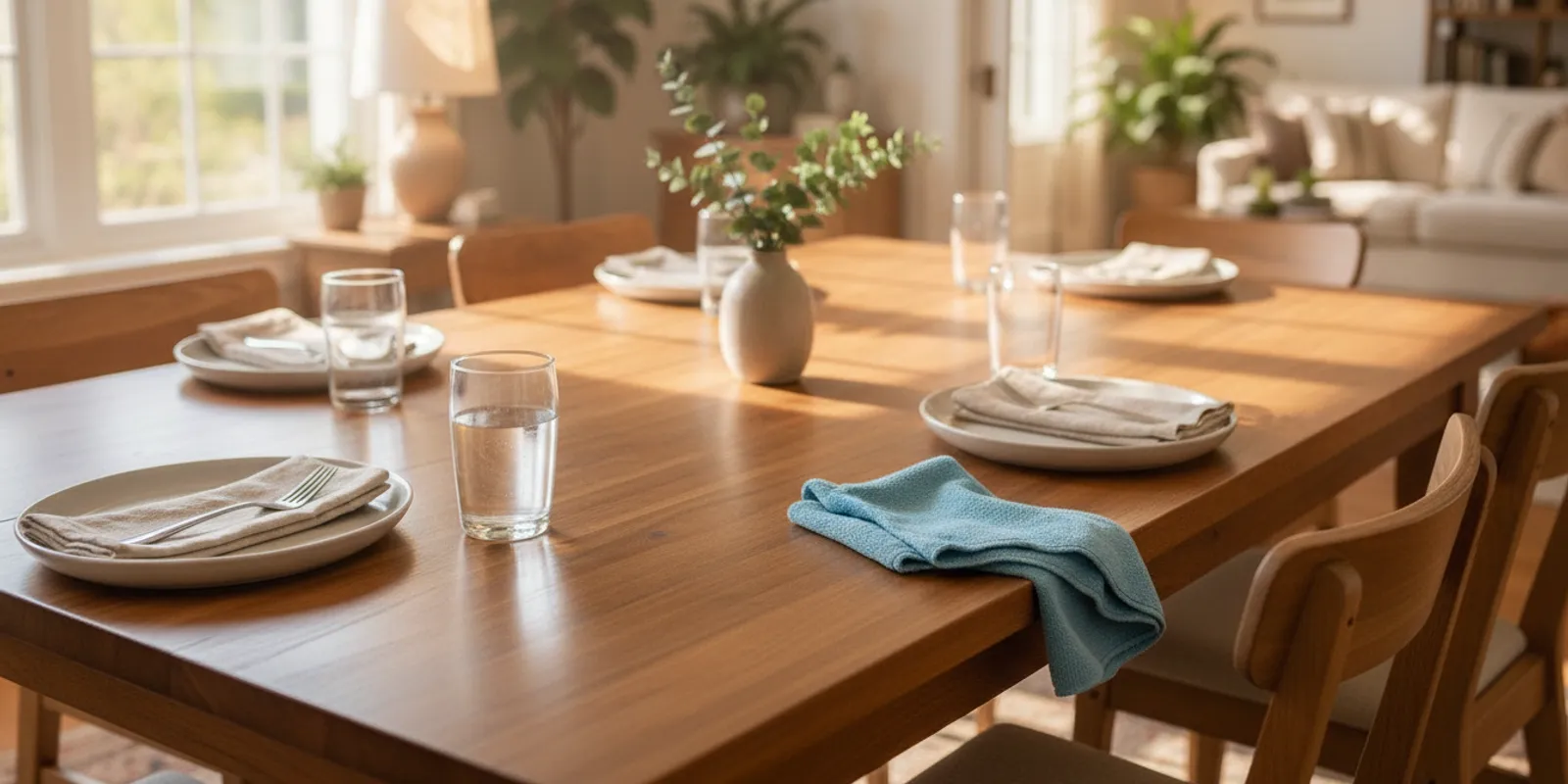
Knowing how to clean a dining table starts with one simple check: identify the surface before you reach for a cleaner. A sealed wood top, natural stone, glass, and laminate can all need different care. With a few safe habits, you can clear food and drink marks without leaving a dull film, scratching the finish, or pushing moisture into seams.
What should you check before cleaning the table?
Look at the material and condition of the top first. Check the care instructions from the maker if you have them, especially for a new table, a specialty finish, or natural stone. If you are not sure whether the surface is sealed, treat it gently: use very little moisture, avoid strong products, and test any cleaner in a small, out-of-sight spot.
Move dishes, placemats, and centerpieces off the table. Shake crumbs into the trash or brush them away with a dry, soft cloth. This matters because crumbs can drag across a finish and leave fine scratches when you wipe over them. If the table has an extension leaf, seams, or carved trim, take a moment to notice where liquid could collect.
- Use a clean, soft microfiber cloth or another non-abrasive cloth.
- Keep a second dry cloth nearby to remove leftover moisture.
- Use a mild dish soap diluted in warm water only when plain water is not enough and the surface can tolerate it.
- Do not mix cleaning products. Follow the product label, and keep cleaners away from food, dishes, and children.
For advice on a product meant to disinfect a surface, read the label for its intended use and directions rather than assuming every household cleaner disinfects. The U.S. Environmental Protection Agency provides information about pesticide products and their labels. For ordinary crumbs and spills, a suitable surface cleaner and a clean cloth are usually the practical starting point.
How do you clean a dining table step by step?
- Clear the surface. Remove tableware and decorations. Lift items rather than dragging them, especially if their bases are rough.
- Remove dry debris. Wipe crumbs off with a dry cloth or soft brush. Do not scrub them across the finish.
- Start with the least aggressive method. Dampen a soft cloth with water, then wring it out well. Wipe the top in manageable sections. Avoid pouring water directly onto the table.
- Address sticky residue carefully. If plain water does not lift a mark, add a small amount of mild dish soap to a bowl of warm water. Dip and wring the cloth so it is damp, not dripping. Wipe the spot gently, then go over it with a clean cloth dampened with plain water to remove soap residue.
- Dry as you go. Use a dry, soft cloth, especially around edges, joints, seams, and the underside of an overhang. Do not leave puddles to air-dry.
- Check the result in good light. Look for missed crumbs, streaks, or a sticky feel. Repeat with a clean cloth if needed rather than adding more product.
For a spill, blot first instead of rubbing. That helps keep liquid from spreading into a larger area or into a seam. Once the mark is lifted, clean the spot using the method that suits the table material. If a finish changes color, feels tacky, or looks cloudy after a product is used, stop and check the maker's care guidance before trying another cleaner.
When a table is part of a larger household reset, consider the rest of the room too: crumbs often collect under chairs, along baseboards, and around nearby furniture. Clear Choice also shares a guide to what deep cleaning covers, which can help you decide whether the issue is a quick surface wipe or a broader cleaning need.
Does the cleaning method change by table material?
Yes. The table's finish is as important as its base material. A wood table may have a protective coating, oil, wax, or a delicate finish; stone can be porous; and manufactured surfaces may have seams or a printed layer. When instructions from the manufacturer differ from a general cleaning method, follow the manufacturer's advice.
| Table surface | Everyday approach | Use extra care with |
|---|---|---|
| Sealed or finished wood | Dust first; wipe with a soft cloth lightly dampened with water and dry promptly. | Standing water, abrasive pads, harsh solvents, and excess polish. |
| Unfinished, oiled, or waxed wood | Use a dry or barely damp cloth and follow the finish maker's care directions. | Soap or water applied broadly; test any product in a hidden spot. |
| Natural stone, including marble | Use a soft cloth and a cleaner labeled as suitable for that specific stone. | Acidic products such as vinegar or lemon, abrasive powders, and unknown cleaners. |
| Glass | Use a clean soft cloth and a glass cleaner suitable for the surface, or a small amount of mild soap and water. | Grit under the cloth, which can scratch; cleaner overspray on wood, stone, or metal nearby. |
| Laminate or veneer | Use a damp, non-abrasive cloth, then dry the top and edges. | Moisture entering seams, chipped edges, scouring pads, and strong solvents. |
Finished wood: Most everyday cleaning should be gentle. Avoid soaking the top or using a rough sponge. Furniture polish is not a substitute for removing food residue, and repeated use can leave buildup on some surfaces. If the maker recommends a particular polish or cleaner, use it as directed.
Stone: Marble and other natural stones may react to acidic substances or inappropriate cleaners. Blot spills promptly, especially juice, coffee, or wine, and use a product labeled for your stone. Do not assume a cleaner is safe simply because it is described as natural.
Glass: Start with a clean cloth so old grit does not scratch the surface. Use a small amount of suitable glass cleaner, applying it to the cloth rather than spraying broadly if adjacent materials could be affected. Wipe in overlapping passes and buff dry with a fresh cloth to reduce streaks.
Laminate and veneer: Clean the surface without letting water pool along edges or joints. These tops can be damaged if moisture reaches the layer beneath the surface, particularly where an edge is worn or a seam is exposed.
How do you handle common dining-table messes?
Dried food: Place a warm, damp cloth over the residue briefly to soften it, if the material permits. Lift the softened spot gently. Do not use a knife or metal scraper, and do not force a stuck patch off a delicate finish.
Greasy fingerprints: Try a small amount of diluted mild dish soap on a cloth, then wipe with a fresh damp cloth and dry. On stone, specialty finishes, or a table with care restrictions, use an approved cleaner instead.
Water rings or cloudy marks: A mark may be in the finish rather than on top of it. Avoid immediately applying heat, abrasives, or internet remedies; those can make damage worse. Check the table care instructions or ask a furniture-care professional to assess a persistent mark.
Wax or gum: Do not scrape with a sharp object. Check the maker's instructions for the material and finish, and use a cautious method in a hidden place first. If residue is stuck or the finish is fragile, professional advice is safer than experimenting.
Odor or sticky film: A residue can come from a spill, cleaner buildup, or a cloth that was not clean. Wipe with the appropriate cleaner and a freshly laundered cloth, then dry completely. Do not layer scented products to cover an odor; find and remove the source where possible.
What should you avoid when cleaning a dining table?
- Do not use a soaking-wet cloth. Too much moisture can affect wood finishes and seep into joints or seams.
- Do not scrub with steel wool, scouring pads, or gritty powders. They can scratch or dull many finishes.
- Do not apply a general-purpose or disinfecting product without checking the label. A product that works on one material may harm another.
- Do not use vinegar or lemon on natural stone. Acidic substances can damage some stone surfaces.
- Do not mix cleaners. Use one product at a time, follow label directions, and ventilate as directed.
- Do not leave food-contact surfaces wet with a product. Follow the product's instructions for any required rinsing or drying before placing food or dishes back on the table.
Keep spray away from nearby upholstery, painted walls, electronics, and floor finishes. When in doubt, apply a small amount to the cloth rather than directly to the table. A small hidden-area test is especially useful when the product or table finish is unfamiliar.
How often should you clean the dining table?
For a table used for meals, wipe away crumbs and spills after use. A quick damp-cloth clean is often enough for everyday marks; use soap only when needed and appropriate for the surface. Dust or wipe less-used tables as part of a regular room routine, and clean promptly after a sticky or staining spill.
There is no single schedule that fits every household. A busy family may need a brief wipe several times a day, while a rarely used formal table may need only occasional dusting. Consider the material, how often the table is used, whether children or pets share the space, and whether food is served directly on the surface. Placemats can reduce everyday mess, but they do not replace cleaning underneath them.
For homes that need more than table care, Clear Choice offers standard cleaning and deep cleaning options. The right fit depends on what needs attention, the home, and the requested scope; ask for an estimate rather than assuming a fixed service or price.
When does a larger cleaning job need extra help?
A few crumbs or fingerprints rarely call for anything beyond routine care. Extra help may be useful when table cleaning is only one part of a move, property turnover, renovation cleanup, or a whole-home reset. For example, after furniture is moved, dust can settle on surfaces and floors; after construction, fine debris may be present well beyond the dining area. In those situations, it can be useful to describe the full space and timing when requesting an estimate.
Clear Choice Home Cleaning Services LLC is a locally owned, veteran-owned cleaning company based in Alpharetta and serving Metro Atlanta. Its services include residential cleaning, apartment cleaning, real-estate cleaning, office and workspace cleaning, and post-construction cleaning. Review the cleaning service options to see which category matches the work you have in mind. For a move-related project, see the move-in/move-out cleaning information.
When contacting a cleaning company, make the request specific: note the type of space, what needs cleaning, whether it is a one-time or recurring request, and any timing constraints. You can also mention any surfaces or items that need special handling. Clear information helps the company understand the job and respond with an appropriate estimate.
Frequently asked questions
Can I use dish soap on every dining table?
No. A small amount of diluted mild dish soap can help with some finished, washable surfaces, but it is not right for every finish or stone. Check the maker's care guidance, use a cautious hidden-area test, and avoid leaving soapy water behind.
Should I spray cleaner directly on the table?
Usually, applying a little cleaner to a soft cloth gives you better control and helps protect nearby materials. Always follow the cleaner label and table-maker instructions. Do not spray into seams or onto an unknown finish.
How do I clean a dining table without streaks?
Use a clean cloth, avoid excess product, and dry the surface with a second cloth. On glass, use a suitable glass cleaner and buff with a dry, lint-free cloth. Streaks can also come from detergent residue or a cloth that needs washing.
Can I use disinfectant on a dining table?
Only use a product whose label says it is suitable for that surface, and follow its directions, including any rinsing or contact-time instructions. Disinfecting is different from removing ordinary crumbs and food residue, so it is not necessary for every routine wipe.
Call (470) 622-8884 to request an estimate
For a single table, start with the gentlest method that suits its material and dry it promptly. If the table is one part of a larger cleaning project, share the scope and timing when you call (470) 622-8884 so the team can discuss an estimate.