
How to Clean a Coffee Table: A Clear Home-Care Answer
Published · Clear Choice Home Cleaning Services
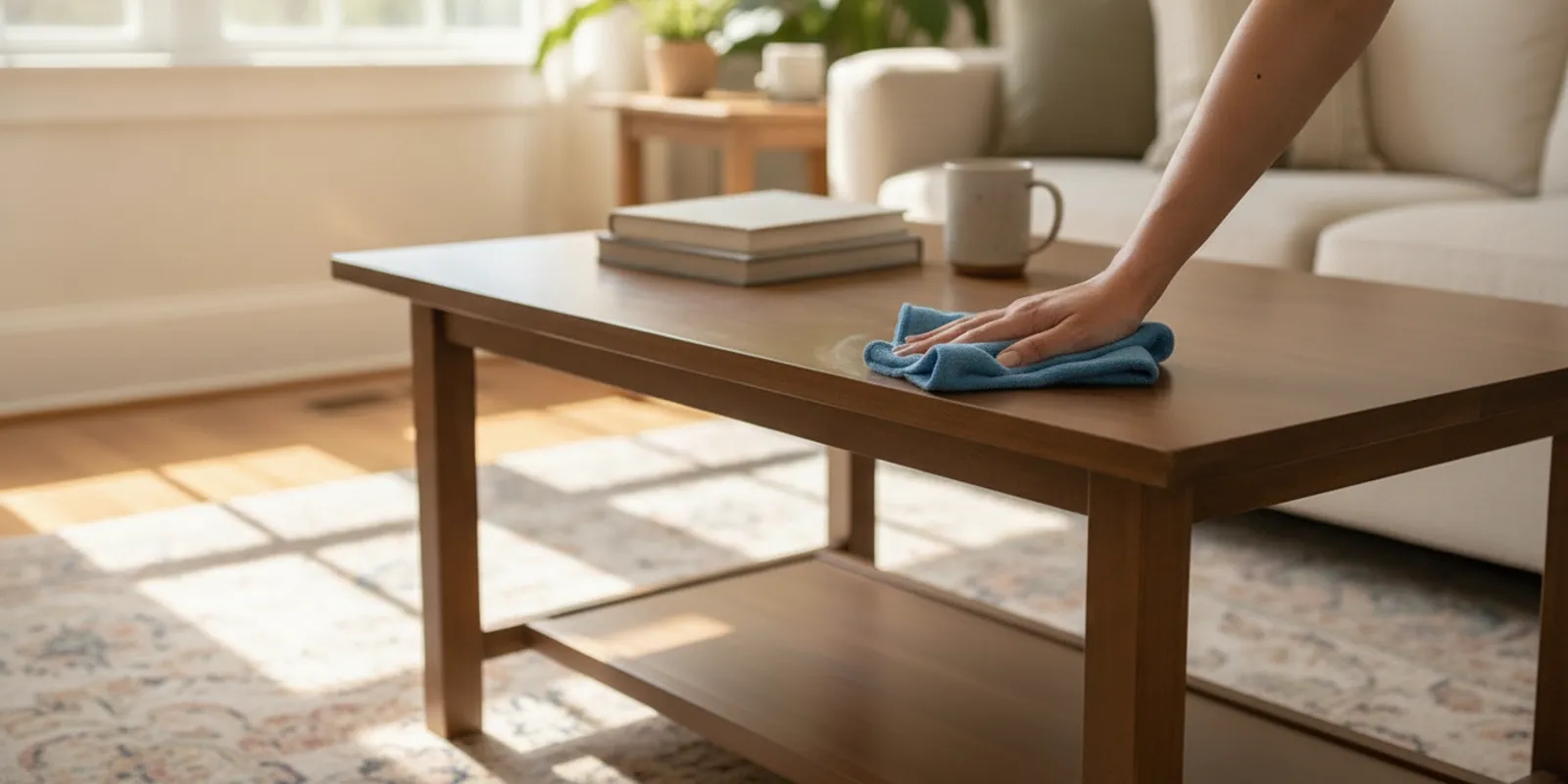
Knowing how to clean a coffee table starts with identifying its surface and finish. Wood, glass, stone, and painted or laminated tops do not all respond the same way to moisture or cleaners. A gentle routine can lift dust and everyday spills while reducing the chance of scratches, streaks, or finish damage. The same basics work for a living room, apartment, reception area, or shared office lounge.
What should you check before cleaning?
First, look for the table maker’s care instructions. Check whether the top is solid wood, veneer, glass, natural stone, engineered stone, painted, or coated with a particular finish. Similar-looking surfaces can have different coatings, so appearance alone is not a reliable guide to which products are safe. If you do not know the material, start with the least aggressive method: lift loose debris and dust with a clean, soft, dry cloth.
Remove books, cups, remotes, decorative objects, and coasters before wiping. Lift them rather than dragging them across the tabletop. Look underneath coasters and ornaments for crumbs, dampness, or sticky patches. If an object has left a mark, do not immediately scrub it; first decide whether it is loose residue on the surface or a change in the finish.
Use a clean microfiber cloth or another soft, lint-free cloth. Shake out or replace it if it picks up grit. A particle caught in the cloth can scratch glass or a delicate finish as you wipe. Keep a second dry cloth nearby for drying and buffing. Do not spray a cleaner directly on the table, especially near joints, seams, edges, or inlaid details. Apply it sparingly to the cloth instead, and test the method on a hidden area first if the care instructions are unclear.
How do you clean a coffee table step by step?
- Clear and inspect the top. Move objects aside and check the full surface, including around the legs and edges. Pick up crumbs with your fingers or a soft brush rather than rubbing them around.
- Dust from one side to the other. Use a clean, dry cloth with light pressure. Fold it to expose a clean section as dust collects. Wipe the edges and the area around any trim carefully.
- Blot fresh spills. Press a dry cloth against the liquid to absorb it. Avoid spreading the spill with broad strokes. Pay special attention to seams and edges where liquid could sit.
- Choose a method for the material. Follow the manufacturer’s care guidance and the cleaner’s directions. If a damp cloth is permitted, wring it out so it is barely damp. Avoid flooding the surface.
- Wipe a small area at a time. Use gentle, even strokes. Do not scrub harder simply because a mark remains; pause and reassess the material and the product instructions.
- Dry and inspect. Use a separate soft, dry cloth to remove moisture. Look at the table from more than one angle in good light to spot streaks, residue, or a missed area.
For ordinary dust, the first two steps may be all that is needed. A slightly damp cloth can help with fingerprints or a light film only when the finish permits it. Cleaners are not automatically better for routine dusting; using less product makes it easier to avoid residue and accidental contact with adjacent materials.
Which cleaning method fits each table material?
Use the table below as a cautious starting point, not a replacement for the maker’s directions. A tabletop may combine materials, such as glass set into a wood frame. In that case, keep cleaner on the cloth and away from the border, joints, and underside of the glass.
| Table surface | Gentle starting method | Use extra caution with |
|---|---|---|
| Sealed wood | Dust with a soft cloth; if permitted, wipe with a barely damp cloth and dry promptly. | Standing water, abrasive pads, and polish not approved for the finish. |
| Glass | Remove grit first, then use a clean microfiber cloth and a glass-safe cleaner applied to the cloth. | Gritty cloths, rough paper, and cleaner that can run onto wood trim or joints. |
| Natural or engineered stone | Use a soft cloth and a product labeled as suitable for that exact stone or surface. | Acidic or abrasive products unless the care guidance specifically permits them. |
| Painted, veneered, or unknown finish | Begin with dry dusting and check care instructions before introducing liquid. | Excess moisture, hard scrubbing, and strong products that may dull or lift a coating. |
| Laminate or coated surface | Dust first; follow the product maker’s directions for a lightly damp cloth or compatible cleaner. | Scouring tools, soaking edges, and cleaners not approved for the coating. |
Do not assume a cleaner is suitable just because it works on another table in the room. When a product is intended to disinfect, read its label and follow the directions for the surface and use. The U.S. Environmental Protection Agency provides information about regulated pesticide products; the individual product label remains the place to check its specific directions. Never mix cleaning products, and stop if the surface looks cloudy, tacky, or discolored.
What if the table has more than one material?
Many coffee tables combine a top with a separate frame, edge band, shelf, or metal base. Treat each part according to its own care guidance instead of assuming one product works everywhere. For a glass top set in a wood frame, remove loose grit from the glass first, then use a small amount of glass-safe cleaner on the cloth. Keep the cloth away from the wood border and dry the edge if any moisture reaches it. For stone supported by painted metal, use a stone-compatible method on the top and a different, suitable method on the base.
A practical example: after a mug leaves a small spill on a mixed-material table, blot the liquid immediately. Check whether it has reached a seam or the underside of the top. Clean only the affected material with a compatible method, and dry both the top and the nearby frame. If the liquid has seeped into a joint or the surface begins to change, stop rather than trying to force a deeper clean. This careful, section-by-section approach helps prevent a solution for one surface from creating a problem on another.
How do you handle common coffee-table marks?
Fingerprints and light smudges
Try a clean, dry cloth first. On a surface whose care instructions allow moisture, lightly dampen one part of the cloth, wipe the mark gently, and dry it right away. For glass, remove dust and grit first, then use a cleaner intended for glass and a separate dry cloth to reduce streaks. Keep spray away from wood frames, metal fittings, and seams.
Sticky drink or food residue
Lift solid crumbs rather than scraping them. Blot any liquid, then use a barely damp cloth if the material permits it. Give the residue a moment to soften on the cloth, then make another gentle pass. Avoid knives, scouring pads, and forceful rubbing. If the sticky spot remains, check the table’s instructions before trying another product; repeated mild passes are preferable to an untested solvent.
Water rings or cloudy patches
Blot any remaining moisture and let the area dry. A ring can be a surface deposit, but it can also indicate that moisture affected the finish. Do not assume that a home remedy, heat, or abrasive rubbing is safe for every coating. If the mark persists after the surface is dry, check the manufacturer’s advice or ask a furniture-care professional rather than escalating to a stronger cleaner.
Wax, adhesive, or dried-on spots
Do not pry at the mark with a blade or metal tool. The safest approach depends on the material and what caused the residue. Check the maker’s care instructions before applying heat, oil, alcohol, or a solvent, since these can alter some finishes. If you cannot identify the surface or the residue, stop at gentle dusting and seek product-specific guidance.
What should you avoid while cleaning?
- Do not use one strong or abrasive cleaner on every surface in the room.
- Do not leave water sitting on wood, veneer, painted areas, stone seams, or exposed edges.
- Do not scrub with steel wool, scouring pads, or a rough cloth that may scratch or dull the finish.
- Do not mix cleaning products, and follow each product label as written.
- Do not spray liquid near joints, decorative inlays, electronics, or nearby upholstery.
- Do not drag heavy decor, lamps, or devices across the tabletop; lift them before cleaning underneath.
Store cleaners safely after use and keep them away from children and pets. If a product causes an unexpected change, stop, avoid applying more chemicals, and consult the furniture maker’s care advice. A cleaning routine should remove surface soil, not attempt to repair a damaged finish.
How do you clean the legs and underside?
Once the top is dry, dust the table’s edge, apron, legs, and lower shelf if it has one. Use a clean cloth and light pressure, working from higher areas downward so loose dust does not fall onto a freshly cleaned top. For carved details or narrow joints, a soft brush can loosen dry dust without pushing liquid into crevices. Support the table if you need to reach underneath, and do not move a heavy or unstable table by pulling on a leg.
For metal or mixed-material legs, use care instructions suited to that material and keep cleaner off adjacent wood or upholstery. A damp cloth should be used only where appropriate, then dry each area. If the table has casters or delicate attachments, do not force them or use excess liquid around the fittings.
How often should you clean a coffee table?
Let use guide the schedule. In a busy living room, dust during regular tidying and wipe spills as soon as practical. In a quieter room, the table may need less frequent attention. A quick check beneath cups, coasters, and decorative objects helps catch dampness or crumbs before they build up. Using coasters and lifting objects when you dust can make each clean quicker.
For a shared office or reception area, include the table in the routine for commonly touched surfaces. Remove crumbs and visible marks, use products that are appropriate for the material, and follow product directions if a disinfectant is needed for a specific purpose. Do not let a frequent schedule become a reason to over-wet the finish. The table’s material and level of use matter more than a single fixed calendar rule.
When is the table only one part of a larger clean?
A coffee table is a small part of a living room, office, or property turnover. Dust may also collect on shelves, baseboards, and other hard-to-reach surfaces, while floors and upholstery need their own material-specific care. If you are already preparing a home between occupants, refreshing a property, or addressing buildup across several rooms, explore Clear Choice’s deep cleaning service for a broader cleaning need.
Clear Choice Home Cleaning Services LLC is locally owned and veteran-owned, based in Alpharetta and serving Metro Atlanta. Its cleaning services include residential and commercial options. Property managers or real-estate professionals planning a turnover can also review the real-estate cleaning information. A service estimate depends on the job; contact the company to discuss what needs attention rather than relying on a fixed price.
Before reaching out, it may help to note the property type, rooms involved, timing, and any areas that need special attention. The cleaning service FAQs offer another place to review common questions. To talk through a larger home or office cleaning need, use the contact page or call the public number below.
Call (470) 622-8884 to request an estimate
Frequently asked questions
Can I use an all-purpose cleaner on my coffee table?
Only if both the product label and the table’s care instructions say it is suitable for that specific material and finish. Test it discreetly if needed, apply it to a cloth rather than spraying the table, and avoid excess moisture.
Should I polish a wood coffee table?
Follow the furniture maker’s directions. Some finishes may not need polish, and a product that is unsuitable can leave residue or change the appearance. Start with gentle dusting and use polish only when the care guidance recommends it.
Can I clean the whole table with glass cleaner?
No, not unless the table’s maker says that product is appropriate for every part. Glass cleaner can run onto wood trim, painted edges, or joints. Use a glass-safe product only on compatible glass, applying it to a cloth and keeping it away from neighboring surfaces.
What if I do not know what the table is made of?
Use a clean, dry, soft cloth to remove loose dust, and look for a label or care instructions. Avoid experimenting with liquids or strong cleaners. If a mark needs more than dry dusting, consult the seller, manufacturer, or a furniture-care professional.
Choose a gentle routine
Clear the tabletop, remove grit and dust, treat spills with a method suited to the finish, and dry the surface. When a larger home, office, or property needs attention beyond the table, contact Clear Choice Home Cleaning Services at (470) 622-8884 to discuss the job and request an estimate.